
Gabon orders social media blackout
HAC cites national security while NetBlocks sees YouTube TikTok Facebook WhatsApp disrupted, VPN demand explodes as regime uses telecom licenses as censorship switch
Images
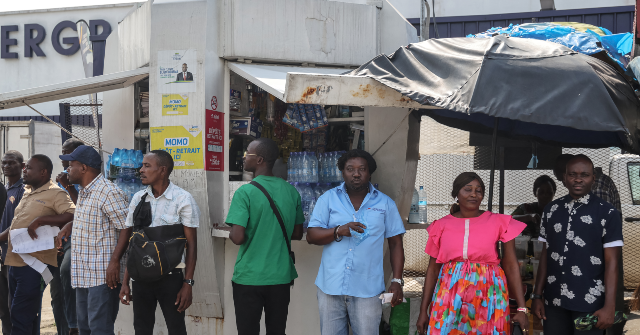 Gabon Shuts Down Social Media as Threat to National Security
breitbart.com
Gabon Shuts Down Social Media as Threat to National Security
breitbart.com
Gabon’s military-backed government has discovered a lever of modern rule: don’t bother arguing with critics when you can simply turn off the pipes.
This week the country’s High Authority for Communications (HAC) ordered an immediate shutdown of social media “until further notice,” citing “national security,” according to Breitbart. The decree did not specify which platforms were targeted or what alleged threat they posed—an omission that matters, because it reveals what is at work. In states where telecom licenses are political favors, “platform policy” is just another name for administrative coercion.
Internet monitoring group NetBlocks reported a sharp loss of connectivity to YouTube, TikTok, Facebook and WhatsApp in Gabon, suggesting the block is not a symbolic warning but an operational intervention at the network level. While the precise method—DNS poisoning, IP blocking, SNI filtering, or throttling—was not publicly detailed, the breadth of services affected points to a coordinated instruction to major carriers rather than a platform-by-platform legal process. The state as ISP, with a kill switch.
The market response was immediate and, in its own way, flattering. NetBlocks observed a surge in VPN usage, and Google recorded rising searches for VPN-related queries from Gabon. Proton VPN said signups from Gabon jumped by more than 60,000% after the blackout began, per Breitbart. This is the standard cat-and-mouse pattern: governments nationalize the chokepoints; users privatize the workarounds.
The political context is equally conventional. Gabon has been ruled by Gen. Brice Oligui Nguema since a 2023 coup; he later claimed a 90% victory in the April 2025 presidential election, Breitbart notes. The BBC, cited by Breitbart, reported the shutdown came as a shock in a country where social platforms are deeply embedded in daily commerce—particularly small business marketing and customer acquisition. One restaurant owner told the BBC that roughly 40% of customers came via social media advertising; the ban, then, is not merely a speech restriction but a direct tax on entrepreneurship.
Observers cited by Breitbart linked the move to a teacher strike that began in December and to protests over the cost of living—exactly the kind of decentralized coordination social media enables and security services dislike. If the economy is weakening and unrest is spreading, cutting communications is a crude substitute for governance.
Broad shutdowns also advertise state fragility. Blocking WhatsApp doesn’t just disrupt activists; it disrupts remittances, informal trade, logistics coordination, and customer service. It accelerates capital flight by reminding anyone with savings that the same administrative apparatus can just as easily “pause” banking apps, mobile money rails, or news sites.
In many countries the decisive political institution is not parliament, court, or even the presidency—it is the telecom regulator. And regulators, unlike voters, do not need to be persuaded.