
Pentagon-Anthropic friction erupts after reports Claude tools support Maduro capture operation
Palantir integration puts frontier models on classified networks, AI safety rhetoric doubles as vendor leverage
Images
 Pete Hegseth
nbcnews.com
Pete Hegseth
nbcnews.com
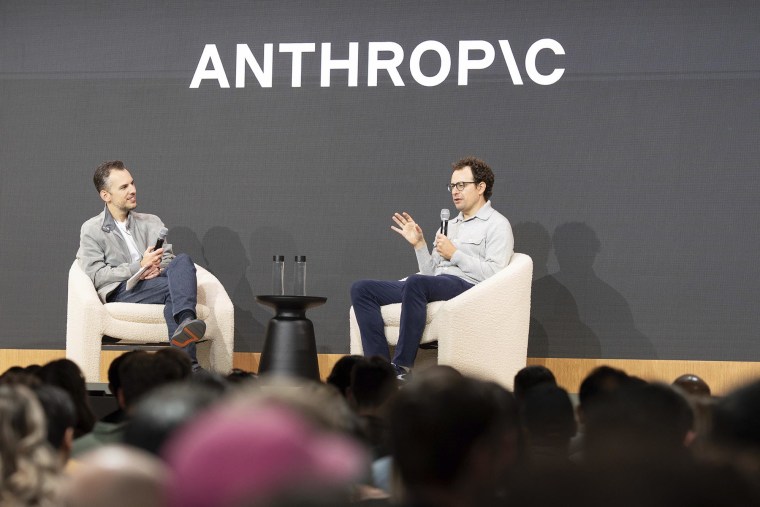 Anthropic CEO Dario Amodei, right, and Chief Product Officer Mike Krieger talk after unveiling Claude 4 during the Code with Claude conference May 22, 2025, in San Francisco.Don Feria / AP Content Services for Anthropic
nbcnews.com
Anthropic CEO Dario Amodei, right, and Chief Product Officer Mike Krieger talk after unveiling Claude 4 during the Code with Claude conference May 22, 2025, in San Francisco.Don Feria / AP Content Services for Anthropic
nbcnews.com
Tensions are rising between the Pentagon and Anthropic, the maker of the Claude model family, after reports that Anthropic-linked tooling was used in an operation targeting Venezuelan President Nicolás Maduro.
According to NBC News, the dispute flared after The Wall Street Journal and Axios reported Anthropic products were involved in the Maduro capture operation, though it remains unclear what role Claude played. Anthropic holds a defense contract worth up to $200 million and has built its brand around “AI safety” commitments, including stated prohibitions on direct use in lethal autonomous weapons and domestic surveillance.
The problem is that “not used for lethal autonomy” is a policy slogan, while modern military systems are a pipeline: collection, fusion, triage, targeting support, and decision-making under time pressure. Anthropic itself, per NBC News, emphasizes it has high visibility into Claude usage—particularly for data-analysis workflows. That visibility becomes awkward when a model is deployed on classified networks, where outsiders (including the public, Congress, and often even the vendor’s own staff) are meant to know less, not more.
Anthropic was also the first frontier AI company allowed to offer services on classified networks via Palantir, which partnered with it in 2024. Palantir’s announcement at the time framed Claude as a tool for processing “vast amounts of complex data rapidly” to help officials make “more informed decisions” in time-sensitive situations. Palantir, a favored military contractor, already sits deep in defense data plumbing—from sensor feeds to targeting support—making it an ideal distribution channel for model providers who want government revenue without owning the messy integration layer.
But that same structure turns “responsible AI” into a competitive weapon. If a model vendor can credibly threaten to yank access, slow-roll updates, or declare a partner “out of policy,” it gains leverage over integrators and agencies alike. Semafor, cited by NBC News, reported that during a routine meeting, a Palantir executive was alarmed by how an Anthropic employee raised the Maduro question—implying Anthropic might disapprove of Palantir’s software being used in that operation.
Anthropic denies any unusual fallout and told NBC News it cannot comment on whether Claude was used in specific operations, classified or otherwise. A senior Pentagon official said an Anthropic executive asked a senior Palantir executive about the raid, and Palantir interpreted the query as potential disapproval.
As the US government pushes more “AI safety,” export controls, and classification rules, it is also concentrating power in a handful of model suppliers whose weights, training data, and safety policies are proprietary—and whose compute pipelines are centralized. That is a new single point of failure for defense IT: not just a vendor lock-in, but a model lock-in. The state gets its AI, the vendor gets its moat, and everyone else gets to discover—during the next crisis—that “frontier capability” is now delivered by terms of service.