
US judge upholds $243m verdict over Tesla Autopilot fatal crash in Florida
Jury assigns Tesla 33% blame despite driver searching for dropped phone, product-liability law becomes de facto regulator of autonomy marketing
Images
 A Tesla Model S lies damaged after it struck a parked Chevrolet Tahoe while operating on Autopilot, in Key Largo, Florida (Singleton Schreiber)
Singleton Schreiber
A Tesla Model S lies damaged after it struck a parked Chevrolet Tahoe while operating on Autopilot, in Key Largo, Florida (Singleton Schreiber)
Singleton Schreiber
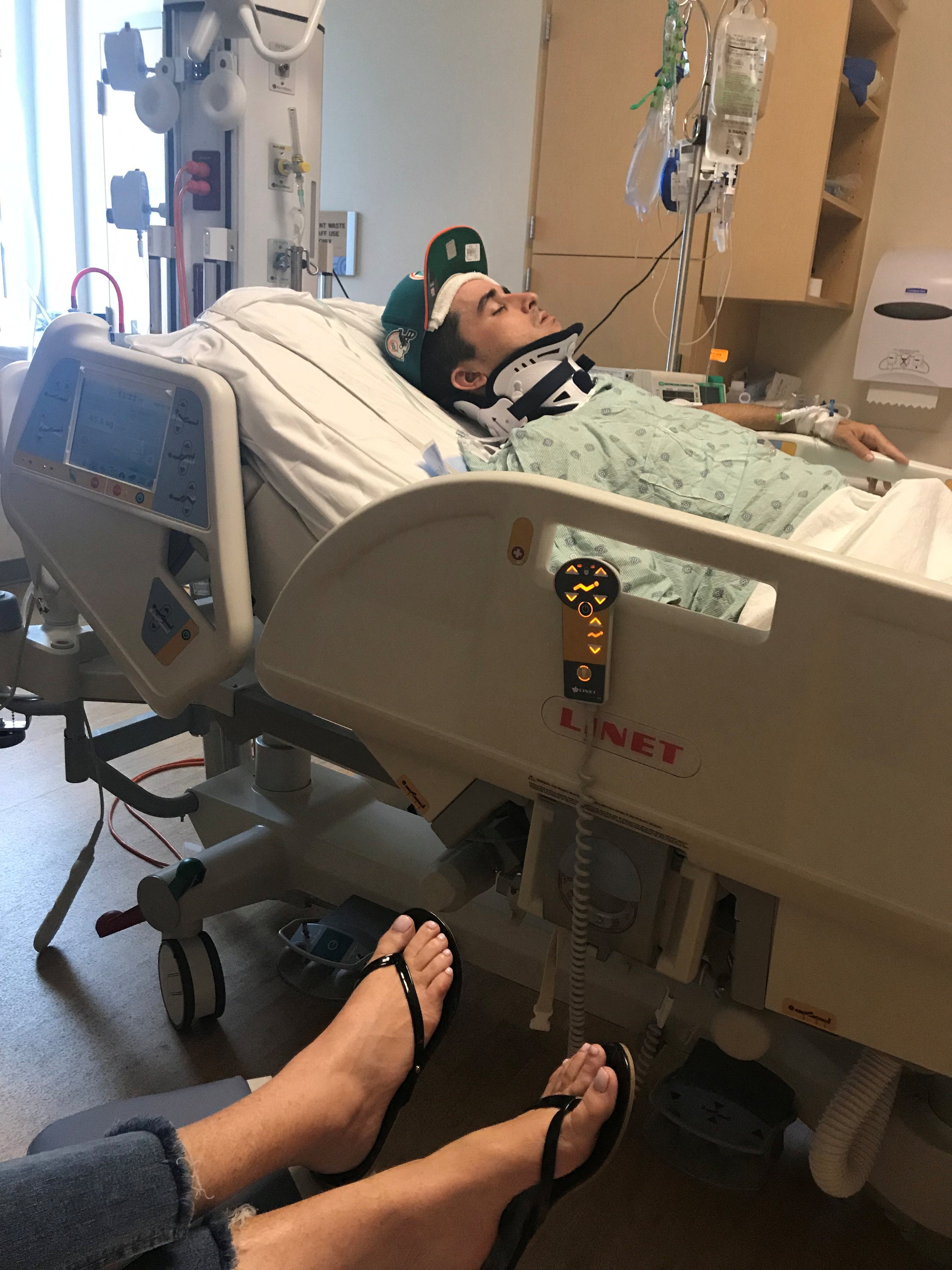 Dillon Angulo, who was injured in a 2019 crash involving a Tesla Model S operating on Autopilot, receives treatment in a hospital (Singleton Schreiber)
Singleton Schreiber
Dillon Angulo, who was injured in a 2019 crash involving a Tesla Model S operating on Autopilot, receives treatment in a hospital (Singleton Schreiber)
Singleton Schreiber
A US federal judge has refused to wipe out a $243 million jury verdict against Tesla over a fatal 2019 crash in Key Largo, Florida—an unusually expensive reminder that product liability law still exists.
According to The Independent, US District Judge Beth Bloom in Miami rejected Tesla’s post-trial bid to overturn the verdict, concluding the evidence “more than supported” the jury’s findings. The case stems from an April 25, 2019 incident in which George McGee drove a 2019 Model S at roughly 62 mph while “looking for his dropped phone,” then struck an SUV parked on the shoulder. Naibel Benavides Leon, 22, was killed; her boyfriend Dillon Angulo was severely injured.
Jurors assigned Tesla 33% responsibility—enough to turn a distracted-driver tragedy into a corporate balance-sheet event. The award included $19.5 million in compensatory damages to Benavides’ estate and $23.1 million to Angulo, plus $200 million in punitive damages to be split between them.
Tesla argued McGee alone should bear blame, that the vehicle was not defective, and that punitive damages should be zero because the company did not act with “reckless disregard for human life” under Florida law. Judge Bloom was not persuaded, and Tesla is expected to appeal.
The verdict matters beyond one crash because it forces courts—and eventually juries—to do what regulators have largely avoided: parse the engineering boundary between driver-assistance and autonomous driving, and then ask whether marketing blurred that boundary on purpose. The very name “Autopilot” invites a semantic bait-and-switch: a feature that allegedly demands constant supervision, sold with a label that implies the opposite. When that mismatch collides with predictable human behavior—overtrust, distraction, and the occasional dropped phone—liability becomes a kind of ex post safety standard.
The Independent notes Tesla has faced many similar lawsuits over its self-driving claims, but most have been dismissed or settled before trial. That makes this case notable: it is described as the first federal jury verdict tied to a fatal Autopilot-related crash.
The timing is also awkward. Elon Musk has spent years pitching Tesla as the frontrunner in autonomy, and the company has been trying to convince the public that its self-driving tech is safe enough for a planned rollout of “hundreds of thousands” of robotaxis on US roads by the end of 2026. The plan now sits alongside a nine-figure punitive-damages bill.
If Tesla’s appeal fails, the message to the entire industry is clear: you can sell “assistance” as almost-self-driving, but you may end up paying like you sold self-driving outright.