
China amplifies Japan travel scares
State-linked narratives push earthquake and safety fears, humanoid robot spectacles sell domestic modernity
Images
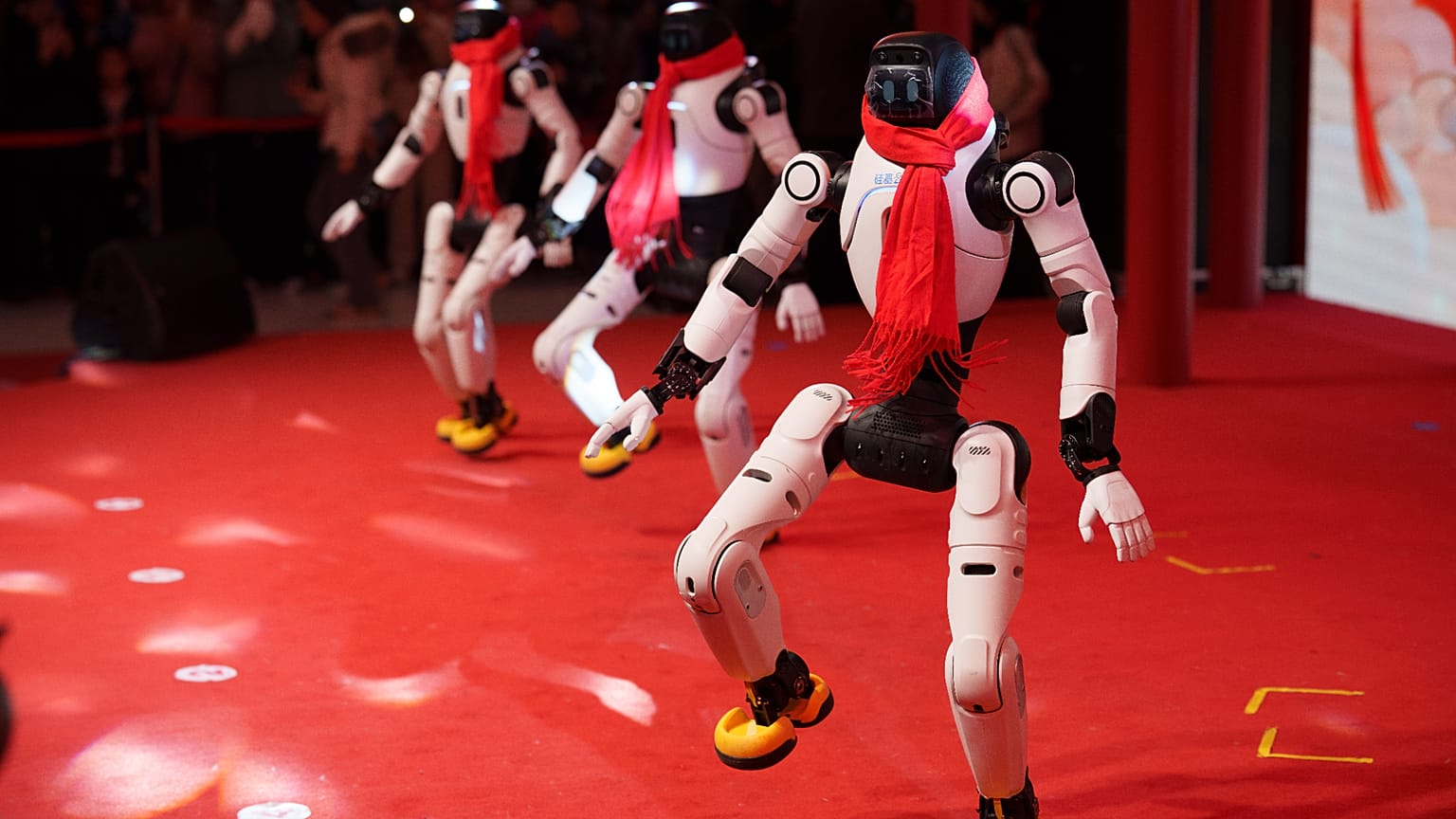 Humanoid robots dance in formation during a Lunar New Year tech temple fair in Beijing, Thursday, Feb. 19, 2026
euronews.com
Humanoid robots dance in formation during a Lunar New Year tech temple fair in Beijing, Thursday, Feb. 19, 2026
euronews.com
China is running a playbook on Japan: discourage private travel and spending through a steady drip of fear, while showcasing its own “modernity” through tightly choreographed spectacles.
According to The New York Times, Chinese state media and online influencers have amplified warnings about travel to Japan, pushing narratives around earthquakes, bear encounters, and generalized “safety” risks. The reporting describes how alarming content circulates widely on Chinese platforms, is reinforced by official travel advisories or semi-official commentary, and then becomes “common sense” for a risk-averse middle class deciding where to vacation and where to park discretionary income.
None of this requires a formal ban. It’s cheaper and more deniable to steer behavior by saturating the information environment—especially when the state has leverage over the distribution channels. The result is a soft form of capital control: not the dramatic kind involving border guards, but the kind that nudges consumers away from Japan’s hotels, shops, and airlines and toward domestic alternatives.
And China is careful to provide the alternative right on cue. Euronews’ footage from Beijing shows humanoid robots dancing in a Lunar New Year mall performance, marketed as both entertainment and proof of rapid technological progress. The segment notes that visitors perceive a striking improvement over last year’s clunky demonstrations, and some explicitly connect the show to practical applications like elderly care.
Put the two together and you get a coherent strategy: Japan is framed as risky and unstable; China is framed as safe, advanced, and inevitable. This is “soft power” only in the sense that it doesn’t involve tanks. It is still power—exercised through state-aligned media ecosystems and the domestication of narrative.
For liberal societies, the vulnerability is structural. Japan can build earthquake-resistant infrastructure, manage wildlife, and issue transparent risk assessments, but it cannot easily compete with a neighboring state that can algorithmically amplify panic while suppressing dissenting correction. When the same actor controls both the message and the pipes, “public opinion” becomes a policy instrument.
For travelers and businesses, the point is blunt: in East Asia, geopolitics increasingly happens at the level of consumer choice and attention. The state that can steer those choices—without ever issuing an explicit order—gets to tax its rivals’ tourism revenues and reward its own domestic champions. And if the robots are part of the sales pitch, so be it. Bread and circuses were always more efficient when the emperor owned the arena.