
Dutch border police seize €250
000 cash at Eindhoven Airport, EU AML regime treats banknotes as probable cause, Confiscation first explanations later
Images
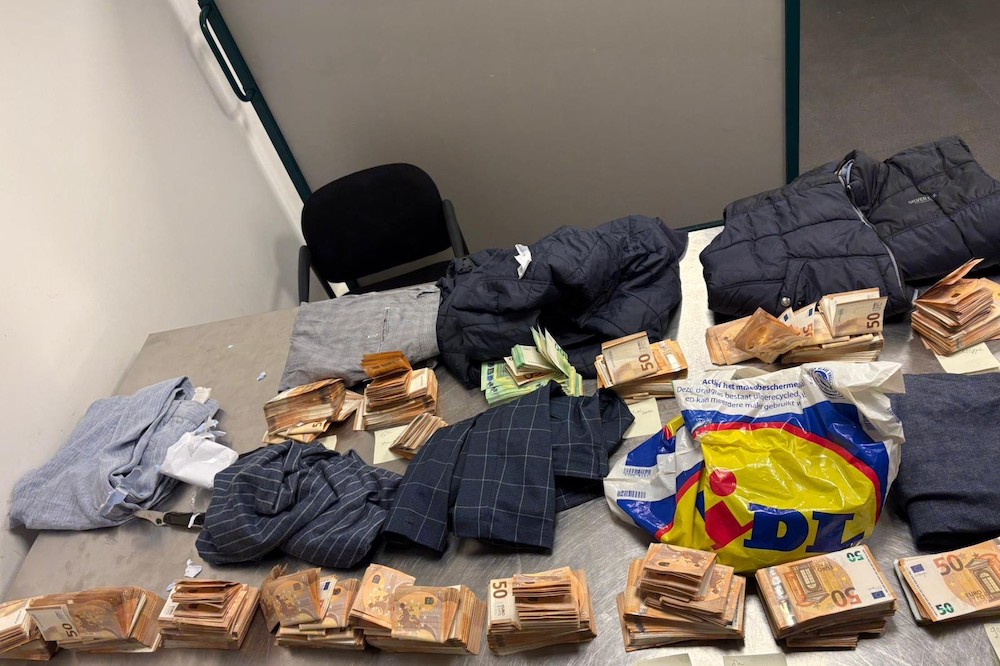 Photo: Marechaussee
Marechaussee
Photo: Marechaussee
Marechaussee
Dutch border police (the Marechaussee) arrested a 54-year-old man from Deventer at Eindhoven Airport after finding €250,000 in cash in his luggage, according to DutchNews.nl. The notes—€50s and €100s—were reportedly hidden in envelopes and inside clothing. The man, police said, could not provide a “proper reason” for carrying the money and was detained on suspicion of money laundering; the cash was confiscated.
On paper, this is an enforcement story: a large sum of cash, concealed, with an explanation deemed inadequate. It is another small exhibit in Europe’s increasingly schizophrenic relationship with physical money. Cash is still legal tender and still widely used for privacy, budgeting, and simple resilience when payment rails fail. Yet across the EU, AML enforcement has drifted toward a presumption that cash—especially cash that is not already pre-approved by a bank—signals criminality.
The key detail in the Dutch account is not the denomination or the envelopes; it is the sequencing. The cash is “confiscated” after the traveler fails to satisfy an on-the-spot narrative test. That’s a powerful administrative dynamic: the state can remove property immediately, while the burden shifts to the citizen to prove legitimacy later, often through opaque procedures and slow timelines. Even where “confiscation” is formally temporary (pending investigation) rather than permanent forfeiture, the effect is similar: loss of control over one’s funds, plus legal costs and delay.
Europe justifies this posture as necessary to combat laundering and organized crime. But it also reflects a policy choice: the EU has built an AML machinery that increasingly treats financial privacy as a defect and intermediated finance as the default. If money is in a bank account, it arrives pre-labeled, pre-surveilled, and pre-explained. If it is in a suitcase, the citizen becomes a walking compliance problem.
The Eindhoven case underlines how “suspicion” is operationalized: concealment, volume, and an explanation that fails to match an officer’s checklist. That may catch criminals. It also predictably catches ordinary people who dislike banks, fear account freezes, operate cash-heavy businesses, or simply don’t wish to narrate their life to a border guard.
The EU’s implicit message is consistent: you can keep cash, but only in the amounts and circumstances that don’t inconvenience the compliance state. Anything else is treated as a confession waiting to be signed.