
Spotify replaces Daniel Ek with joint CEOs amid growth doubts and politicized content fights
Record users meet subscription fatigue and culture-war pressure
Images
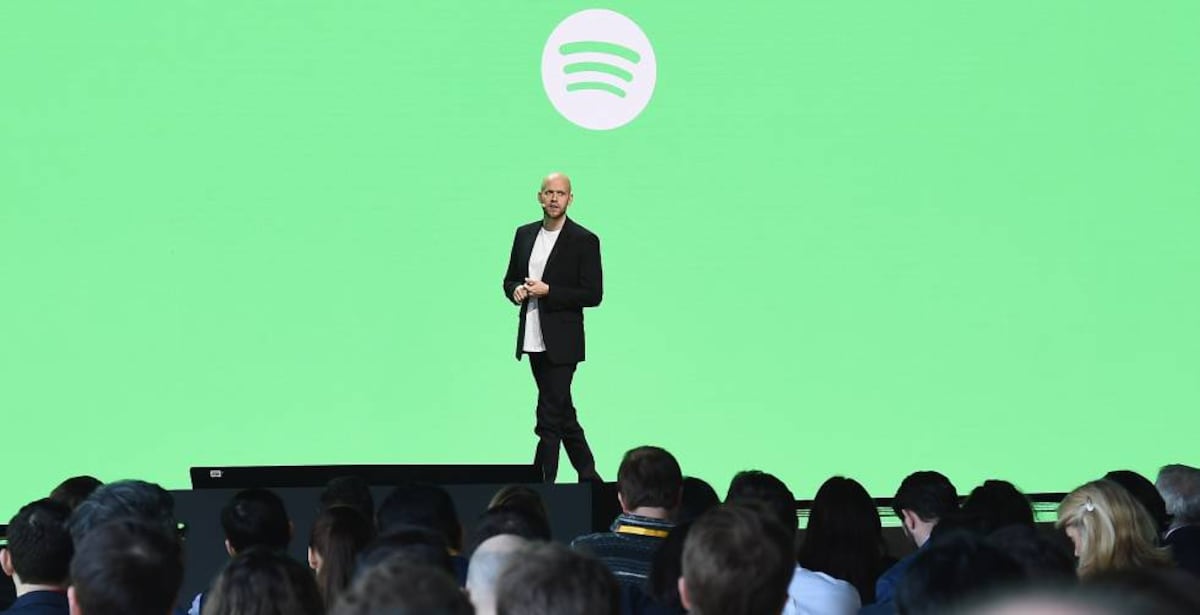 Spotify in the eye of the storm: Trumpism, denialism and a future under question
english.elpais.com
Spotify in the eye of the storm: Trumpism, denialism and a future under question
english.elpais.com
Spotify has reshuffled its top leadership while discovering that “audio platform” is now a euphemism for political battleground.
According to El País, long-time CEO Daniel Ek stepped down on January 1 to become chairman, with former co-presidents Alex Norström and Gustav Söderström taking over as joint CEOs. The timing is awkward: Spotify’s operational metrics still look strong, but investors are increasingly skeptical that the company can keep growing at anything like its earlier pace.
El País reports Spotify booked $20.4bn in revenue in 2025, up 8.2% year-on-year, and nearly doubled net income. It ended the year with 751 million monthly active users and 290 million premium subscribers. Yet the market is unimpressed: the paper notes the share price has fallen about 40% from a June peak near $800, leaving a market cap around $94bn.
The explanation offered is less “Spotify is dying” than “streaming is mature.” Dave Van Dyke of Bridge Ratings told El País the post-2013 smartphone boom has given way to subscription fatigue and inflation-driven belt-tightening, with users increasingly choosing one service rather than stacking several. Meanwhile, shorter formats on TikTok and Instagram siphon attention from full-length music.
But Spotify’s bigger problem is that it has become a distribution utility whose moderation and advertising decisions are treated as political acts. El País notes recurring artist boycotts and ethical objections—ranging from Ek’s investments in the arms industry to Spotify’s hosting of controversial podcasts, including Joe Rogan’s, for which Spotify reportedly paid $100m for exclusive hosting. The paper also points to Spotify carrying ads for ICE, the US immigration agency spearheading President Donald Trump’s enforcement drive, and says Spotify sponsored an event for Trump’s inauguration and donated $150,000 to the official ceremony.
In parallel, Spotify’s internal cost-cutting has raised questions about whether the company is hollowing out its own capacity. El País recalls that in 2025 Spotify carried out its largest layoffs ever—cutting 17% of staff, about 1,500 people—after more than 200 job cuts in 2024. Ek himself reportedly questioned whether the reductions would improve efficiency or create operational fragility.
The platform’s core economic dispute remains unchanged: artists argue Spotify underpays and that algorithmic curation makes some music effectively invisible. El País cites New Yorker critic Kyle Chayka, who quit the service in 2024, arguing Spotify’s interface increasingly obstructs deliberate listening. Spotify counters that it is the music industry’s largest revenue generator, paying out $11bn, and claims roughly half goes to independent labels and artists.
What investors are really pricing may not be “music streaming” at all. It may be the durability of Spotify’s role as a choke point—where content policy, ad inventory, and recommendation systems function as quasi-regulation without the inconvenience of democratic accountability.