
Five miners presumed dead after mud-rush at Ekapa diamond mine near Kimberley
Workers trapped 800 metres underground as rescue turns to recovery, Zero Harm slogans meet geology
Images
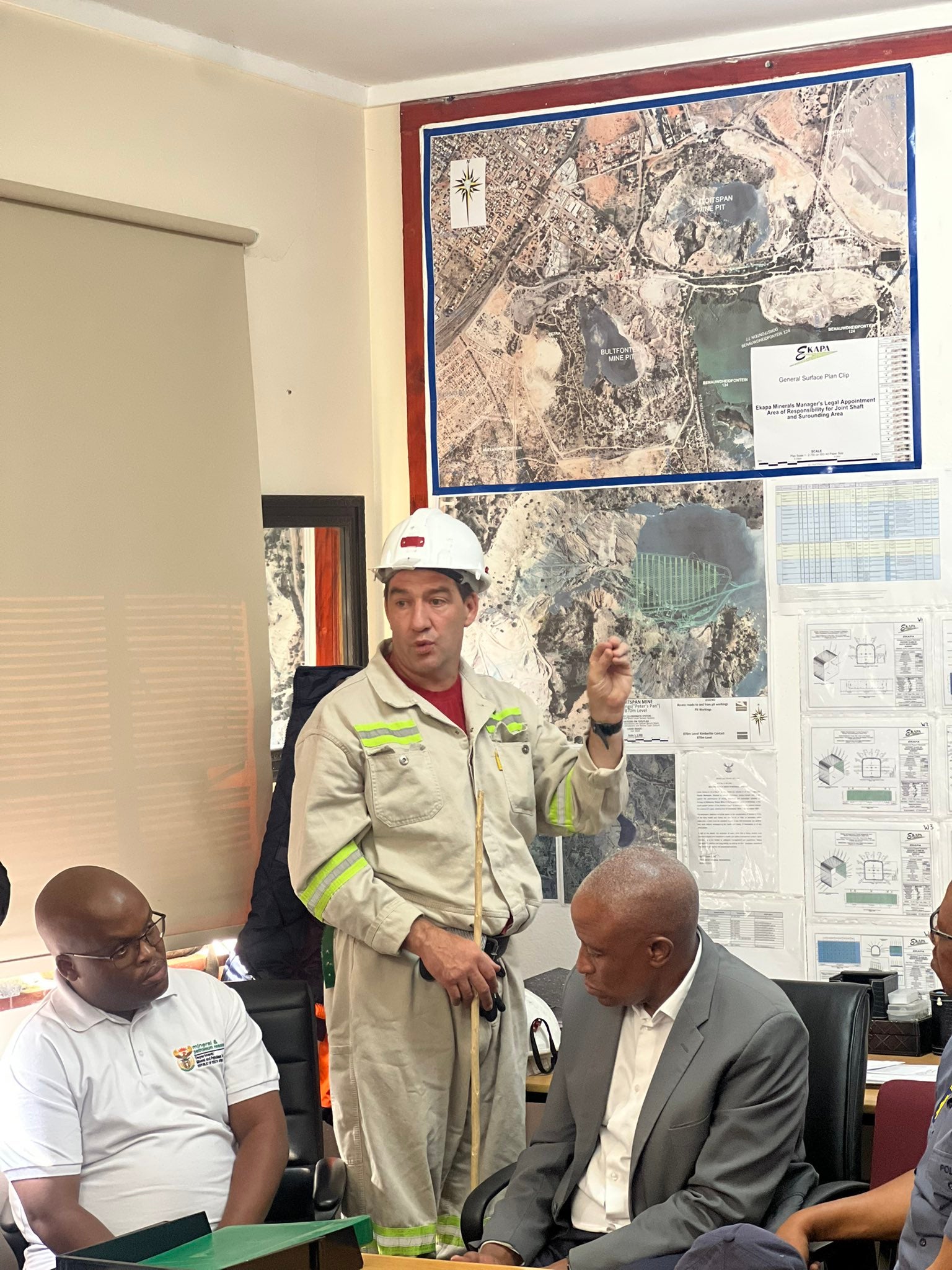 DMPR
DMPR
South Africa’s mining minister says five workers trapped more than 800 metres underground after a “mud-rush” at the Ekapa diamond mine are now presumed dead, as rescue operations shift toward body recovery.
According to Reuters, carried by The Independent, the incident occurred early Tuesday at the Ekapa mine near Kimberley in Northern Cape province. Mining minister Gwede Mantashe said on Friday that the focus had moved from rescue to retrieval, South African broadcaster SABC reported. Ekapa Minerals, the operator, said it halted operations immediately and continued rescue efforts, with its general manager Howard Marsden warning that the time elapsed since the event was “a major concern.”
The tragedy lands in a country that has spent years branding its safety push as “Zero Harm,” a slogan that reads better on PowerPoint than in a shaft. Reuters notes South Africa recorded its lowest-ever number of mining deaths last year, at 41 — even improved statistics still represent a steady stream of irreversible failures.
Kimberley, the site of the mine, is synonymous with the 19th-century diamond rush. The city’s history captures how luxury and “critical” commodities are produced: capital markets and fashionable storefronts at the top, and a physical environment below that remains brutally indifferent to regulatory aspirations.
Mining disasters also expose how accountability actually works when something goes wrong underground. Investigations are promised; families hold vigils; operations pause; and the incentive structure quietly resets. Regulators will seek procedural violations, companies will cite compliance systems, and insurers will price the residual risk. The dead, as usual, will not be shareholders.
The lesson is not that safety is optional — it’s that safety culture is ultimately an internal discipline, not a ministerial press release. Where liability is diffuse and enforcement arrives after the fact, “compliance” becomes a box-ticking substitute for engineering rigor.
South Africa’s mining industry has reduced fatalities over time, but the Ekapa incident is a reminder that the margin between “routine” and “catastrophe” can be measured in seconds — and in how aggressively operators invest in prevention when nobody is watching.