
Israel caps Ramadan access to Al-Aqsa
Age thresholds and 10,000-entry quota enforced via checkpoints, security language turns worship into a state-licensed flow problem
Images
 Israel blocks Palestinians from attending Ramadan Friday prayers at Al-Aqsa
aljazeera.com
Israel blocks Palestinians from attending Ramadan Friday prayers at Al-Aqsa
aljazeera.com
 Cuba’s health care system pushed to the brink by US fuel blockade, Cuban minister says
wtop.com
Cuba’s health care system pushed to the brink by US fuel blockade, Cuban minister says
wtop.com
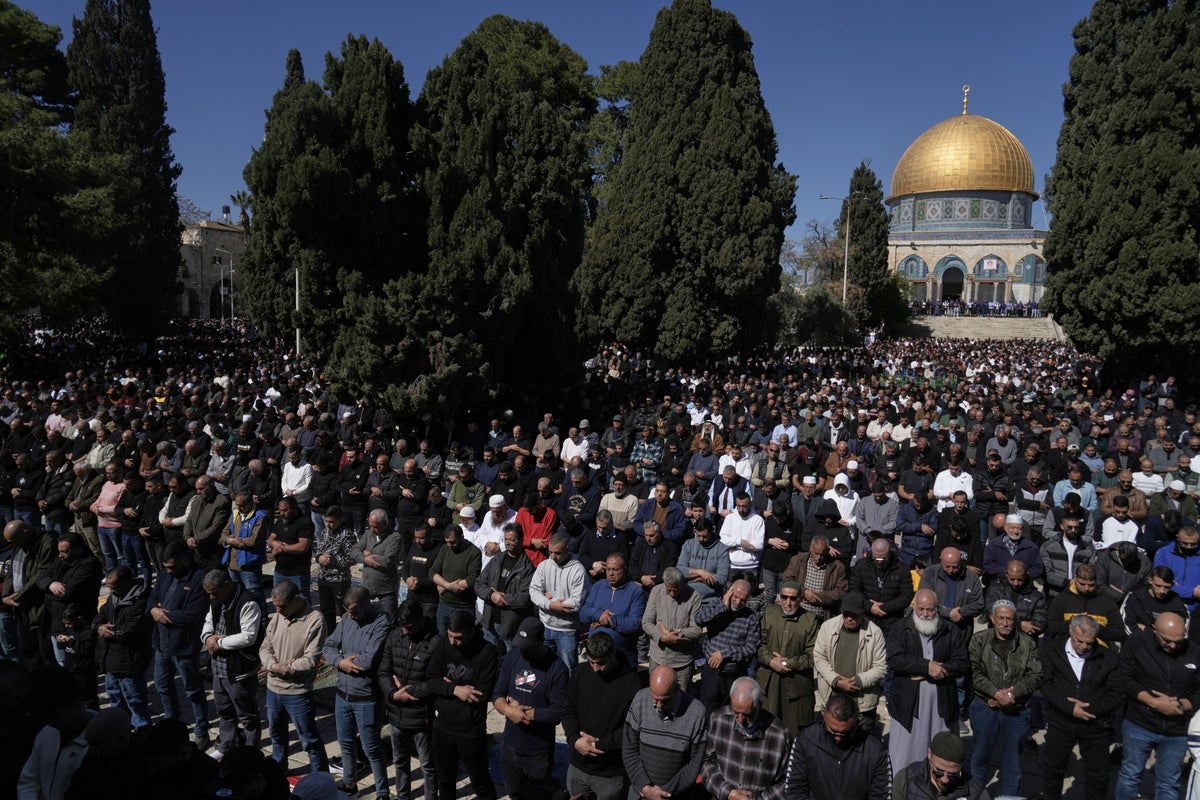 First Ramadan Friday prayers held at Jerusalem's Al-Aqsa mosque since ceasefire
independent.co.uk
First Ramadan Friday prayers held at Jerusalem's Al-Aqsa mosque since ceasefire
independent.co.uk
The first Friday prayers of Ramadan at Jerusalem’s Al-Aqsa Mosque since an October ceasefire were held under an old, well-tested innovation: administrative control over a holy site presented as “security,” implemented as capacity management.
According to The Independent, Israel restricted entry from the West Bank to 10,000 Palestinians on Friday and applied demographic filters—men over 55, women over 50, and children up to 12. Al Jazeera reports Palestinians were blocked or turned back as Israeli authorities enforced the limits through checkpoints and permit rules. WTOP, citing the same day’s events, describes prayers proceeding under heavy security in the Old City.
The system is technical by design. A quota converts a political conflict into a scheduling problem; age thresholds convert collective suspicion into a bureaucratic rule; checkpoints convert geography into a controllable interface. The state doesn’t need to ban worship in plain language when it can throttle it: fewer permits, narrower eligibility, longer queues, more uncertainty.
Israeli police said more than 3,000 officers were deployed across Jerusalem, The Independent reports, insisting their presence was not “aggression” but readiness for emergencies. The Jordanian-administered Islamic Waqf, which manages the compound, estimated 80,000 worshippers attended—far below normal Ramadan Fridays that can draw up to 200,000.
The compound is simultaneously a religious site and a sovereign pressure point: Jews call it the Temple Mount; Muslims call it the Noble Sanctuary. That dual claim is precisely why “security” becomes an all-purpose administrative monopoly. Whoever controls gates, IDs, and passage times effectively controls the lived reality of religious freedom, without needing a court order or a theological argument.
For Palestinians, the policy reads less like crowd control and more like a licensing regime for devotion. One worshipper quoted by The Independent—Ezaldeen Mustafah from the West Bank—lamented the limits: “We need more people than this.” The line is almost comically literal: in a checkpoint state, what you “need” is not merely faith, but throughput.
Also reported by The Independent is a Gaza war whose casualty figures and destruction claims remain contested but politically catalytic: Gaza’s health ministry puts deaths above 72,000, while Israel says it launched its offensive after Hamas-led militants killed about 1,200 people and took 251 hostages on Oct. 7, 2023.
The mechanism on display is clear. When the state can redefine worship as a risk-management problem, it can ration access to the sacred as if it were airport slots—complete with eligibility rules, policing surges, and a final authority that answers to itself.