
Cambodian journalists appeal 14-year treason sentences over Thai border clash photo
Court says Facebook posts disclosed defense-sensitive details, National security law becomes universal key for silencing witnesses
Images
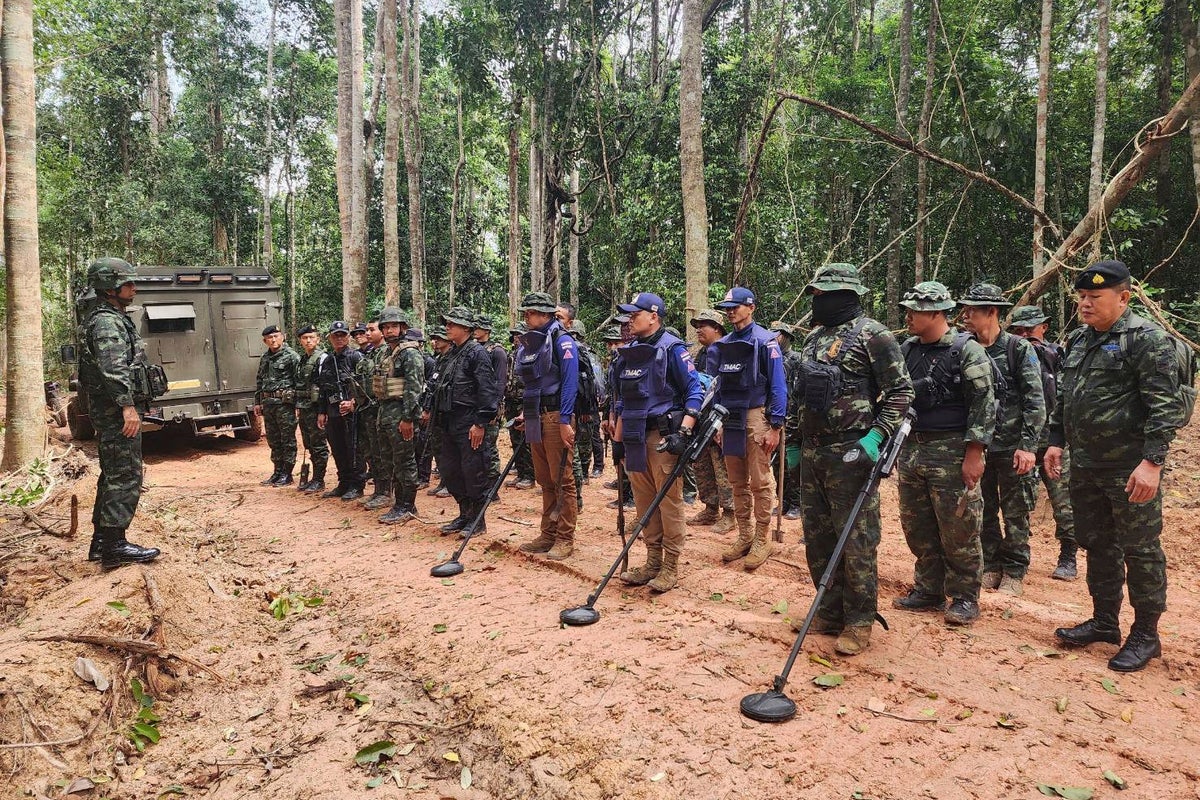 2 Cambodian journalists appeal treason convictions over a photo from Thai border clash
independent.co.uk
2 Cambodian journalists appeal treason convictions over a photo from Thai border clash
independent.co.uk
 18 killed in road collision in northeastern Egypt
wtop.com
18 killed in road collision in northeastern Egypt
wtop.com
Two Cambodian journalists convicted of treason for Facebook posts about last year’s border fighting with Thailand have filed appeals against their 14-year prison sentences, in a case that illustrates how “national security” can be stretched into a one-size-fits-all weapon against inconvenient reporting.
The Independent, citing the Associated Press, reports that Phorn Sopheap of Battambang Post TV Online and Pheap Pheara of TSP 68 TV Online were arrested on July 31 while returning from separate reporting trips. Prosecutors argued they had taken photographs in a restricted military zone near the border and that the posts amounted to “supplying a foreign state with information prejudicial to national defense,” a treason offense carrying seven to 15 years.
One widely circulated image — later republished by Thai media — allegedly showed land mines in the background. That detail mattered because Cambodia had publicly denied using land mines in the clashes, insisting it adhered to international agreements banning their use. Thailand accused Cambodia of placing fresh mines that wounded Thai patrols; Cambodian authorities countered that any mines were remnants from decades of conflict ending in the late 1990s.
The “secret” at issue was not a new weapons system or troop movement but an embarrassing contradiction between official messaging and battlefield reality. Treason charges do not require the state to win an argument; they merely require the state to declare that the argument itself is dangerous.
Pheap Pheara’s wife, Om Sarath, told the AP that her husband had no intention of harming national security and said he took the photo while delivering gifts to front-line soldiers, not knowingly documenting mines. She said she filed an appeal through a lawyer on Monday and hopes a higher court will acquit both men. Yin Srang, a spokesperson for the Siem Reap Provincial Court, confirmed the sentences and said both families have appealed.
Press freedom groups were less charitable about the state’s theory. Shawn Crispin, the Committee to Protect Journalists’ senior Southeast Asia representative, said Cambodian authorities should not contest the appeal and should stop using “vague national security laws to criminalize legitimate reporting,” according to The Independent.
The case sits inside a broader pattern. Cambodia ranked 161st out of 180 in Reporters Without Borders’ 2025 World Press Freedom Index, placing it among countries where the press freedom situation is considered “very serious,” the report notes.
Border clashes in July and December displaced hundreds of thousands and killed about 100 soldiers and civilians, according to the AP account carried by The Independent. A ceasefire in December halted major fighting, but tensions remain.
The appeal now tests whether Cambodian courts will treat journalism as a civic function or as a form of espionage whenever it contradicts official statements. The incentives are obvious: if the state can turn a photo into treason, it can convert uncertainty into silence — and outsource the cost to reporters who happen to be nearby when reality breaks through the press release.