
Dog adopted then found roaming Home Depot two weeks later
Social media posts supply the missing context institutions did not
Images
 newsweek.com
 Donald Trump Reacts to Supreme Court’s Decision To Strike Down Tariffs
newsweek.com
Donald Trump Reacts to Supreme Court’s Decision To Strike Down Tariffs
newsweek.com
 Is Trump’s Tariff Era Over?
newsweek.com
Is Trump’s Tariff Era Over?
newsweek.com
 Uncommon Knowledge: Chinamaxxing a Century of Humiliation
newsweek.com
Uncommon Knowledge: Chinamaxxing a Century of Humiliation
newsweek.com
 Karoline Leavitt Cuts Off Trump’s Comments on Nancy Guthrie Search
newsweek.com
Karoline Leavitt Cuts Off Trump’s Comments on Nancy Guthrie Search
newsweek.com
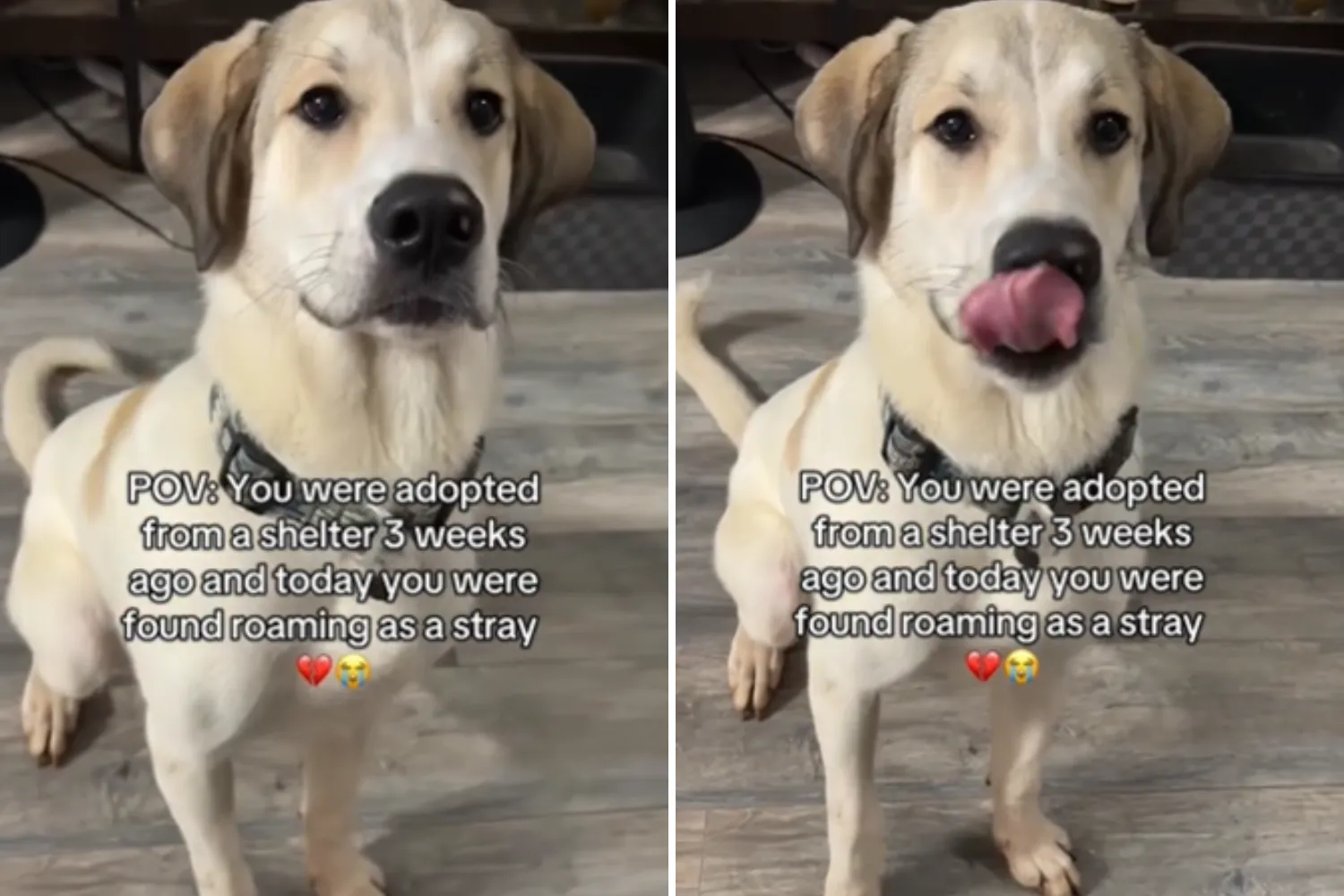
A year-old dog named Jon Snow was adopted from an Oklahoma City shelter on January 29, then reappeared as a stray inside a Home Depot on Valentine’s Day—an oddly modern example of how decentralized “OSINT for pets” can outperform formal systems.
Newsweek reports that Kayla Winrow, affiliated with the We’re OK! Foundation rescue organization, began retracing the dog’s recent history after her husband found him wandering the hardware store, approaching customers and staff. The dog wasn’t fearful or aggressive; he was, if anything, socially confident—just apparently ownerless.
The shelter record showed Jon Snow had first arrived in November as a stray. He wore a collar with an Apple AirTag duct-taped to it, yet no owner came forward during roughly two months in the shelter’s care, according to Newsweek. Whatever the AirTag was supposed to symbolize—responsible ownership, modern tracking, the illusion of control—it didn’t translate into an actual retrieval.
After the second “stray” incident, Winrow located the adopters. They claimed the dog must have escaped from an apartment complex nearby and said they had no yard. They did not ask to have him returned.
The more revealing trail, however, came not from the shelter paperwork or from any official follow-up, but from the adopters’ own public posts. Winrow told Newsweek that social media posts made shortly before Jon Snow was found suggested the adopters were struggling with house training and manners and were expressing frustration—posts made just two days before the dog was discovered loose in Home Depot.
This is not a heartwarming story about “the internet finding the dog” so much as an account of what worked: lots of independent observers, low transaction costs, and publicly searchable information. Shelters can document intake dates and adoption forms, but they can’t cheaply observe what happens inside an adopter’s home. Social platforms, for all their pathologies, often provide the missing telemetry—unofficial but real.
In the end, Jon Snow is back in foster care under the We’re OK! Foundation and is again available for adoption, Newsweek says. The dog’s saga also points to a mismatch: institutions are built to process cases, while animals live in households. When that household fails, the fastest feedback loop is frequently not the state or a nonprofit database, but the ambient surveillance of everyday life—cameras, posts, screenshots, and the bored competence of strangers.
The point is unglamorous but useful: accountability doesn’t come from paperwork alone. It comes from incentives and visibility. Jon Snow, improbably, got both—inside a Home Depot aisle.