
NORAD intercepts 5 Russian aircraft near Alaska ADIZ
Tu-95 bombers and A-50 trigger F-35 and tanker scramble despite no airspace breach, Costly signalling ritual normalises escalation risk
Images
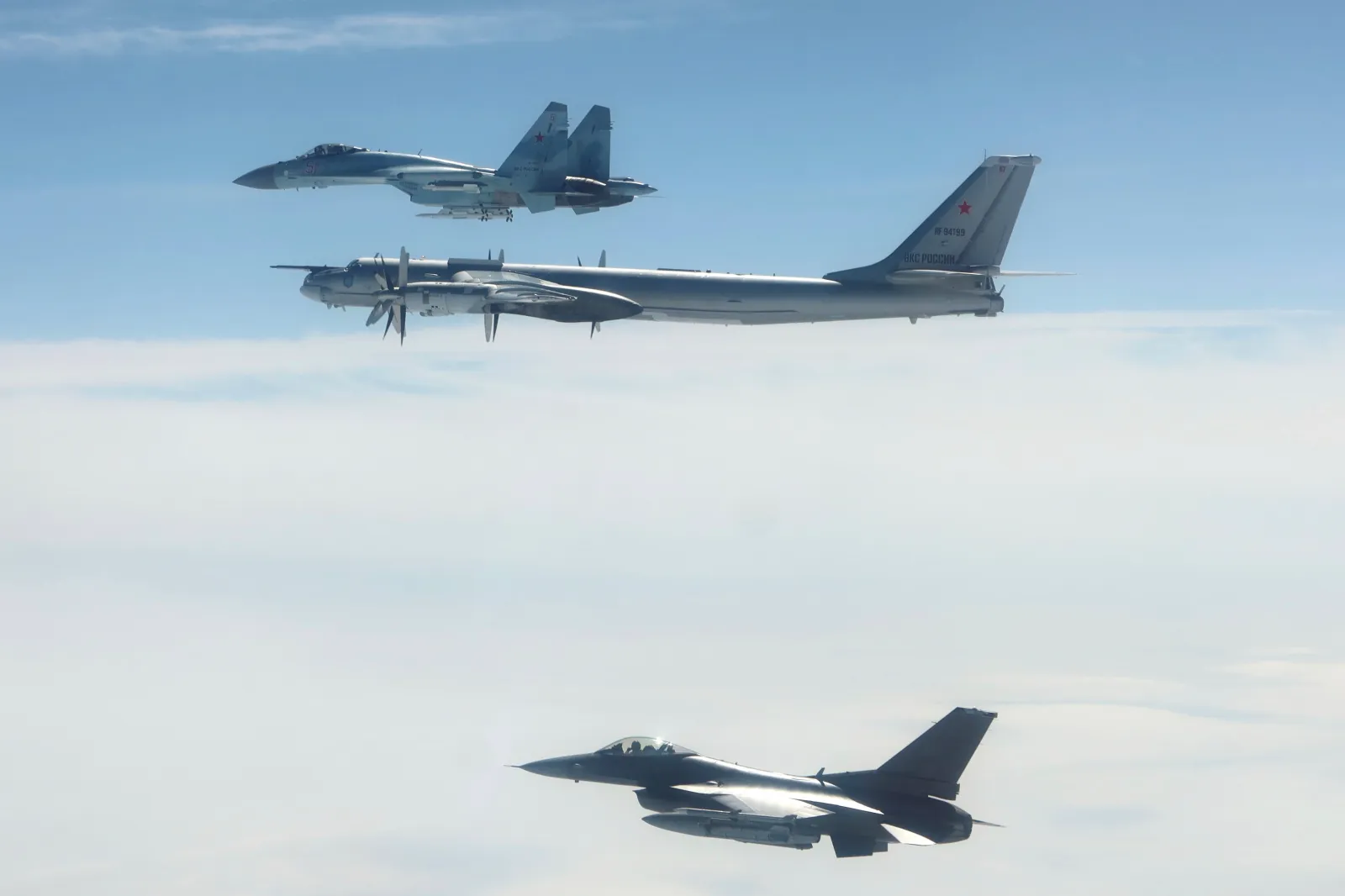
 The U.S. scrambled nine aircraft Thursday to escort five Russian warplanes out of Alaska’s Air Defense Identification Zone (Department of Defense)
Department of Defense
The U.S. scrambled nine aircraft Thursday to escort five Russian warplanes out of Alaska’s Air Defense Identification Zone (Department of Defense)
Department of Defense
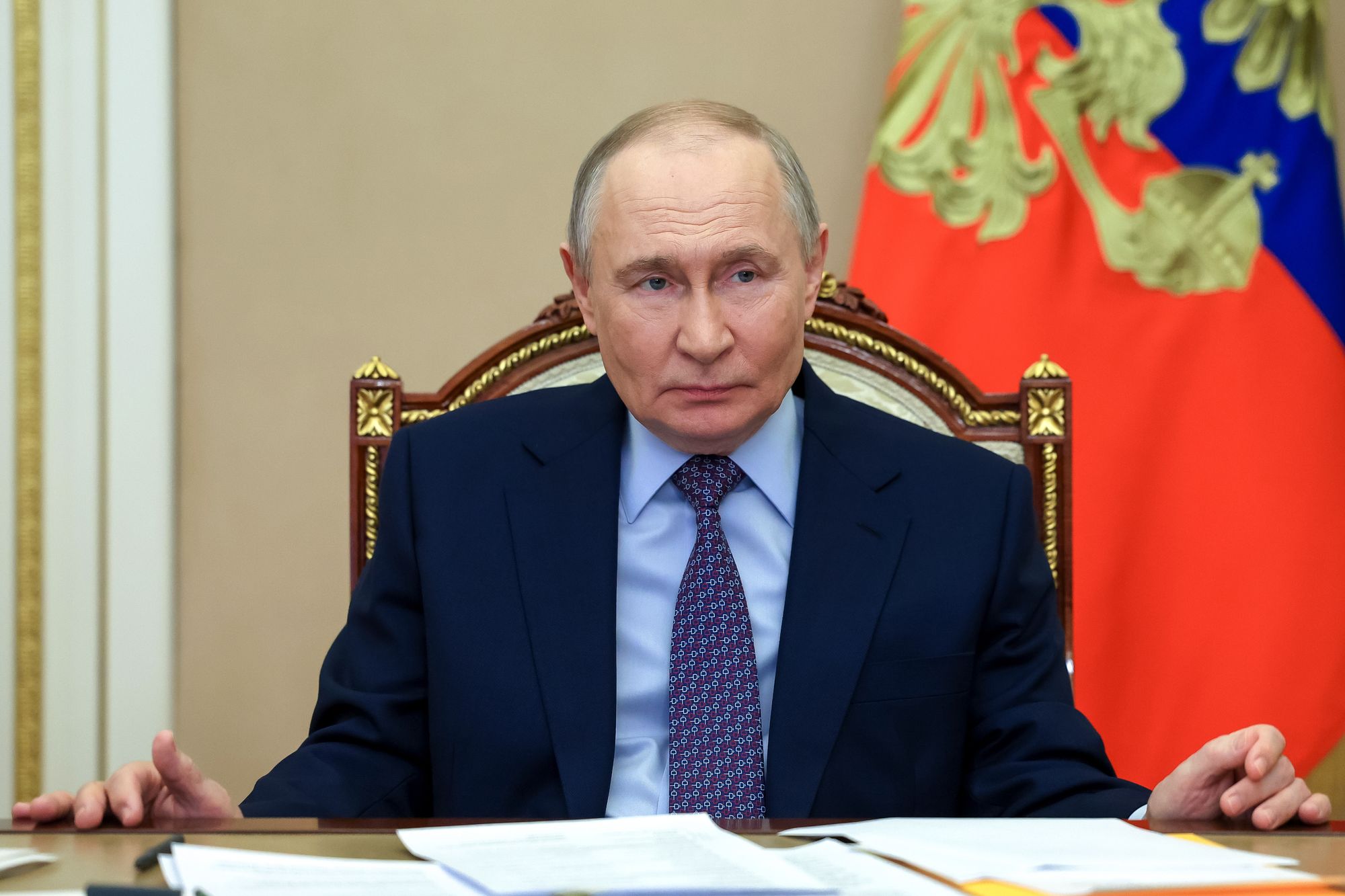 Russian President Vladimir Putin insists he is open to ending the war in Ukraine but continues to play hard ball (Sputnik)
Sputnik
Russian President Vladimir Putin insists he is open to ending the war in Ukraine but continues to play hard ball (Sputnik)
Sputnik
 newsweek.com
 Donald Trump Reacts to Supreme Court’s Decision To Strike Down Tariffs
newsweek.com
Donald Trump Reacts to Supreme Court’s Decision To Strike Down Tariffs
newsweek.com
 Is Trump’s Tariff Era Over?
newsweek.com
Is Trump’s Tariff Era Over?
newsweek.com
NORAD scrambled a small air force’s worth of hardware after detecting five Russian military aircraft operating near Alaska — and then calmly reminded everyone that this happens all the time.
According to Newsweek, the North American Aerospace Defense Command detected two Russian Tu-95 strategic bombers, two Su-35 fighter aircraft, and an A-50 airborne early warning and control aircraft flying in the Alaskan Air Defense Identification Zone (ADIZ). NORAD responded with two F-16s, two F-35s, one E-3 airborne warning and control aircraft, and four KC-135 tankers to “intercept, positively identify, and escort” the Russian planes until they left the ADIZ. The Independent similarly reports the intercept and notes that the aircraft remained in international airspace and did not enter US or Canadian sovereign territory.
The ADIZ is the key to the ritual. It is not a border, and it is not sovereign airspace; it is a self-declared buffer where a state demands identification of aircraft approaching its territory. Operating in an ADIZ is not, by itself, illegal. Which is why NORAD can simultaneously scramble fighters and insist the incident is “not seen as a threat.”
This is the modern security state’s perfect product: expensive, repeatable, and politically unassailable. Intercepts are sold as prudence, even when both sides know the choreography. Russia signals reach and readiness; the US and Canada signal vigilance; everyone gets footage, flight logs, and a chance to test procedures.
But rituals have failure modes.
First, misclassification risk. In a crowded theatre of radar tracks and transponder data, “positive identification” is only as good as sensors, comms discipline, and human judgement — under time pressure. Second, escalation by accident. Close approaches, misunderstood manoeuvres, or electronic warfare probing can turn theatre into incident. Third, resource drag. Every intercept consumes flight hours, maintenance cycles, and tanker capacity — not to mention the opportunity cost of tying high-end assets to predictable patrol work.
The sardonic part is that the system normalises itself by repetition. If it happens “regularly,” it becomes background noise; if it becomes background noise, it becomes harder to question why it is so costly. And if it is costly, budgets must grow — because what is a deterrence posture without constant rehearsals?
The Alaska ADIZ intercepts are therefore less a breaking-news event than a standing subscription: recurring charges for a geopolitical signalling service, billed to taxpayers on both sides, with the added bonus that any malfunction could be rebranded as a crisis.
In an era of already swollen defence budgets, the most reliable growth engine may not be wars — but the rituals that keep everyone rehearsing for them.