
Report alleges abuse of Palestinian journalists in Israeli detention
CPJ claims beatings starvation and sexual violence across facilities, information war acquires a prison economy
Images
 Sde Teiman prison in the Negev desert near the Gaza Strip, where many of the Palestinian prisoners detained since the 7 October 2023 attacks have been held. Photograph: Mostafa Alkharouf/Anadolu/Getty Images
theguardian.com
Sde Teiman prison in the Negev desert near the Gaza Strip, where many of the Palestinian prisoners detained since the 7 October 2023 attacks have been held. Photograph: Mostafa Alkharouf/Anadolu/Getty Images
theguardian.com
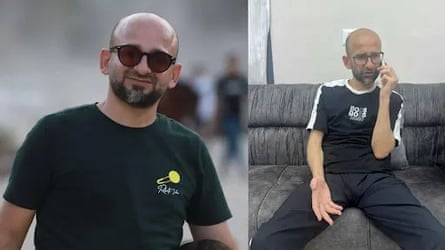 Sami al-Sai before and after his arrest by Israeli authorities. Photograph: Handout
theguardian.com
Sami al-Sai before and after his arrest by Israeli authorities. Photograph: Handout
theguardian.com
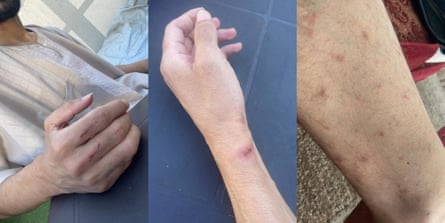 Images show some of the injuries journalist Shadi Abu Sido reported sustaining while in prison. Photograph: Handout
theguardian.com
Images show some of the injuries journalist Shadi Abu Sido reported sustaining while in prison. Photograph: Handout
theguardian.com
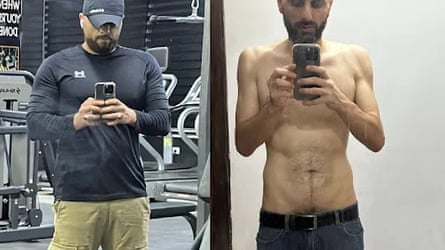 Journalist Mohammad Badr, pictured before and after his spell in prison, said he was struck so hard his tongue was cut, and he could barely speak or eat for two weeks. He told CPJ he lost 40kg over 10 months of incarceration. Photograph: Handout
theguardian.com
Journalist Mohammad Badr, pictured before and after his spell in prison, said he was struck so hard his tongue was cut, and he could barely speak or eat for two weeks. He told CPJ he lost 40kg over 10 months of incarceration. Photograph: Handout
theguardian.com
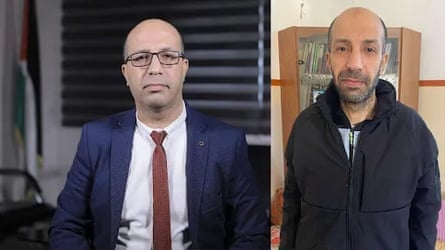 Journalist Rami Abu Zubaida, shown before and after his time in prison, told the CPJ he lost 35kg in his year held in Israeli detention facilities. Photograph: Handout
theguardian.com
Journalist Rami Abu Zubaida, shown before and after his time in prison, told the CPJ he lost 35kg in his year held in Israeli detention facilities. Photograph: Handout
theguardian.com
Nearly 60 Palestinian journalists detained by Israel since Hamas’s October 7, 2023 attack have reported beatings, starvation, medical neglect and sexual violence while in custody, according to a Committee to Protect Journalists (CPJ) report covered by The Guardian. The report is based on interviews with 59 journalists, alongside what CPJ says are photographs and medical records. Israel’s prison service and the Israel Defense Forces rejected the allegations.
The Guardian’s account describes recurring methods across multiple detention sites: prolonged stress positions, sensory deprivation, “ghost hanging” (strappado), dog attacks, pepper spray and electroshocks. Several detainees alleged sexual assault, including rape with objects. CPJ also calculated an average reported weight loss of 23.5 kg among interviewees, with 55 reporting extreme hunger or malnutrition.
This is not merely a human-rights claim; it is a claim about control of information in wartime. Journalists are not valuable because they can shoot back, but because they can publish. Detention therefore becomes a form of content moderation by other means—less Silicon Valley, more shackles.
The incentive structure is grimly symmetrical. Israel has an operational motive to disrupt hostile or unreliable reporting from Gaza and the West Bank, especially amid allegations of civilian harm and contested casualty counts. Palestinian media actors and their sponsors have incentives to document abuses, amplify them internationally, and frame detention as systematic repression. Both can be true in parts; both can also be strategically curated.
Independent verification is hard because the relevant evidence—medical examinations, prison logs, CCTV, guard rosters, chain-of-custody for injuries—sits with the detaining authority. That asymmetry is the point: a monopoly on force tends to become a monopoly on records.
A separate dispatch from The Japan Times adds context on the shrinking space for outside humanitarian actors. A Japanese staffer from Doctors Without Borders (MSF) said the group had to halt operations in Gaza after Israel banned international NGOs from operating there, warning that MSF had supported medical institutions covering roughly a fifth of Gaza’s hospital beds. If external medical providers are pushed out, then so are third-party witnesses who could corroborate—or refute—abuse claims.
Wars always generate a secondary market in testimony: statements, photos, leaked documents, counter-claims, and the inevitable PR-industrial supply chain that packages suffering into narratives. The point is not to dismiss testimony, but to distrust systems that make verification impossible. When the state controls the cell, the clinic, and the paperwork, everyone else is left arguing over before-and-after photos.
If Israel wants credibility, it will have to permit independent inspections and publish auditable detention data. If it doesn’t, the information vacuum will be filled anyway—by whoever is loudest, not whoever is right.