
AI capex jitters weigh on markets as oil rises on US-Iran tension
Investors eye stranded data centers and private credit links, real economy intrudes on software hype
Images
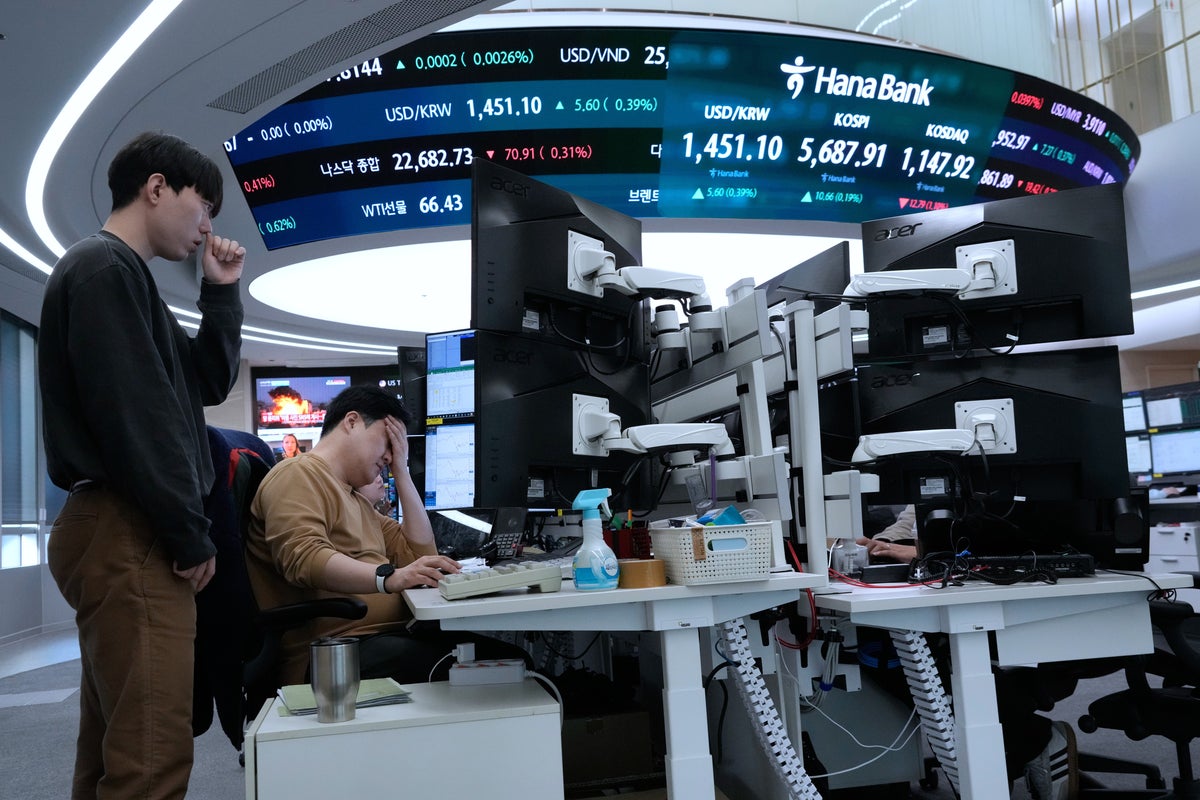 Asian shares are mixed, US futures edge higher as AI fears drag Wall Street lower
independent.co.uk
Asian shares are mixed, US futures edge higher as AI fears drag Wall Street lower
independent.co.uk
Asian markets were mixed Friday as investors tried to price two very different kinds of uncertainty: geopolitical risk pushing energy prices up, and the financial risk of an AI investment boom that increasingly looks like a leveraged bet on perfect execution.
According to the Associated Press via The Independent, the S&P 500 slipped 0.3% Thursday while oil climbed, with benchmark U.S. crude near $66–67 and Brent near $72 as Washington and Tehran signaled readiness for escalation if nuclear talks fail. Higher oil prices, AP notes, can complicate the Federal Reserve’s path to rate cuts by re-igniting inflation pressure.
But the more interesting market anxiety is self-inflicted. The same report describes growing “AI fears” tied to massive capital expenditures for data centers and GPUs—and the possibility that the returns won’t match the hype. Tokyo’s Nikkei fell about 1.2%, with bank shares sliding on concerns around private credit exposures, including links to Blue Owl Capital. (Blue Owl shares dropped 5.9% in New York trading, AP reported.)
The AI buildout is being financed through a mix of corporate balance sheets, long-dated commitments for power and networking, and increasingly through private credit structures that promise yield and liquidity—until they don’t. If AI revenue growth disappoints, or if competition commoditizes models and pushes margins toward “inference as a utility,” the industry could be left with stranded assets: data centers built for peak demand, expensive GPU inventories, and power contracts that don’t flex downward.
AP points to “AI-powered competitors” as a threat even to incumbents like Booking Holdings, whose shares fell 6.1% despite beating profit expectations—an illustration of how quickly markets can flip from rewarding scale to punishing perceived vulnerability.
The capex math is vulnerable in several places. Electricity is the obvious choke point: power prices and grid constraints can turn a projected cost curve into a political fight over who gets priority access. Utilization is another: data center economics assume high, steady load factors, yet AI demand is lumpy and model cycles are short. Financing conditions matter too: as rates normalize, the discount rate rises, and suddenly “growth at any cost” becomes “debt service at any cost.”
The same institutions that spent a decade telling everyone capital was cheap forever are now discovering that building the physical substrate of AI is, inconveniently, a real-economy project—subject to energy, logistics, and the brutal possibility that customers might not pay enough to justify the bill.