
Irvine police warn teens over Senior Assassin water-gun game
Graduation tradition meets armed-response risk logic, State treats play like a public-order incident
Images
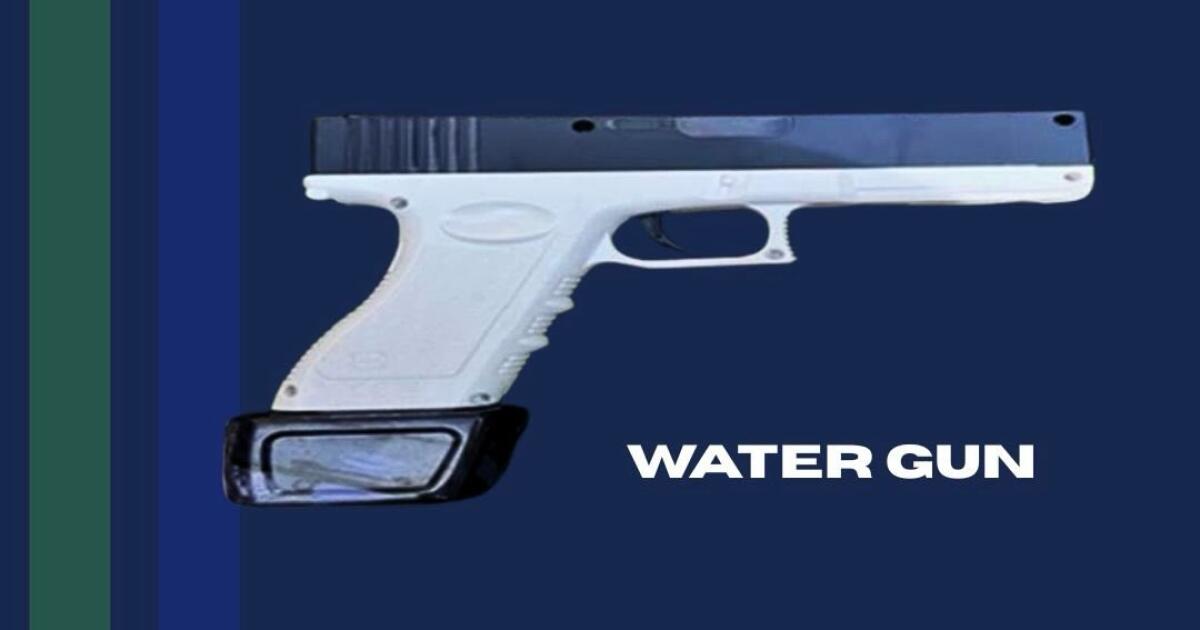 Why Irvine police are sounding the alarm on 'senior assassin,' a popular high school tradition
latimes.com
Why Irvine police are sounding the alarm on 'senior assassin,' a popular high school tradition
latimes.com
Irvine, California police are warning residents about “Senior Assassin,” a graduating-class tradition in which high school seniors try to “eliminate” each other with water guns, according to the Los Angeles Times. The game’s rules are typically self-organized: players are assigned targets, post “kills” on social media, and progress through brackets until one winner remains. It’s adolescent theater with a thin tactical veneer — and, inevitably, it collides with the adult world’s allergy to ambiguity.
The Irvine Police Department’s concern is not that teenagers are having fun, but that “realistic-looking” toy guns, masks, and sudden ambushes can trigger 911 calls, armed police responses, or confrontations with bystanders who can’t distinguish a TikTok assassination from an actual one. The Times reports the department has urged participants to avoid replica firearms, not trespass, and not approach strangers’ homes or vehicles.
This is the modern American pattern: informal social norms create a low-stakes game; institutions respond by translating it into a risk-management problem; and the resulting “safety guidance” becomes a quasi-regulatory regime enforced by the implicit threat of escalation. The state doesn’t need to ban the game to shape it — it just needs to remind everyone that the monopoly on legitimate violence is always on standby.
The timing is not accidental. As the Times notes, “Senior Assassin” has spread widely, amplified by social media and by a generation trained to document everything. The same platforms that turn a private rite of passage into a public spectacle also make it legible to authorities — and to the public, who are primed to interpret any gun-shaped object as an imminent threat.
Meanwhile, in the same state, a very different story illustrates what happens when risk is not simulated. CBS News reports that some victims have been identified in a deadly avalanche near Lake Tahoe, with families confirming names and details as search and recovery efforts continue. Backcountry recreation is the opposite of “Senior Assassin”: not a game that resembles danger, but danger that is packaged as a hobby — complete with gear, training, and a culture of “safety” that can’t repeal physics.
Put together, the two stories point to a contrast. Teenagers pointing squirt guns at each other attract official warnings because the play resembles violence. Adults voluntarily entering avalanche terrain receive condolences after the fact because the violence is real — and no warning label can substitute for personal judgment. One prompts preventive bureaucratic choreography; the other ends in the oldest regulatory instrument of all: a coroner’s report.
The point is that society works best when people can manage their own risks — and worst when every ambiguous situation is treated as a pretext to expand institutional control. But in 2026 America, even a water pistol can summon the state faster than a snowpack can collapse.