
Japan shuntō wage demands rise to ¥18
000 monthly at major electronics firms, Nippon Steel sees China-driven supply glut nearing end, Real wage growth collides with global overcapacity and trade barriers
Images
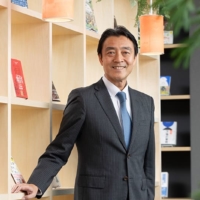
 Hitachi Vice President Susumu Takimoto answers questions about the 2026 spring wage negotiations on Thursday in Tokyo's Chiyoda Ward.
japantimes.co.jp
Hitachi Vice President Susumu Takimoto answers questions about the 2026 spring wage negotiations on Thursday in Tokyo's Chiyoda Ward.
japantimes.co.jp
 A solar farm in Nakai, Kanagawa Prefecture, in March 2016. Japan gets about a tenth of its electricity from solar panels despite having nearly no domestic production of photovoltaics (PVs).
japantimes.co.jp
A solar farm in Nakai, Kanagawa Prefecture, in March 2016. Japan gets about a tenth of its electricity from solar panels despite having nearly no domestic production of photovoltaics (PVs).
japantimes.co.jp
 Sonic the Hedgehog, Castlevania's Alucard and the weak yet lovable Slime from Dragon Quest are just some of Japan's iconic gaming franchises celebrating midlife anniversaries in 2026.
japantimes.co.jp
Sonic the Hedgehog, Castlevania's Alucard and the weak yet lovable Slime from Dragon Quest are just some of Japan's iconic gaming franchises celebrating midlife anniversaries in 2026.
japantimes.co.jp
 Japan agency aims for both decarbonization, growth
japantimes.co.jp
Japan agency aims for both decarbonization, growth
japantimes.co.jp
Japan’s annual spring wage offensive, shuntō, is back — and this year it’s testing whether the country can escape its deflationary reflexes without blowing up corporate margins in industries squeezed by global oversupply.
The Japan Times reports that labor unions at major electronics makers — including Hitachi and Mitsubishi Electric — formally submitted wage demands on Thursday, seeking a ¥18,000 monthly base-pay increase. That is larger than last year’s record demand of ¥17,000 and extends a streak of 13 consecutive years in which the sector’s unions have sought pay-scale increases.
Management, at least rhetorically, is onboard. Hitachi Vice President Susumu Takimoto told reporters that “the source of growth is investment in people” and said the company would “positively consider” wage hikes based on performance. Large corporations are expected to respond on March 18, with attention focused on whether pay rises can outpace persistent inflation and finally deliver real wage growth.
But Japan’s wage revival is colliding with the less romantic side of industrial reality: too much capacity, too little pricing power, and a region flooded with discounted Chinese exports.
In a second Japan Times piece, Nippon Steel CFO Takahiko Iwai argues that the China-driven supply glut in Asian steel may be nearing an end. He says Chinese exporters are increasingly struggling to make profits abroad as markets are oversupplied, while shipments are also falling due to trade measures such as anti-dumping duties. “They’re gradually running out of places to go,” Iwai said, adding that Asia may be “nearing the bottom.”
If that’s true, it would be convenient timing for Japanese firms facing wage pressure. If it’s wrong, wage hikes will land in exactly the place executives least want them: margins. Electronics and heavy industry already compete in markets where pricing is set globally and where governments respond to excess supply by adding trade barriers — a policy that can protect incumbents while quietly raising input costs.
Japan’s “new normal” is often described as a clean break from decades of deflation. In reality, it’s a balancing act between workers demanding inflation compensation, companies trying to preserve competitiveness, and policymakers hoping wage growth can do what monetary stimulus could not: generate durable domestic demand.
The shuntō ritual is a reminder that Japan’s economy is not just changing — it’s renegotiating who bears the cost of that change.