
South Korea reports second foot-and-mouth disease case
FMD control hinges on strain match diagnostics and movement networks, culling remains bureaucracy’s favorite measurable output
Images
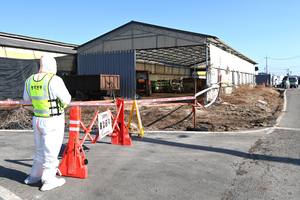 S. Korea reports 2nd foot-and-mouth disease case
koreaherald.com
S. Korea reports 2nd foot-and-mouth disease case
koreaherald.com
South Korea has reported its second foot-and-mouth disease (FMD) case, according to the Korea Herald, renewing a policy dilemma: whether to lean on vaccination and movement controls, or default to mass culling as a blunt instrument of biosecurity.
FMD is caused by an Aphthovirus (family Picornaviridae) with multiple serotypes and substantial antigenic variation. That matters because immunity is not a generic “FMD antibody” checkbox: vaccine match to circulating strains is central, and mismatches can yield the bureaucrat’s favorite outcome—high compliance, mediocre protection.
Epidemiologically, FMD is built for rapid spread in cloven-hoofed livestock. Transmission occurs via direct contact, aerosols over short distances, contaminated equipment, vehicles, feed, and human-mediated farm-to-farm movement. Incubation is typically a few days but can vary with dose and host factors; clinically, outbreaks are recognized by fever, salivation, and vesicular lesions that reduce productivity even when mortality is low in adult animals. The economic damage is therefore less about dead animals than about trade restrictions and the cascading costs of control.
Diagnosis in modern outbreaks relies on RT-PCR for viral RNA, antigen detection assays, and serology to distinguish infection from vaccination where DIVA-compatible strategies are used. But the decisive variable is often not lab capability; it is the speed of detection and the integrity of movement data. “Traceability” sounds like a database problem until you remember it is also a compliance problem.
Control strategies split into three buckets. First, movement restrictions and farm-level biosecurity: disinfection points, vehicle controls, personnel protocols, and rapid quarantine. Second, vaccination—either routine in high-risk regions or emergency ring vaccination around detected cases. Third, depopulation (culling) of infected and sometimes neighboring herds, paired with disposal and decontamination.
Governments like culling because it is legible: body counts, zones, press conferences. Vaccination is messier: it requires supply chains, strain selection, coverage, and—awkwardly—admitting that “zero risk” is unattainable. Yet culling is not costless. It concentrates decision power in agencies, creates perverse incentives around reporting, and turns farmers into contractors for state disease policy.
The Korea Herald report does not settle which approach will dominate, but it highlights a recurring truth of animal-health governance: outbreaks are biological events; the response is a political economy. Viruses exploit contact networks. Bureaucracies exploit crises.