
Dhaka ranks No 2 in global pollution tables
PM2.5 metrics depend on monitor placement and averaging windows, environmental reality becomes a ranking-industrial product
Images
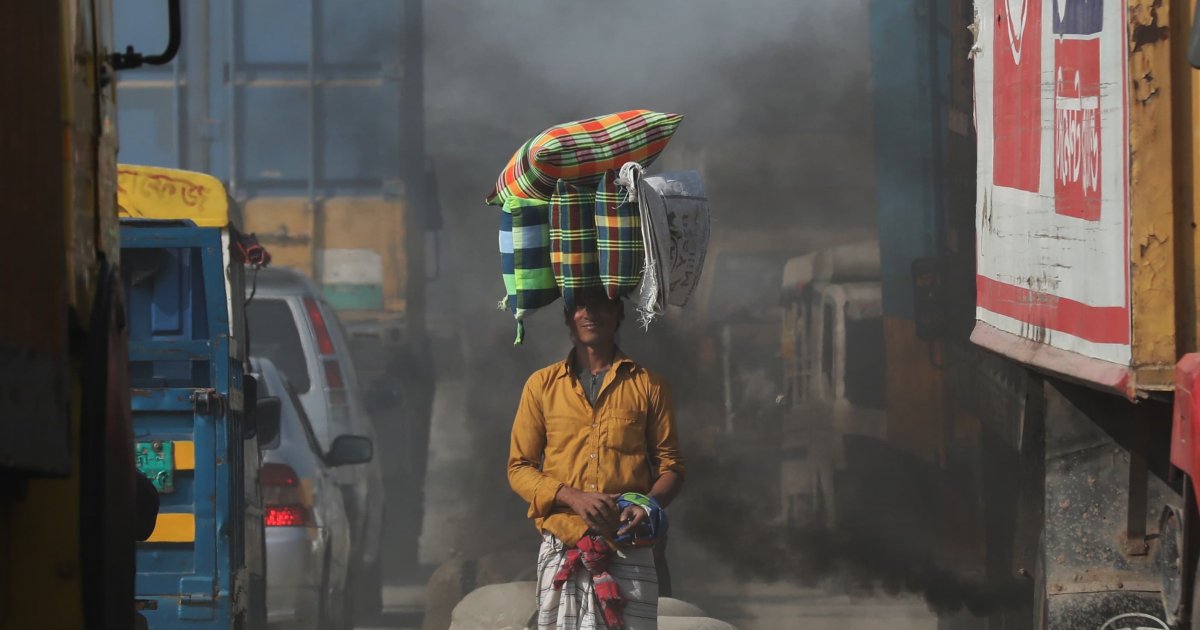 Dhaka ranks second among world’s most polluted cities
dhakatribune.com
Dhaka ranks second among world’s most polluted cities
dhakatribune.com
Dhaka has again landed near the top of the global “most polluted cities” league table—this time at No. 2—according to the Dhaka Tribune, citing air-quality readings dominated by fine particulate matter.
The ranking typically hinges on PM2.5 (particles smaller than 2.5 micrometers), the pollutant most consistently linked to cardiopulmonary harm. But the apparent simplicity—one city, one number—masks a stack of methodological choices. PM2.5 can be measured by ground monitors (reference-grade or low-cost optical sensors), estimated from satellites, or blended in model-based products. Even within “ground-based” data, station placement matters: monitors near major roads, construction corridors, or industrial clusters will not represent an entire metro area, while suburban siting can understate exposure for the urban core.
Time aggregation is another lever. Annual means are useful for long-run health burden; daily or hourly peaks capture acute episodes (winter inversions, dust events, fire smoke). A city that spends much of the year “merely bad” can outrank a city that is usually moderate but occasionally catastrophic. Seasonal meteorology is not a footnote in South Asia: winter temperature inversions trap emissions close to the ground, while dry-season dust and regional transport can dominate local sources.
As for drivers, Dhaka’s particulate load is widely attributed to a familiar cocktail: dense traffic and high-emitting vehicles, resuspended road dust from perpetual construction, and brick kilns operating around the city—often with variable fuel quality and inconsistent controls. Add cross-border haze episodes and the physics of stagnant air, and you get numbers that are stubbornly high even when policymakers announce “action plans.”
That is where “air quality” as measurable physics meets “air quality” as political instrument. A ranking can be a diagnostic tool—or a press-release cudgel. It can justify crackdowns on small operators while leaving politically connected emitters untouched, or it can serve as a substitute for the unglamorous work of emissions inventories, enforcement, and infrastructure that reduces the need for everyone to burn something, somewhere, every day.
None of this is to argue that Dhaka’s air is fine. It is to argue that a single ordinal rank is a poor proxy for what residents actually breathe, and an even worse proxy for which interventions would deliver the largest marginal improvements. If the city wants fewer headlines about being “second worst,” it will need fewer incentives to pollute—starting with the ones created by weak property rights, chaotic transport governance, and regulation that is strict on paper but open to negotiation.