
Meta-OpenAI-Oracle back off-grid data centers powered by on-site gas and solar
AI compute drives vertical integration from cloud to kilowatt, grid bottlenecks replaced by permitting chokepoints
Images
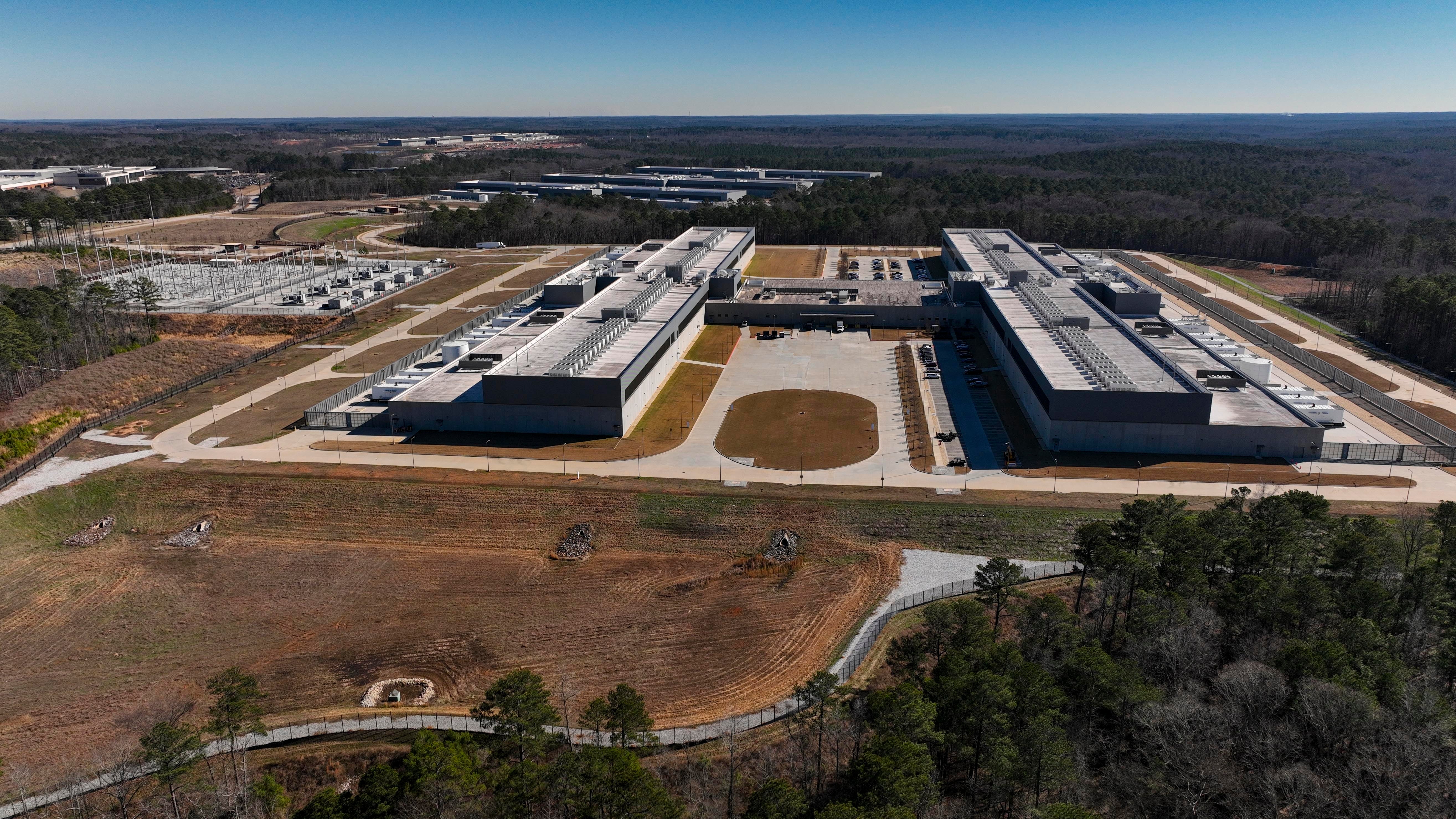 Meta's Stanton Springs Data Center in Georgia. Meta is building off-grid data centers in El Paso and New Albany, Ohio. It’s just one of several big tech companies building supposedly power self-sufficient data center facilities across the countryer (Copyright 2026 The Associated Press. All rights reserved)
independent.co.uk
Meta's Stanton Springs Data Center in Georgia. Meta is building off-grid data centers in El Paso and New Albany, Ohio. It’s just one of several big tech companies building supposedly power self-sufficient data center facilities across the countryer (Copyright 2026 The Associated Press. All rights reserved)
independent.co.uk
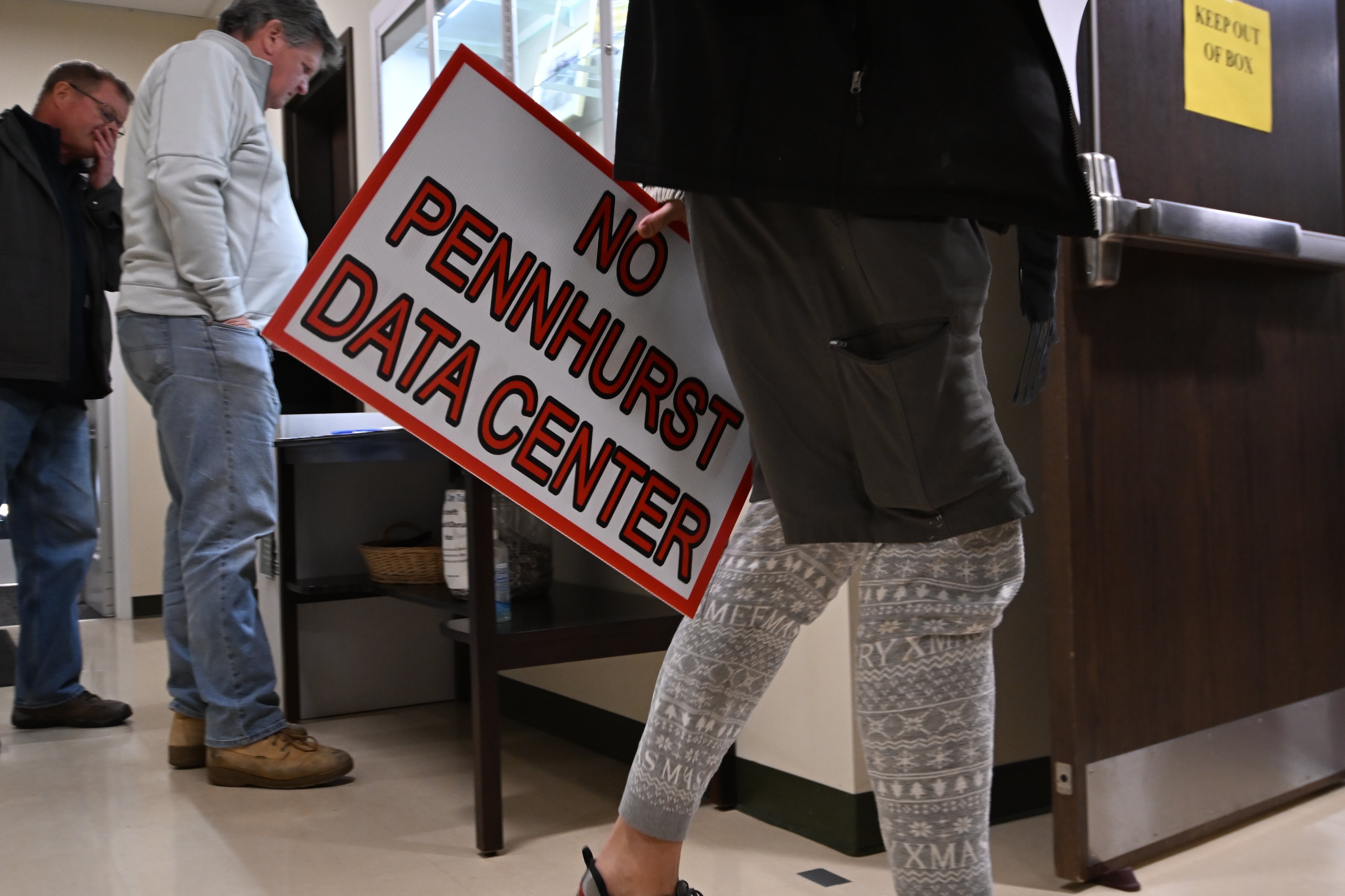 A resident carries a data center protest sign into an East Vincent Township, Pennsylvania supervisors meeting on December 17, 2025, where an agenda item involved a data center proposal at the former Pennhurst state hospital grounds is being discussed. (Copyright 2025 The Associated Press. All rights reserved.)
independent.co.uk
A resident carries a data center protest sign into an East Vincent Township, Pennsylvania supervisors meeting on December 17, 2025, where an agenda item involved a data center proposal at the former Pennhurst state hospital grounds is being discussed. (Copyright 2025 The Associated Press. All rights reserved.)
independent.co.uk
 Elon Musk’s xAI Data Center in Memphis, Tennessee, is fully reliant on dozens of gas power generators (Copyright 2025 The Associated Press. All rights reserved)
independent.co.uk
Elon Musk’s xAI Data Center in Memphis, Tennessee, is fully reliant on dozens of gas power generators (Copyright 2025 The Associated Press. All rights reserved)
independent.co.uk
A new wave of data-center development is pushing Big Tech beyond buying electricity into building the electricity system itself—an unglamorous but consequential form of vertical integration from cloud compute down to the kilowatt.
The Independent, summarizing reporting by The Washington Post, describes a flagship example: the “GW Ranch” project in West Texas, an 8,000-acre, fully off-grid data-center complex expected to consume more power than the city of Chicago. The pitch is brutally simple: generate power on-site—primarily with natural gas, supplemented by solar—so the project does not have to wait for utilities, transmission upgrades, or the increasingly political queue for grid interconnections.
Regulatory filings and permits reviewed by the Post, as described by the Independent, show similar off-grid or “isolated” data-center builds planned across Wyoming, New Mexico, Pennsylvania, Utah, Ohio, and Tennessee. Companies tied to the boom include Meta, OpenAI, Oracle and Chevron. Several projects are already under construction.
This is what happens when the grid becomes the bottleneck and AI becomes the justification. The U.S. already hosts roughly 5,246 data centers consuming at least 17 gigawatts, according to the Data Center Map project cited by the Independent—equivalent to the output of about 17 large nuclear reactors. When a single hyperscale campus can rival a major city’s load, the old model—petition the utility, wait for interconnection, fight local hearings—starts to look quaint.
The political economy is the more interesting story. States are rewriting rules to accelerate these projects; the Independent notes West Virginia legislation that would ease development, with residents complaining that “local control” has been stripped away and the process “shrouded in secrecy.” When government fast-tracks a “speculative gold rush,” it doesn’t eliminate politics—it centralizes it.
Off-grid does not mean consequence-free. Jigar Shah, a former energy entrepreneur who managed federal energy investments under the Biden administration, told the Post that deep-pocketed tech companies will compete with public utilities for scarce equipment and maintenance capacity. If utilities face higher costs or longer delays for transformers, turbines, and skilled labor, ordinary ratepayers can end up subsidizing the scramble through higher bills and deferred maintenance.
There is also the climate math, which the Independent reports critics are already flagging. Solar can help, but without the grid as backup, natural gas becomes the default firming resource. Cleanview’s Michael Thomas called the trend “catastrophic for climate goals,” and Cleanview has identified 47 off-grid data-center projects nationwide.
The irony is layered. Tech giants are building private power systems to escape public grid constraints—an entrepreneurial response to scarcity and permitting paralysis. But those private grids will still depend on public law: zoning, subsidies, emissions permits, pipeline approvals, water rights, and the occasional legislative shortcut. The result is not “market vs state,” but a new hybrid: corporate infrastructure that is privately owned, publicly permissioned, and politically indispensable.
Once compute is fused to captive generation, energy regulation becomes a lever for digital control. If governments want to steer, ration, or punish online services, they may find it easier to do so through energy permitting than through speech law. Big Tech’s race to build its own power grid may reduce dependence on utilities—while creating a new, more centralized choke point: the state’s power to approve the power plant.