
Stolen ambulance rams Idaho building housing DHS offices
Police say staged gas cans and accelerant indicate attempted arson, Security hardening spreads from federal targets to hospitals
Images
 Officials to set off controlled explosions to recover bodies of California avalanche victims
wtop.com
Officials to set off controlled explosions to recover bodies of California avalanche victims
wtop.com
 Police say accelerant was used in attack on DHS building
foxnews.com
Police say accelerant was used in attack on DHS building
foxnews.com
 Meridian police chief Tracy Basterrechea
foxnews.com
Meridian police chief Tracy Basterrechea
foxnews.com
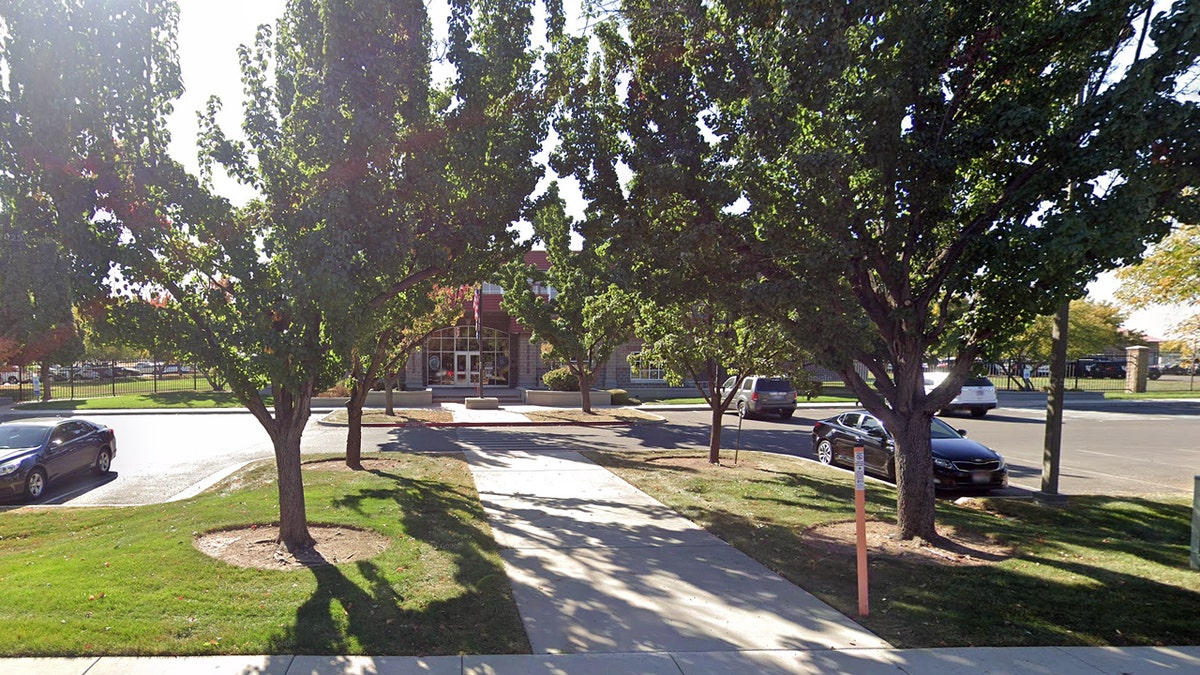 Street view of the Meridian Police Department
foxnews.com
Street view of the Meridian Police Department
foxnews.com
A suspect in Meridian, Idaho allegedly stole an ambulance from a hospital bay, drove it into a building that houses Department of Homeland Security offices, and attempted to set the scene on fire—an attack that police say was interrupted before ignition.
WTOP reports the ambulance was taken from St. Luke’s West hospital late Wednesday night. Meridian Police Chief Tracy Basterrechea said the driver retrieved gas cans that had been staged in nearby vegetation, rammed the vehicle into the North Portico building, then poured an accelerant in and around the ambulance. Authorities believe the suspect fled after law enforcement arrived, before the accelerant could be lit.
Fox News adds that state and federal agencies—including the FBI, ATF, DHS and Idaho State Police—are investigating the incident as an attempted arson attack. Officials emphasized that the theft temporarily removed a critical medical resource from the community, a point that is both true and revealing: the state’s own emergency infrastructure is now a soft target, and the public pays twice—first for the asset, then for the security response.
The immediate story is a violent, targeted attack on a federal office. The longer-term story is the predictable policy aftershock. When government facilities get attacked, the standard response is “hardening”: more barriers, more surveillance, more controlled perimeters, more policing of adjacent public space. The attack weaponized a symbol of civil society—an ambulance—while the policy response will likely land on civil society: hospitals, clinics, and EMS providers will be pushed toward tighter access controls, secured bays, more ID checks, more cameras, and more “coordination” with federal law enforcement.
Basterrechea also pointed to “rhetoric” surrounding DHS leasing office space at the location, and criticized online claims that “property damage isn’t violence.” That rhetorical battle matters because it becomes the justification layer for whichever expansion of authority follows. Once the incident is framed as part of a broader extremist environment, the menu expands: security zones, protest restrictions, intelligence task forces, and “temporary” measures that never quite expire.
For now, police say there is no indication of an ongoing threat to the broader community. But the institutional incentives are clear. An attack on DHS property is not merely a criminal case; it’s a budget argument. And in the American security state, budget arguments have a way of turning into permanent architecture—bollards first, then databases.