
Epstein cultivated ties with CBP officers in US Virgin Islands travel corridor
DOJ files show FBI opened 2019 probe into St Thomas inspector, State power doubles as social capital
Images
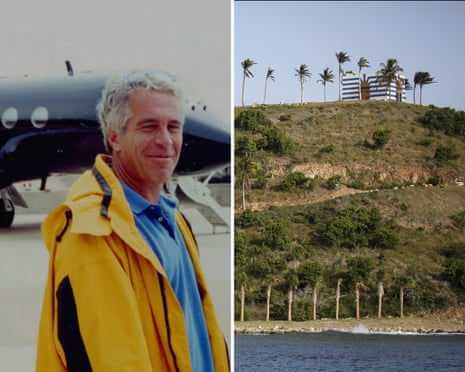 Jeffery Epstein and St Thomas Island Composite: DOJ and Getty
theguardian.com
Jeffery Epstein and St Thomas Island Composite: DOJ and Getty
theguardian.com
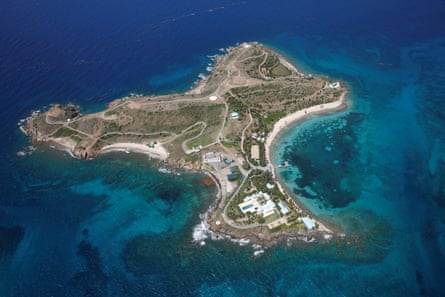 Little St James Island, one of Epstein’s properties, as seen in July 2019. Photograph: Marco Bello/Reuters
theguardian.com
Little St James Island, one of Epstein’s properties, as seen in July 2019. Photograph: Marco Bello/Reuters
theguardian.com
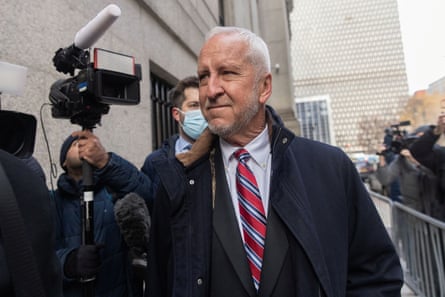 Larry Visoski arrives for Epstein associate Ghislaine Maxwell’s trial in New York in November 2021. Photograph: Jeenah Moon/Reuters
theguardian.com
Larry Visoski arrives for Epstein associate Ghislaine Maxwell’s trial in New York in November 2021. Photograph: Jeenah Moon/Reuters
theguardian.com
 A villa stands on Little St James Island, owned by Epstein, in 2019. Photograph: Bloomberg/Getty Images
theguardian.com
A villa stands on Little St James Island, owned by Epstein, in 2019. Photograph: Bloomberg/Getty Images
theguardian.com
 Epstein is seen on Little St James Island in an undated photo. Photograph: United States District Court Southern District of New York/PA
theguardian.com
Epstein is seen on Little St James Island in an undated photo. Photograph: United States District Court Southern District of New York/PA
theguardian.com
Jeffrey Epstein did not need to “capture” institutions in the grand, cinematic sense. According to newly released Justice Department files reviewed by The Guardian, he cultivated relationships with rank-and-file Customs and Border Protection (CBP) officers around his travel corridor to the US Virgin Islands—exactly the kind of low-glamour access that makes rules optional.
The Guardian reports the FBI in New York opened a preliminary investigation in October 2019 after receiving a report that a long-serving CBP agricultural inspector, Timothy “Bill” Routch, had an “ongoing friendship” with Epstein while working CBP pre-clearance in St Thomas for more than seven years. Epstein regularly flew into Cyril E King Airport on St Thomas before continuing by boat or helicopter to his private island, Little St James.
Investigators subpoenaed records related to additional CBP officers at the same airport, and federal authorities interviewed Epstein’s longtime pilot about contacts with CBP agents, the Guardian writes. The inquiry appears to have ended without charges. The files do not show evidence that officers had direct knowledge of trafficking; Routch told the Guardian his interactions were “business” and called the FBI’s effort a “wild goose chase,” saying he never witnessed anything “remotely related to trafficking.”
The point is less “CBP was complicit” so much as “the state is a social network.” CBP markets itself as “uniquely situated to deter and disrupt human trafficking,” yet the same proximity to borders and discretion at ports of entry makes it an attractive node for anyone who wants predictability: who will be on shift, who will ask questions, who will look away.
The Epstein record already reads like a manual for exploiting organizational incentives: cultivate informal loyalty, offer status, create a sense of mutual familiarity, and let the bureaucracy’s own risk-aversion do the rest. Internal controls are typically designed to catch paperwork errors, not relationships.
The Guardian notes the Justice Department’s Epstein file release has been delayed and inconsistently redacted, with uncertainty about what remains undisclosed. That opacity is the second half of the machine: when agencies investigate themselves—or their own peripheries—public accountability depends on selective document dumps and after-the-fact PR choreography.
Epstein’s advantage was not mystical. It was structural: a system that concentrates discretionary power in government employees, then acts surprised when that discretion becomes tradable. The response, inevitably, will be more process—more training, more “ethics” modules, more internal audits. Meanwhile the underlying market remains: access, favors, and silence—priced in relationships rather than invoices.