
Israel expands West Bank land registration
Cadastral control functions as low-noise annexation infrastructure, Jordan warns paperwork can displace as effectively as force
Images
 Jordan-Israel relationship ‘at its worst’ after West Bank plans
aljazeera.com
Jordan-Israel relationship ‘at its worst’ after West Bank plans
aljazeera.com
 Board of Peace updates: Trump says Gaza war ‘over’ despite Israeli attacks
aljazeera.com
Board of Peace updates: Trump says Gaza war ‘over’ despite Israeli attacks
aljazeera.com
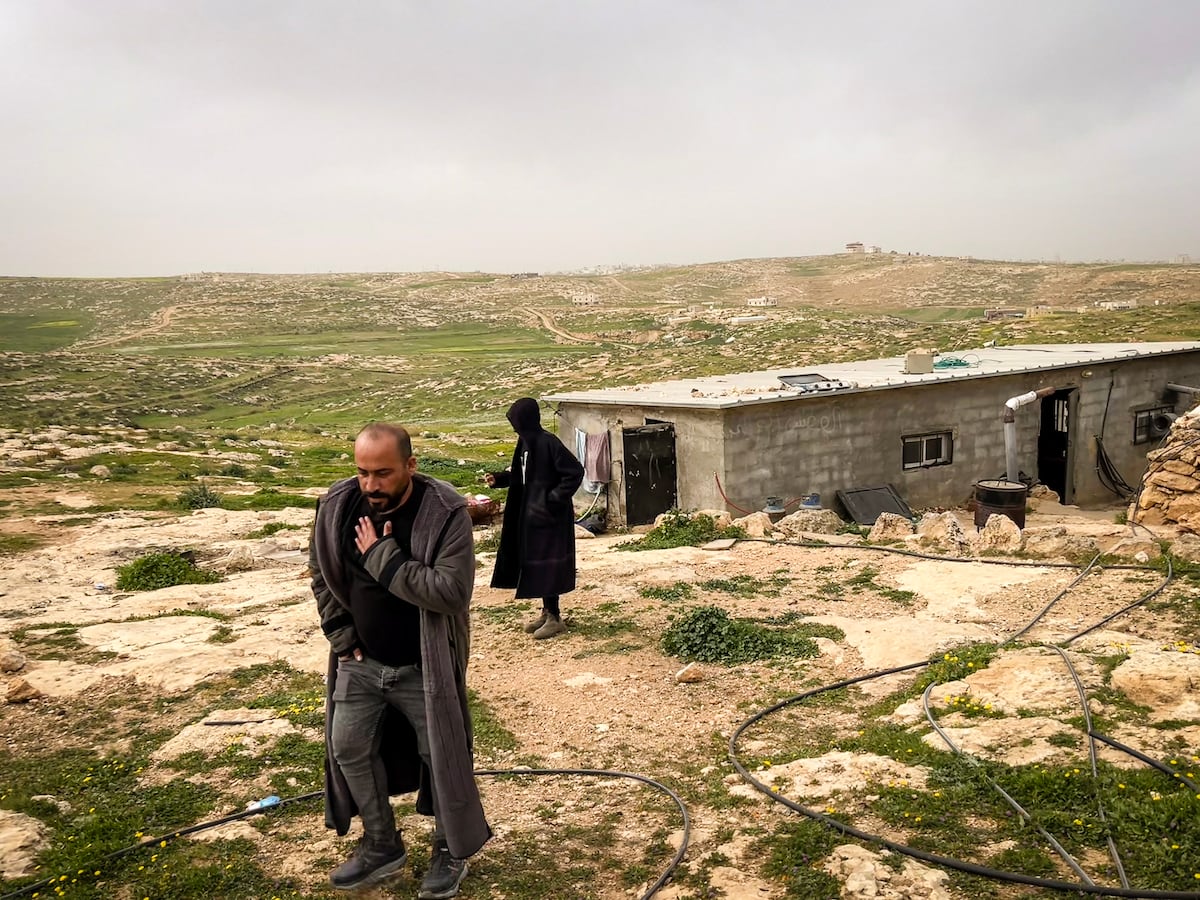 A year after ‘No Other Land’ won Oscar, ‘everything has gotten worse’
english.elpais.com
A year after ‘No Other Land’ won Oscar, ‘everything has gotten worse’
english.elpais.com
 Monzer Shawamla, a baker in Hebron's old city.
nbcnews.com
Monzer Shawamla, a baker in Hebron's old city.
nbcnews.com
 The Ibrahimi Mosque in Hebron.Hazem Bader / AFP - Getty Images
nbcnews.com
The Ibrahimi Mosque in Hebron.Hazem Bader / AFP - Getty Images
nbcnews.com
Israel’s newest West Bank move is not a tank advance or an airstrike. It is paperwork—precisely because paperwork can do what violence does, but with fewer headlines.
Al Jazeera reports that Israel is moving to expand land registration and cadastral processes in the occupied West Bank, a step framed by critics as a “quiet conquest” that accelerates de facto annexation and undermines the Oslo framework. Jordan, which has long treated West Bank stability as a core national interest, is sounding alarms. In a separate Al Jazeera video segment, analysts describe the Jordan–Israel relationship as at its worst in years, explicitly tied to Israel’s West Bank plans.
Land registration sounds boring until you remember what it actually is: the state’s master key.
A cadastral system determines who owns what, which claims are recognized, which disputes can be heard, and which documents count as proof. In a normal rule-of-law environment, registration can reduce uncertainty and lower transaction costs. Under occupation, the same machinery becomes a strategic weapon: it can convert ambiguous or customary land use into “unregistered” land, then into “state land,” then into legally sanitized transfer to settlers, infrastructure corridors, or military zones.
The coercion is administrative rather than kinetic. The occupier sets the evidentiary standards, controls access to archives and survey data, and decides which courts adjudicate disputes. The result is a property regime where law is not a constraint on power but a tool of it—because the monopoly on force also monopolizes the registry.
Jordan’s concern is not sentimental. A bureaucratic annexation changes facts on the ground while preserving diplomatic deniability. It also increases pressure on Jordan domestically by inflaming public opinion and raising fears of displacement—an old nightmare in the region’s politics. When borders and property rights are rewritten via administrative acts, neighboring states can see the downstream effects coming: migration flows, security spillovers, and the slow collapse of any negotiated settlement premise.
The uncomfortable insight is that “property rights” are only as neutral as the institution enforcing them. A land registry run by an occupying power is not the free market discovering ownership; it is the state deciding it. The paperwork is the conquest, and the conquest is filed.
If the goal were genuinely to protect private ownership, the process would be insulated from the occupying authority and subject to independent adjudication. Instead, as Al Jazeera describes it, the registration drive is being rolled into a political project that treats land law as infrastructure for permanent control.
In the West Bank, the most consequential battles increasingly happen at the registry desk, not the checkpoint.