
Kenyan intelligence: 1
000+ nationals recruited into Russian army, Rogue agencies allegedly use visas and state insiders to feed Ukraine front
Images
 Charles Ojiambo Mutoka, 72, poses with portraits of his son Oscar, who was killed fighting for Russia in August. Photograph: Tony Karumba/AFP/Getty Images
theguardian.com
Charles Ojiambo Mutoka, 72, poses with portraits of his son Oscar, who was killed fighting for Russia in August. Photograph: Tony Karumba/AFP/Getty Images
theguardian.com
 Kenyan families demand return of loved ones recruited into Russian army
aljazeera.com
Kenyan families demand return of loved ones recruited into Russian army
aljazeera.com
 'Over 1,000 Kenyans recruited to fight for Russia in Ukraine' - SABC News - Breaking news, special reports, world, business, sport coverage of all South African current events. Africa's news leader.
sabcnews.com
'Over 1,000 Kenyans recruited to fight for Russia in Ukraine' - SABC News - Breaking news, special reports, world, business, sport coverage of all South African current events. Africa's news leader.
sabcnews.com
 As Russian battlefield losses mount, Putin is turning to Africa for soldiers
atlanticcouncil.org
As Russian battlefield losses mount, Putin is turning to Africa for soldiers
atlanticcouncil.org
Kenya is discovering that in the global labour market, “foreign deployment” can mean trench duty.
An intelligence report presented to Kenya’s National Assembly says more than 1,000 Kenyan nationals have been lured into fighting for Russia in Ukraine, a sharp jump from the Kenyan foreign ministry’s November estimate of “more than 200,” according to The Guardian. The report, read by majority leader Kimani Ichung’wah, describes a recruitment pipeline run by “rogue” agencies and individuals that targets ex-soldiers, police officers, and civilians in their mid‑20s to 50s—people with the useful combination of physical durability and economic desperation.
The pitch is not subtle: monthly pay of about 350,000 Kenyan shillings (roughly £2,000), large bonuses, and the promise of Russian citizenship, The Guardian reports. It is, in other words, a private-sector offer calibrated to outbid local opportunity while keeping the human “input” cheap relative to Russia’s battlefield losses.
What turns a scam into a scalable supply chain is paperwork. The intelligence summary alleges collusion by staff inside Kenya’s Directorate of Immigration Services, the Directorate of Criminal Investigations (including its Anti‑Narcotics Unit), and the National Employment Authority to prevent recruits being stopped at Nairobi’s main airport. It also claims coordination with staff at the Russian embassy in Kenya and the Kenyan embassy in Moscow to obtain Russian visitor visas.
Russia’s embassy in Nairobi denied any involvement, calling the accusations “dangerous and misleading propaganda” and insisting Russian authorities have “never engaged in illegal recruitment of Kenyan citizens,” per The Guardian. That denial sits awkwardly alongside the broader trend: Ukraine’s foreign minister Andrii Sybiha said in November that more than 1,400 people from 36 African countries were fighting for Russia; Ukraine also says many are now prisoners of war.
Kenya’s report offers unusually granular accounting of outcomes: as of February, 39 Kenyans were hospitalised, 30 repatriated, 28 missing in action, 35 in military camps or bases, 89 on the frontline, one detained, and one who “completed their contract,” The Guardian reports. The euphemism is doing heavy lifting.
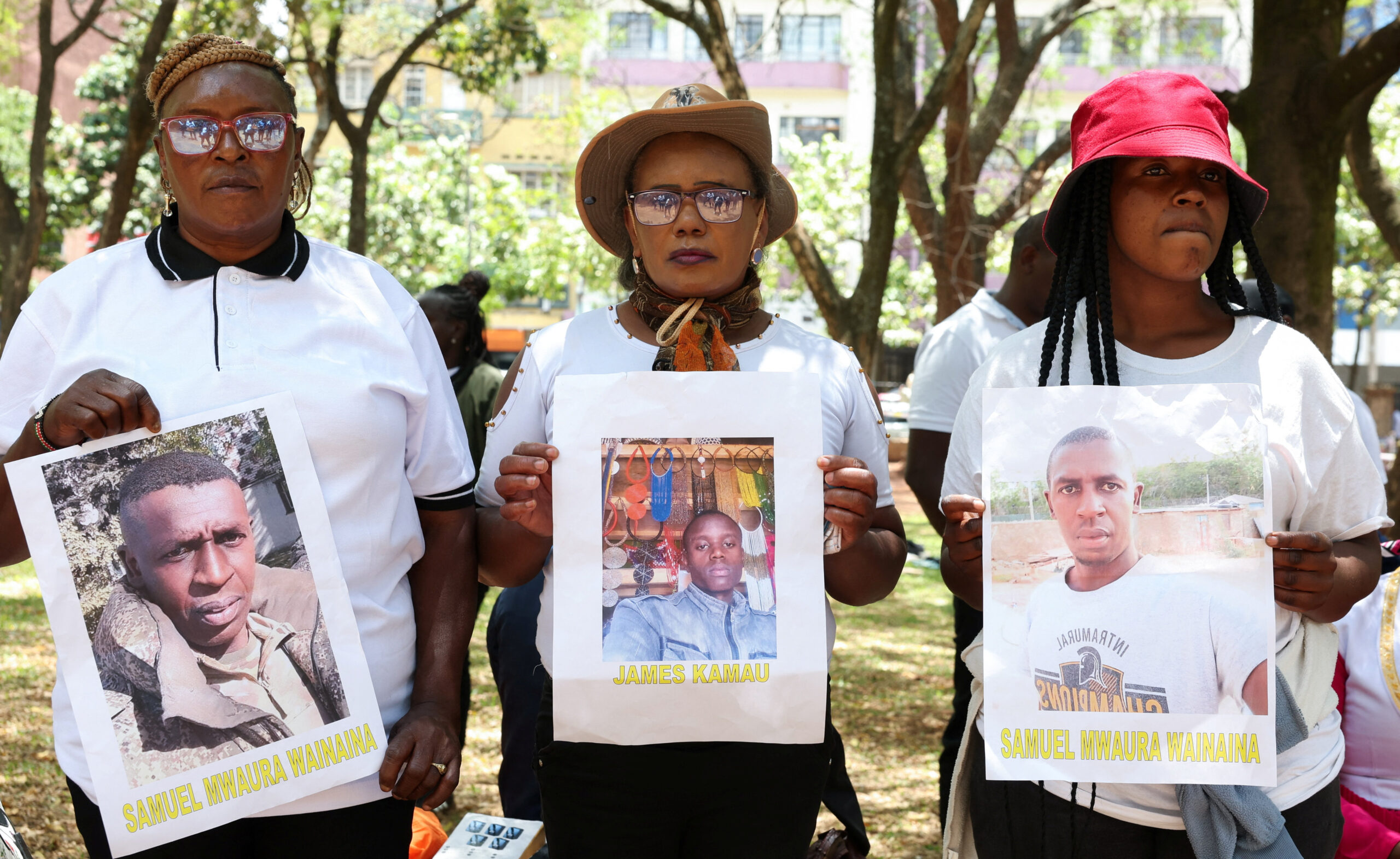
Al Jazeera describes families demanding the return of loved ones recruited into the Russian army, underlining the moral asymmetry of the arrangement: recruiters and facilitators collect fees and commissions up front; the “workers” earn their wages only if they survive.
The state’s response so far reads like classic bureaucratic theatre. Kenya’s foreign minister Musalia Mudavadi is expected to visit Russia next month to discuss what he called the “unacceptable and clandestine” recruitment, according to The Guardian. Meanwhile, the report says recruiters are increasingly routing men through Uganda, the Democratic Republic of Congo, and South Africa to avoid interception.
In a country where exporting labour is a rational household strategy, the line between “migration” and “mercenary logistics” is thin—especially when government agencies can be induced to treat citizens as paperwork rather than persons.