
Bill Gates cancels India AI Impact Summit keynote hours before appearance
Gates Foundation cites keeping focus as Epstein questions resurface, elite legitimacy laundering meets reputational risk
Images
 U.S. philanthropist and Microsoft co-founder Bill Gates attends an event in New Delhi on March 19, 2025.
japantimes.co.jp
U.S. philanthropist and Microsoft co-founder Bill Gates attends an event in New Delhi on March 19, 2025.
japantimes.co.jp
 A solar farm in Nakai, Kanagawa Prefecture, in March 2016. Japan gets about a tenth of its electricity from solar panels despite having nearly no domestic production of photovoltaics (PVs).
japantimes.co.jp
A solar farm in Nakai, Kanagawa Prefecture, in March 2016. Japan gets about a tenth of its electricity from solar panels despite having nearly no domestic production of photovoltaics (PVs).
japantimes.co.jp
 Sonic the Hedgehog, Castlevania's Alucard and the weak yet lovable Slime from Dragon Quest are just some of Japan's iconic gaming franchises celebrating midlife anniversaries in 2026.
japantimes.co.jp
Sonic the Hedgehog, Castlevania's Alucard and the weak yet lovable Slime from Dragon Quest are just some of Japan's iconic gaming franchises celebrating midlife anniversaries in 2026.
japantimes.co.jp
 Japan agency aims for both decarbonization, growth
japantimes.co.jp
Japan agency aims for both decarbonization, growth
japantimes.co.jp
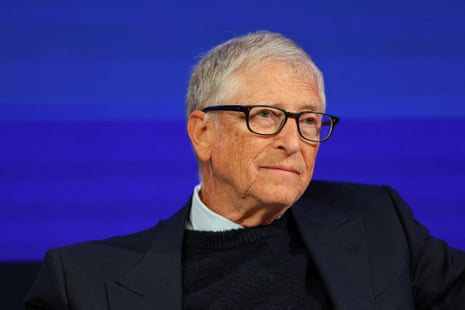 Bill Gates, facing questions over his ties to late sex offender Jeffrey Epstein, withdrew just hours before his speech in India to ‘ensure the focus remains on the AI Summit’s key priorities’, the Gates Foundation said. Photograph: Denis Balibouse/Reuters
theguardian.com
Bill Gates, facing questions over his ties to late sex offender Jeffrey Epstein, withdrew just hours before his speech in India to ‘ensure the focus remains on the AI Summit’s key priorities’, the Gates Foundation said. Photograph: Denis Balibouse/Reuters
theguardian.com
Bill Gates was supposed to headline India’s AI Impact Summit. Instead, he became the story.
Reuters reports, via the Japan Times, that the Microsoft co-founder pulled out of his scheduled keynote address in New Delhi just hours before speaking, dealing another blow to an event already plagued by organizational chaos, delegate complaints and a “robot bungle.” The Gates Foundation said Gates would skip the speech “to ensure the focus remains on the AI Summit’s key priorities.” Only days earlier, the foundation had publicly insisted he was still on track to attend.
The Guardian supplies the missing subtext: Gates’ withdrawal comes amid renewed scrutiny of his relationship with the late financier and convicted sex offender Jeffrey Epstein following a new release of “Epstein files” by the US Department of Justice. While the foundation did not explicitly cite Epstein, the timing and the abrupt reversal made the explanation read like the sort of corporate statement designed to deny the existence of the obvious.
Gates has said he regrets ever spending time with Epstein, telling Australia’s 9News earlier this month that “every minute I spent with him, I regret,” while denying specific allegations referenced in a draft email attributed to Epstein. Melinda French Gates, now divorced from Gates, has said the document releases revived “very, very painful times” and that questions about Epstein are for Gates to answer, not her, according to the Guardian.
In theory, this is a celebrity scheduling change. It is how modern “philanthropy” functions as a parallel diplomatic apparatus—one that is neither elected nor meaningfully audited, yet enjoys red-carpet access to heads of government and the power to frame policy priorities.
India’s summit is marketed as a flagship gathering on AI in the Global South, with political leaders and tech executives converging in Delhi. Gates’ presence was part of the imported legitimacy package: Western billionaire-as-oracle, flown in to bless domestic ambitions with global prestige. The fact that the blessing can be revoked overnight—because the brand risk now outweighs the photo-op value—reveals how brittle this legitimacy economy is.
The objection is not moralistic pearl-clutching about who met whom at which dinner. It is structural. When policy influence is routed through foundations and elite networks, accountability becomes optional. “AI for social good” becomes a slogan that can be deployed, paused, or rebranded depending on reputational weather—while the underlying programs, contracts, and regulatory favors continue.
The Gates Foundation said it would be represented at the summit by Ankur Vora, president of its Africa and India offices, and reiterated its commitment to work in India on health and development goals, per Reuters. That is the point: the institution remains embedded even when the founder becomes inconvenient. The summit keeps its sponsors and its talking points. It just loses the human shield.
If India wants AI capacity rather than AI pageantry, it might start by relying less on celebrity keynotes and more on transparent procurement, measurable outputs, and the unglamorous work of building systems that function without reputational babysitters.