
Lyon killing of far-right activist Quentin Deranque escalates into murder case
Prosecutor seeks charges against seven suspects tied to far-left circles, Public order rhetoric returns as politics hunts leverage
Images
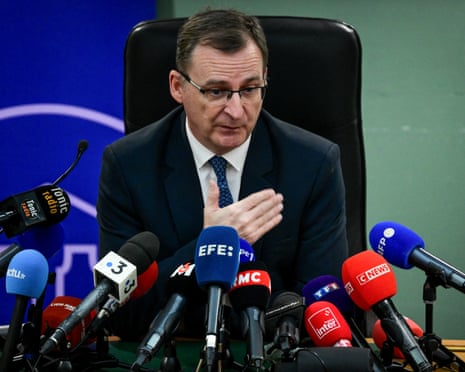 Thierry Dran said he had requested that the seven suspects be kept in custody to avoid any ‘disturbance to public order’. Photograph: Olivier Chassignole/AFP/Getty Images
theguardian.com
Thierry Dran said he had requested that the seven suspects be kept in custody to avoid any ‘disturbance to public order’. Photograph: Olivier Chassignole/AFP/Getty Images
theguardian.com
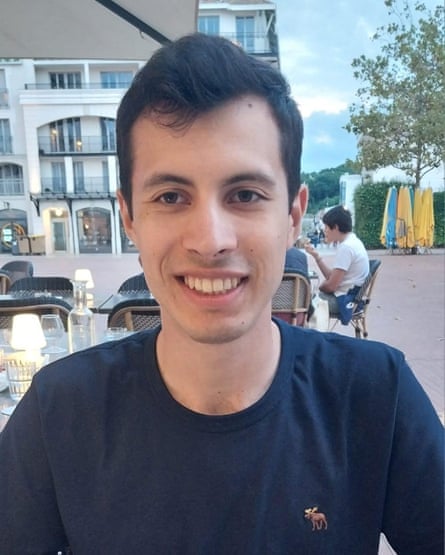 Quentin Deranque, who died after being attacked on the sidelines of a far-right protest in Lyon on 12 February. Photograph: AFP/Getty Images
theguardian.com
Quentin Deranque, who died after being attacked on the sidelines of a far-right protest in Lyon on 12 February. Photograph: AFP/Getty Images
theguardian.com
 Quentin Deranque falleció por lesiones
infobae.com
Quentin Deranque falleció por lesiones
infobae.com
 La policía de Francia detuvo
infobae.com
La policía de Francia detuvo
infobae.com
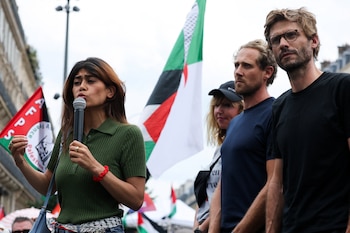 La conferencia de Rima Hassan
infobae.com
La conferencia de Rima Hassan
infobae.com
A street killing in Lyon has become the kind of political object the French state loves most: a tragedy that can be translated into “public order,” then invoiced back to the public as new powers.
On 12 February, Quentin Deranque, a 23-year-old far-right activist, died from head injuries after being attacked on the margins of a far-right protest in Lyon, according to The Guardian. French prosecutors say at least six people took part in the beating. Eleven people were detained; the Lyon prosecutor, Thierry Dran, is now seeking murder charges for seven suspects and wants them held in custody to prevent any “disturbance to public order,” The Guardian reports.
Infobae adds detail on the setting: the violence erupted near the Institut d’Études Politiques de Lyon during a conference by Rima Hassan, a European Parliament member associated with the hard-left party La France Insoumise (LFI). A far-right group, Némesis, held a demonstration nearby. According to Infobae, masked attackers hit demonstrators; Deranque was part of Némesis’s informal security and died after the confrontation.
The immediate political choreography has been almost as revealing as the assault itself. Italian prime minister Giorgia Meloni called the killing “a wound for all of Europe,” prompting President Emmanuel Macron—on a trip to Delhi—to tell Italian leaders to mind their own business while simultaneously insisting there is “no place” in France for movements that “adopt and legitimise violence,” per The Guardian. Italy’s foreign minister Antonio Tajani replied that political violence concerns all Europeans.
Nationalism is unacceptable when it comes with comments from Rome, but perfectly serviceable when it comes with Paris prescribing virtue to domestic opponents.
Prosecutors say some suspects admit being present and some admit striking blows, while disputing intent to kill, The Guardian reports. Two refused to speak. That is the criminal case.
The political case is broader: the killing lands just ahead of French municipal elections in March and with the 2027 presidential race looming, where Marine Le Pen’s National Rally is widely expected to be competitive. The Guardian notes that after Deranque’s death, some politicians have rushed to distance themselves from the hard left—despite last year’s tactical alliances to block the far right.
France’s governing class will now attempt the classic conversion: street violence becomes a mandate for more surveillance, more bans, more discretionary policing—always justified as neutral “republican” hygiene. The state’s promised monopoly on legitimate force looks less like a principle than a branding exercise: violence is condemned in the abstract, then selectively processed into whichever set of powers and enemies are politically useful.