
Airbus posts record deliveries and profits
US government-assisted Boeing deals surge to $244bn, Free market rivalry curiously requires diplomacy and export-credit muscle
Images
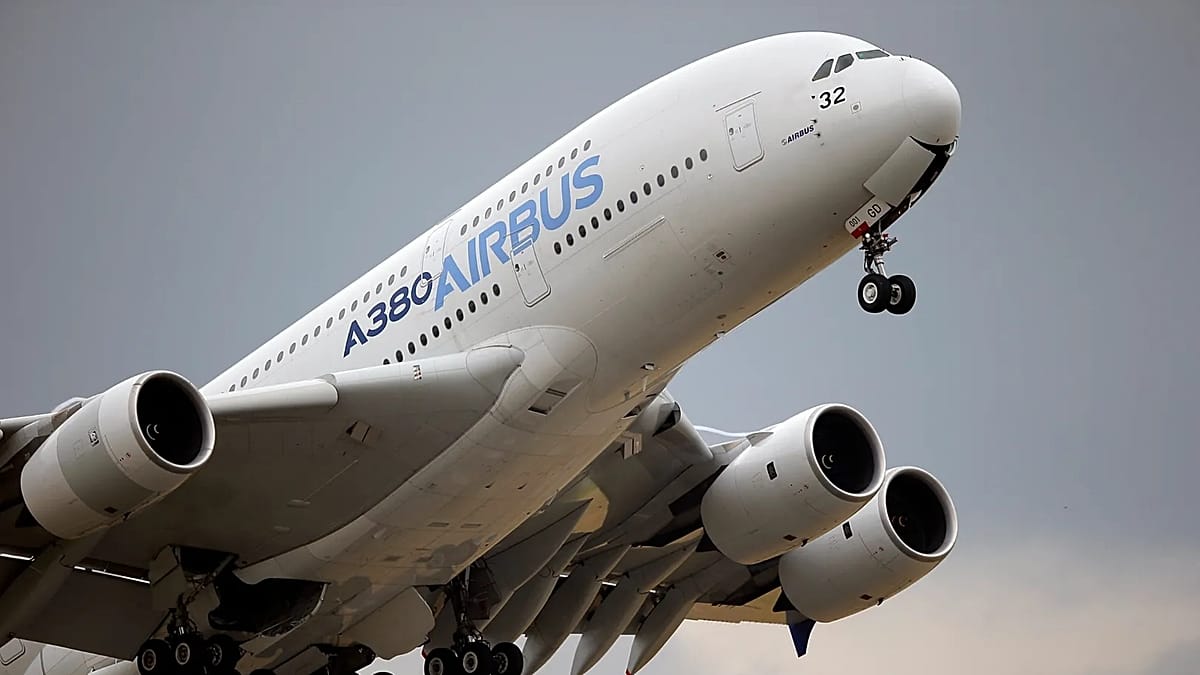 Airbus hits records, but Trump still plays favourites with Boeing
euronews.com
Airbus hits records, but Trump still plays favourites with Boeing
euronews.com
Airbus just delivered a record year—793 commercial aircraft in 2025, revenue up 6% to €73.4bn, and adjusted operating profit of €7.1bn—yet Washington’s procurement-and-diplomacy machine still tilts the playing field toward Boeing, according to Euronews.
On the numbers, Airbus looks like the more functional industrial organism. Net income reached €5.2bn, free cash flow before customer financing €4.6bn, and the company proposed a €3.20 dividend. Its order book is effectively a multi-year production plan: 1,000 gross orders in 2025 and a backlog of 8,754 jets, with total order intake of €123.3bn and a total order book valued at €619bn.
And yet the transatlantic “competition” is not primarily about who can deliver planes; it’s about who can deliver geopolitics. Euronews notes that President Donald Trump’s push to sell Boeing aircraft as part of broader trade-for-diplomacy packages has coincided with a surge in government-assisted foreign contracts. The US Commerce Department said such government-backed deals jumped to $244bn in 2025, with Boeing net orders rising to 1,075 from 377 a year earlier.
The showcase examples are almost satirical in their clarity. Qatar Airways’ $96bn widebody order was unveiled during Trump’s Gulf trip. Vietnamese carriers signed about $30bn in Boeing agreements during a Washington visit tied to trade talks. That is not a neutral market outcome; it is the state acting as chief salesman, bundling aircraft with security relationships, market access, and political favors.
Airbus, meanwhile, is wrestling with the unglamorous reality of production: supply-chain bottlenecks and especially Pratt & Whitney engine shortages for its best-selling A320 family. CEO Guillaume Faury was unusually blunt, accusing the US supplier of failing to meet contractual obligations. Airbus is targeting about 870 deliveries in 2026 and roughly €7.5bn in adjusted operating profit—assuming no major disruptions to trade or supply chains.
“Industrial policy” is often just procurement policy plus export finance plus regulatory discretion, wrapped in national-security language. When the White House is “rooting for your rival,” as Euronews puts it, technical performance becomes a secondary variable. The decisive product is not the airframe; it’s the alliance.
The punchline writes itself: the more politicians talk about strategic autonomy and competitive markets, the more the outcome depends on who has the better access to treasuries, export-credit channels, and diplomatic choreography. Airbus can build planes. Boeing, with Washington behind it, can sell them as foreign policy.