
Trump White House ballroom plan wins unanimous approval from Commission of Fine Arts
$400M project faces preservation lawsuit and planning commission review, Administrative aesthetics quietly govern capital
Images
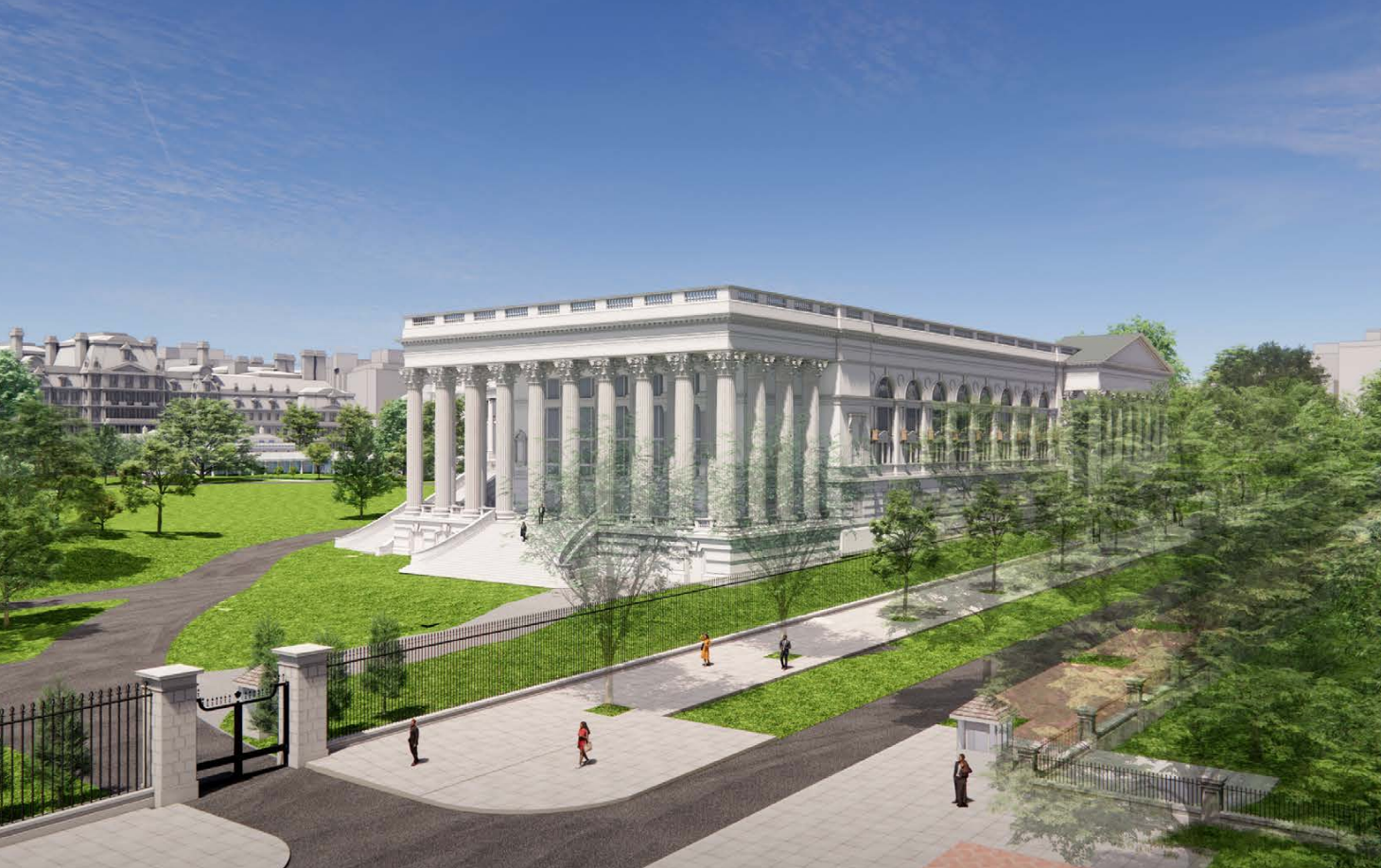 In court documents, the Trump administration said above-ground construction for the ballroom would begin in April, assuming the commission approves the plans (Shalom Baranes Associates)
Shalom Baranes Associates
In court documents, the Trump administration said above-ground construction for the ballroom would begin in April, assuming the commission approves the plans (Shalom Baranes Associates)
Shalom Baranes Associates
An arts-and-architecture commission most Americans have never heard of has unanimously approved President Donald Trump’s proposal for a roughly $400 million White House ballroom, according to The Independent. The U.S. Commission of Fine Arts (CFA)—made up of Trump appointees—signed off even after some commissioners questioned the “immense” scale of a project described as roughly twice the size of the White House itself.
Trump announced the plan with characteristic subtlety, calling it “the finest ballroom ever built anywhere in the world,” The Independent reports, and adding that it would be used for future inaugurations because of unspecified “structural, safety, and security features.” The grandiosity is the surface-level story. The more interesting part is how Washington actually works: the aesthetic veto.
The CFA has jurisdiction over major construction and renovations to government buildings in the region. That means real power sits not only in elected offices and headline-grabbing agencies, but also in semi-obscure boards that can bless or block projects under the banner of design review, historic character, and “appropriateness.” Administrative state power, but with nicer stationery.
The Independent notes that Trump’s decision in October to demolish the East Wing triggered public outcry partly because work began without the independent reviews, congressional approval, and public comment that are typical even for smaller modifications. The National Trust for Historic Preservation has sued in federal court to halt construction; a decision is pending.
Next up is another layer of capital-city governance. The plan is scheduled for further discussion on March 5 by the National Capital Planning Commission (NCPC), which The Independent says is led by one of Trump’s top White House aides. In court filings, the administration reportedly said above-ground construction would begin in April—assuming the NCPC approves.
The modern American state in miniature: politicians posture as if they command the machine, while the machine is a stack of commissions, procedural gates, and litigation hooks. “Historic preservation” becomes a lever. “Security” becomes a trump card. And the public finds out—after the demolition starts—which committee is actually in charge.
Whether the ballroom is built or blocked, the precedent is already set: Washington’s built environment is governed less by voters than by appointment networks and process control. Democracy, but with renderings.