
Orbán turns Hungarian media into political supply chain
State ads and captured regulator replace formal censorship, EU rule-of-law scrutiny arrives after consolidation
Images
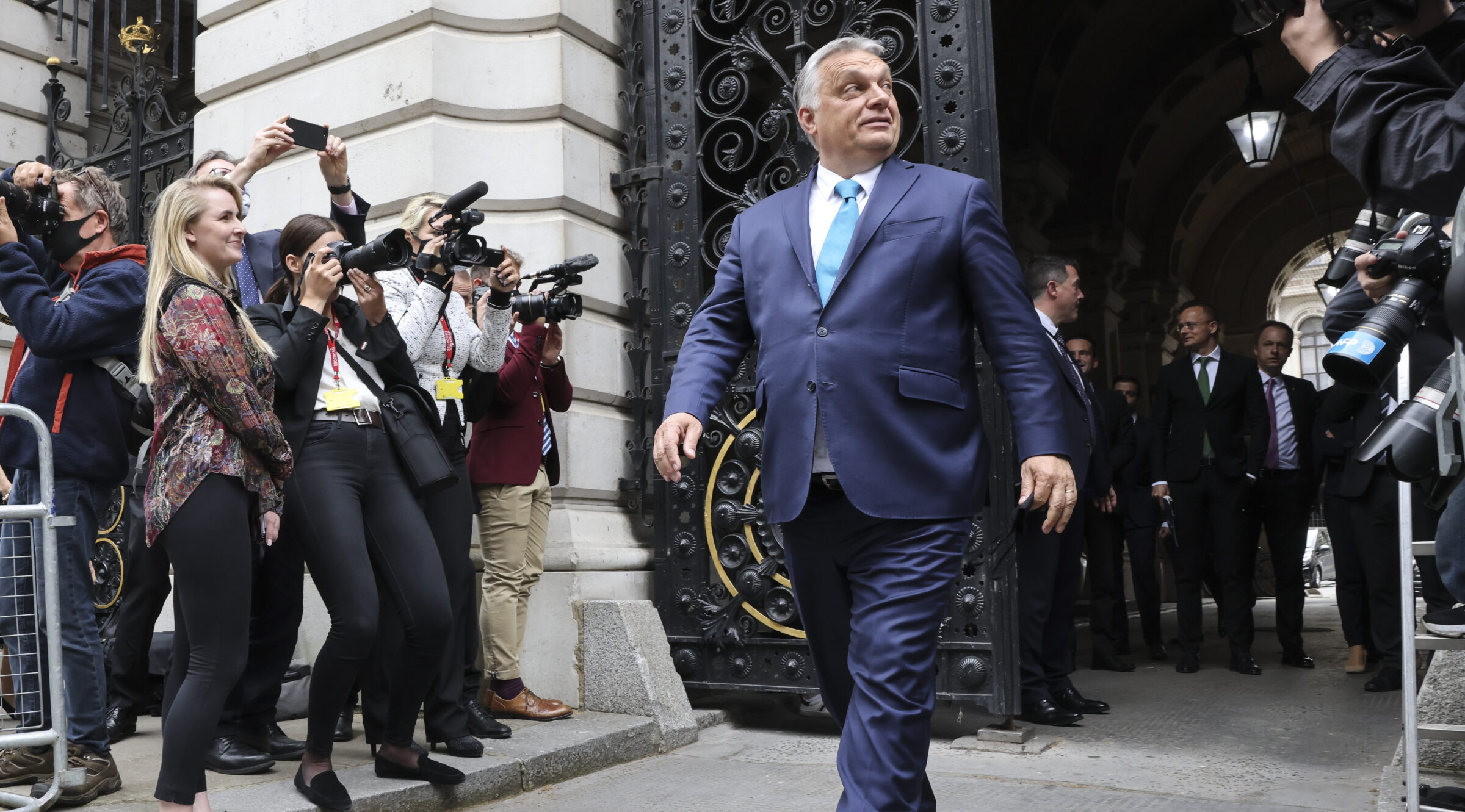 Prime minister of Hungary, Viktor Orbán in Downing Street, London, 2021.
euobserver.com
Prime minister of Hungary, Viktor Orbán in Downing Street, London, 2021.
euobserver.com
Viktor Orbán did not “ban” the Hungarian press. He did something more durable: he turned media into a supply chain.
According to EUobserver, which draws on a report produced with the watchdog Mérték Media Monitor, the Fidesz government spent the 2010–2025 period systematically converting a once-pluralistic media market into an ecosystem where cashflow, licensing and distribution are politically rationed. The result is not merely a propaganda outlet here or there but a market structure: EUobserver says Fidesz now directly or indirectly controls roughly 80% of Hungary’s media. Reporters Without Borders’ press-freedom ranking for Hungary fell from 23rd to 68th over the same period.
The mechanics are banal and therefore powerful. First, capture the media regulator: early post-2010 media laws were designed to bring the regulatory authority under government influence, EUobserver reports. Once the referee is partisan, “market outcomes” become a sequence of administrative decisions.
Second, consolidate ownership via friendly capital. Government-allied buyers acquire outlets, while independent competitors are subjected to legal and commercial pressure that makes them cheap, risky or simply unable to operate at scale. This is the illiberal version of private equity: leverage is political.
Third, weaponise state advertising. EUobserver notes the diversion of state ad spending to government-friendly outlets. This is the key to the model: propaganda becomes a revenue line, not a budget line. If the state is the dominant advertiser, editorial alignment becomes a solvency strategy.
Fourth, raise the personal cost of journalism. EUobserver describes targeted exclusion, smear campaigns, SLAPPs, unlawful surveillance and cyberattacks. Recent years add a more formal “sovereignty” layer. Hungary’s 2023 Sovereignty Protection Act created a Sovereignty Protection Office with broad investigative powers over actors deemed to serve “foreign interests”; EUobserver says it has opened an investigation into Átlátszó and targeted Telex and Válasz Online.
And when the EU notices? It arrives with a clipboard after the building has burned down. Brussels’ much-touted “rule of law” toolbox often reads like delayed accounting: documenting the consolidation, debating conditionality, and issuing statements while the underlying asset—independent distribution—has already been acquired.
This is exportable inside the EU because it does not require explicit censorship or mass arrests. It requires control over regulators, procurement-style ad budgets, and the legal surface area to harass dissent into insolvency. The press can remain “free” in the same way a contractor is “free” to ignore the only customer in town.
Hungary is not an outlier so much as a demonstration: modern political control is frequently achieved not by silencing speech, but by deciding which speech gets paid, carried, and insured against bureaucratic retaliation.