
US military buildup around Iran lowers strike threshold
Carriers and tankers pre-position kill chain while oil options price upside risk, diplomacy becomes logistics and Brent skew does the voting
Images
 U.S. sailors direct a warplane on the flight deck of the USS Abraham Lincoln, an aircraft carrier, in the Arabian Sea on Feb. 3
japantimes.co.jp
U.S. sailors direct a warplane on the flight deck of the USS Abraham Lincoln, an aircraft carrier, in the Arabian Sea on Feb. 3
japantimes.co.jp
 A solar farm in Nakai, Kanagawa Prefecture, in March 2016. Japan gets about a tenth of its electricity from solar panels despite having nearly no domestic production of photovoltaics (PVs).
japantimes.co.jp
A solar farm in Nakai, Kanagawa Prefecture, in March 2016. Japan gets about a tenth of its electricity from solar panels despite having nearly no domestic production of photovoltaics (PVs).
japantimes.co.jp
 Sonic the Hedgehog, Castlevania's Alucard and the weak yet lovable Slime from Dragon Quest are just some of Japan's iconic gaming franchises celebrating midlife anniversaries in 2026.
japantimes.co.jp
Sonic the Hedgehog, Castlevania's Alucard and the weak yet lovable Slime from Dragon Quest are just some of Japan's iconic gaming franchises celebrating midlife anniversaries in 2026.
japantimes.co.jp
 Japan agency aims for both decarbonization, growth
japantimes.co.jp
Japan agency aims for both decarbonization, growth
japantimes.co.jp
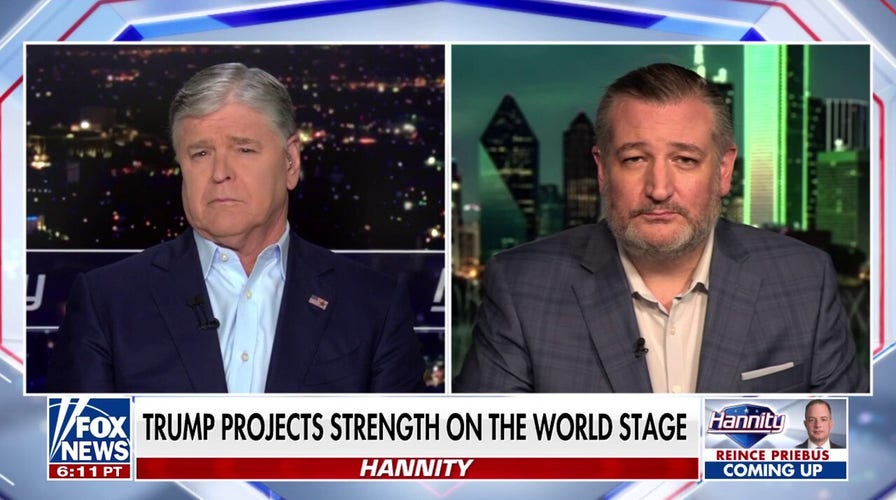 Sen Ted Cruz says he hopes Iran's Khamenei has ‘more sense’ than Maduro
foxnews.com
Sen Ted Cruz says he hopes Iran's Khamenei has ‘more sense’ than Maduro
foxnews.com
Washington is calling it diplomacy again, but the hardware says “campaign.”
A report carried by The Japan Times (via AFP) describes a “massive” US military buildup in the Middle East: warships, fighter aircraft and refueling tankers positioned to enable sustained operations against Iran if President Donald Trump gives the order. Trump, who ordered strikes last year, is now threatening further action unless talks produce a replacement for the nuclear agreement he scrapped in 2018.
The key point is not the threat; it is the pre-positioning. Susan Ziadeh of CSIS, quoted in the Japan Times, notes that “so much firepower” creates momentum of its own. Once the logistics chain is in place — carriers on station, ISR coverage normalized, aerial refueling capacity allocated, munitions and maintenance cycles planned — the political decision shifts from “start a war” to “press play.” The marginal cost of escalation falls, and so does the threshold.
Markets understand this better than press briefings. A note from SEB commodities analyst Ole R. Hvalbye, published by Råvarumarknaden.se, says Brent has climbed to roughly $71.3/bbl, up about $4.5 from Tuesday’s low, on reports that the probability of military action is rising. Axios, cited in that note, quoted a Trump adviser predicting likely “kinetic action” within weeks. US officials have indicated operational capability could be in place by mid-March.
Iran is signaling it can raise the price of “diplomacy” too. Hvalbye notes IRGC drills near the Strait of Hormuz — the chokepoint through which a large share of global seaborne oil flows — and frames Tehran’s leverage in blunt terms: disruptions translate into higher US pump prices, which translate into voter anger ahead of midterms. The Ayatollah’s rhetoric, he adds, emphasized that if warships are dangerous, the weapons that sink them are more so.
Derivatives show where fear concentrates. SEB highlights that the Brent second-month 25-delta call skew has widened to around +17%, the highest since early February, indicating stronger demand for upside protection — traders are paying to insure against a spike, not a crash. That’s a real-time referendum on whether Washington’s “limited” options remain limited once the kill chain is warmed up.
Zero Hedge, summarizing the day’s risk mood, similarly points to oil surging on Iran war risks while broader markets wobble — the costs of escalation are not confined to the target country.
Bureaucracies rarely admit it, but “deterrence” is not just a message; it is an infrastructure project. And infrastructure projects have constituencies — commands, contractors, and budget lines — that prefer utilization to idling. When the machinery is already humming, restraint requires active political effort. The oil market is betting that effort is in short supply.