
Reese’s heir accuses Hershey of quiet ingredient downgrades
Walmart gains share as shoppers trade down, inflation shows up as reformulation while scale firms monetize value panic
Images
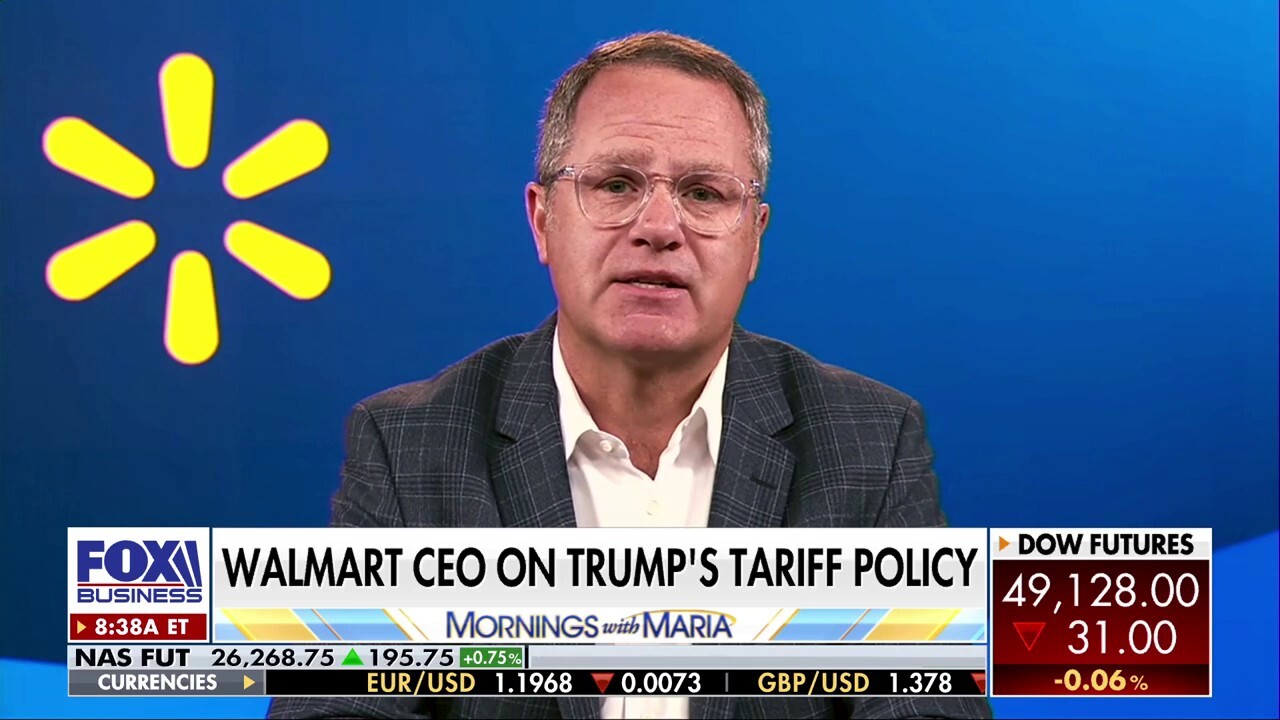 Walmart CEO Doug McMillan joins ‘Mornings with Maria’ to discuss his retirement, inflation pressures, tariffs, AI-driven growth and the future of America’s largest retailer.
foxbusiness.com
Walmart CEO Doug McMillan joins ‘Mornings with Maria’ to discuss his retirement, inflation pressures, tariffs, AI-driven growth and the future of America’s largest retailer.
foxbusiness.com
 People shopping in Walmart.
foxbusiness.com
People shopping in Walmart.
foxbusiness.com
 Outside of a Walmart
foxbusiness.com
Outside of a Walmart
foxbusiness.com
 Workers stand in an aisle at an Ohio Walmart store.
foxbusiness.com
Workers stand in an aisle at an Ohio Walmart store.
foxbusiness.com
A small family squabble over a peanut-butter cup is doing a better job of explaining U.S. inflation psychology than half the Federal Reserve’s press conferences.
CBS News reports that Brad Reese — a grandson of Harry Burnett Reese, the inventor of Reese’s Peanut Butter Cups — is accusing Hershey of “quietly” replacing ingredients and degrading the product. Reese argues the change is not merely taste drift but a deliberate cost-cutting reformulation, framed as a betrayal of a legacy brand built on a specific recipe. Hershey has not conceded wrongdoing in the CBS account, but the complaint is familiar: smaller packages, cheaper inputs, and marketing copy that insists nothing has changed.
Meanwhile, Fox Business notes that Walmart’s latest quarter shows consumers continuing to “prioritize value and convenience,” with the retailer gaining share across income tiers — including higher-income shoppers who traditionally had more room to ignore price creep. Walmart reported fiscal Q4 revenue of $190.7 billion, up 5.6%, with U.S. comparable sales up 4.6%. Online sales now represent 23% of total sales, and growth is being driven by store-fulfilled delivery and higher-margin lines like advertising and memberships. The discount giant is thriving as households trade down, even as it monetizes the resulting traffic through data-driven ad inventory.
Together, they show the modern inflation transmission mechanism in miniature. Monetary debasement and cost shocks don’t arrive as a single, honest price tag that says “your currency buys less now.” They arrive as a scavenger hunt: new “family size” labels, altered recipes, thinner chocolate, and corporate euphemisms about “improving” the product. Consumers then blame the brand — because the brand is the visible actor — rather than the policy stack that makes input costs volatile, compliance expensive, and supply chains brittle.
The public also rewards the institutions best positioned to survive this regime. Walmart’s results highlight how scale, logistics dominance, and data infrastructure turn inflation into market-share consolidation. When households chase “value,” they often end up feeding the very corporate machinery that can arbitrage regulation, negotiate supplier terms, and build ad businesses on top of grocery carts.
Reese’s is the emotional story: a product people remember tasting “better.” Walmart is the structural story: a platform that profits when the middle class starts shopping like the lower middle class. Both are signals that inflation isn’t just a CPI print — it’s a reordering of consumer behavior and corporate power, one reformulated candy bar at a time.