
Rubio holds backchannel talks with Raúl Castro’s grandson
Trump White House demands dramatic changes in Havana, Sanctions regime becomes a privately brokered market
Images
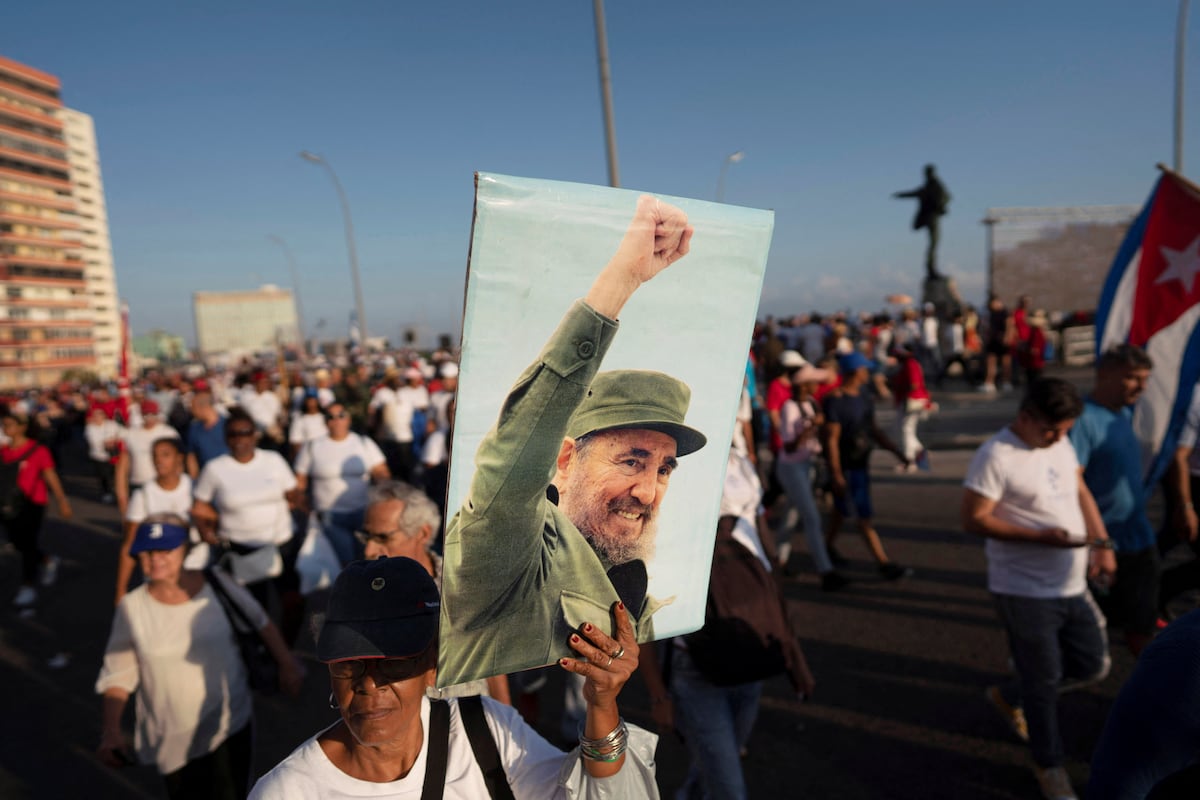 The United States demands Cuba make ‘dramatic changes very soon’
english.elpais.com
The United States demands Cuba make ‘dramatic changes very soon’
english.elpais.com
The United States demands Cuba make ‘dramatic changes very soon’
english.elpais.com
The United States demands Cuba make ‘dramatic changes very soon’
english.elpais.com
 Daily Memo: Russia-Cuba Talks, Nuclear Weapons in Europe - Geopolitical Futures
geopoliticalfutures.com
Daily Memo: Russia-Cuba Talks, Nuclear Weapons in Europe - Geopolitical Futures
geopoliticalfutures.com
Daily Memo: Russia-Cuba Talks, Nuclear Weapons in Europe - Geopolitical Futures
geopoliticalfutures.com
Daily Memo: Russia-Cuba Talks, Nuclear Weapons in Europe - Geopolitical Futures
geopoliticalfutures.com
The Trump administration is escalating pressure on Cuba while simultaneously exploring backchannel contacts with the Castro family’s next generation—an arrangement that looks less like diplomacy than a licensing system for political access.
On Wednesday, White House spokesperson Karoline Leavitt said Cuba must make “very dramatic changes very soon,” describing the government as “falling” and the country as “collapsing,” according to El País. The spokesperson declined to confirm whether the administration’s goal is regime change.
Yet El País reports—citing Axios—that Secretary of State Marco Rubio has been holding conversations with Raúl Guillermo Rodríguez Castro, the grandson of Raúl Castro, outside official channels in Havana. The White House did not confirm those talks. The same reporting says U.S. media previously described secret contacts with Alejandro Castro Espín, Raúl Castro’s son, allegedly held in Mexico—also unconfirmed.
Sanctions are no longer merely punitive; they are a form of centralized trade planning that creates scarcity, then sells exceptions. In that ecosystem, the most valuable commodity is not sugar or oil but permission.
Cuba’s economy is already in its worst crisis in decades, with fuel shortages and blackouts. Euronews, citing AP, reports that Russia’s Vladimir Putin told Cuban Foreign Minister Bruno Rodríguez in Moscow that Russia “will not accept” new U.S. sanctions, while Foreign Minister Sergei Lavrov urged Washington to refrain from a “sea blockade.” The same report notes Venezuela—long a key oil supplier—stopped selling crude to Cuba in January after the U.S. captured Nicolás Maduro in a raid and flew him to New York to face drug-trafficking charges. Mexico has also halted shipments after Trump threatened tariffs on countries selling oil to Cuba, Euronews reports.
El País adds that Mexican President Claudia Sheinbaum says Mexico is discussing a possible mediator role and will continue humanitarian aid shipments, while also seeking a way to restore Pemex’s oil-supply arrangements with Havana.
Axios, per El País, portrays Rodríguez Castro and his circle as a business-focused, less ideological cohort who see engagement with Washington as beneficial. When the U.S. squeezes an entire country’s trade, it predictably elevates the politically connected—those able to negotiate carve-outs, “technical contacts,” and off-the-books channels—while ordinary Cubans get to experience the purity of embargo economics.
For Rubio, the son of Cuban immigrants, the fall of Castroism is personal symbolism. For Washington, it is leverage. For everyone else, it is the spectacle of sanctions policy: a moral crusade that quietly functions as an insider market in exemptions, intermediaries, and access.
Sources: El País (citing Axios), Miami Herald, Euronews/AP.