
Indian cricket umpire dies after bee swarm hits match in Uttar Pradesh
15–20 players injured, Biological risk ignores event bureaucracy
Images
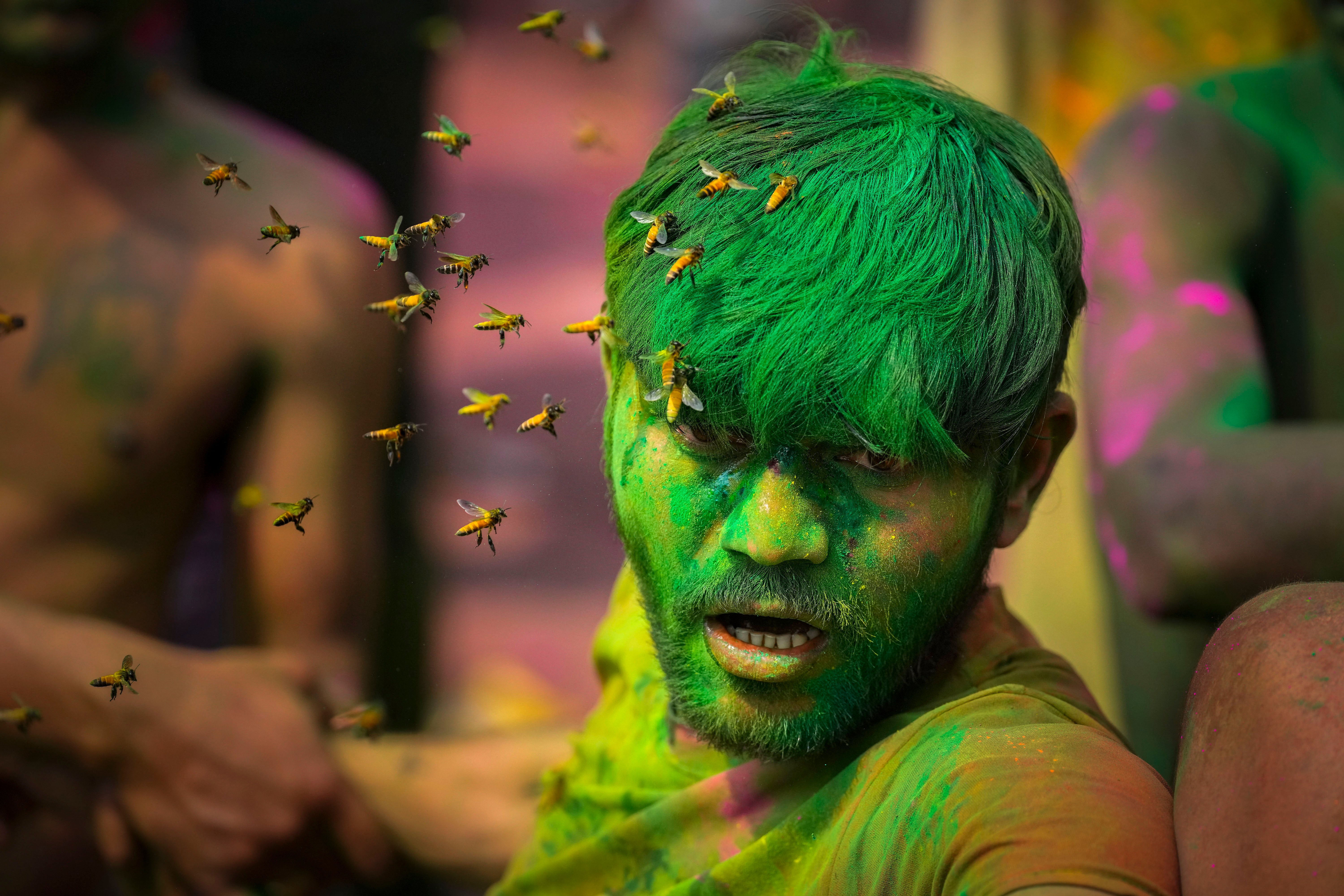 File. Bees swarm a man during a celebration of the Hindu festival of Holi in Guwahati, India, on 25 March 2024 (AP)
independent.co.uk
File. Bees swarm a man during a celebration of the Hindu festival of Holi in Guwahati, India, on 25 March 2024 (AP)
independent.co.uk
A local cricket match in northern India turned lethal when a swarm of bees descended on the ground, stinging players and officials and killing a veteran umpire.
The Independent reports that Manik Gupta, 65, was officiating a league match at Sapru Maidan in Shuklaganj, in Uttar Pradesh, when the swarm arrived shortly after play began. The attack triggered panic, with players and spectators running for cover. Gupta was reportedly stung multiple times and collapsed on the field. Police said another umpire and 15 to 20 players were injured.
Gupta was taken first to a private hospital in Shuklaganj and then referred to Lala Lajpat Rai Hospital in Kanpur as his condition worsened, where doctors declared him dead on arrival, according to the report. The Kanpur Cricket Association confirmed the death; its president, SN Singh, said bees were still clinging to Gupta’s face and body as he was being rushed to hospital.
Not all “public safety” problems yield to more rules, more barriers, more surveillance, and more paperwork. A bee swarm is not a knife you can ban, a crowd you can pen, or a data stream you can filter. It is a biological system that doesn’t care about your event permit.
Mass gatherings are now routinely managed as if every risk is legible to a central planner—complete with checklists, compliance regimes, and post-incident statements about “reviewing procedures.” Yet the hazards that actually injure people often sit outside that bureaucratic comfort zone: weather, infrastructure failure, and, in this case, insects.
The Independent notes that this is not unprecedented in cricket. A 2019 match between India A and the England Lions in Thiruvananthapuram was briefly halted after bees attacked spectators; play resumed after about 15 minutes and injuries were reportedly minor.
But “it happened before” is not a plan. The question is how organizers and local authorities will respond: with practical, decentralized mitigation (site inspection for nearby hives, rapid access to antihistamines and emergency care, clear evacuation procedures), or with the usual theatre of control that mainly produces new signage and new budgets.
Gupta had been on the association’s umpiring panel for nearly three decades, the Times of India reported, and officials said they would support his family. After a freak catastrophe, an organization can avoid pretending that risk can be regulated out of existence—especially when nature refuses to sign the forms.