
India AI Impact Summit spotlights guardrails and coordination as AI industrial policy
OpenAI partners with IIT Delhi IIM Ahmedabad AIIMS to push ChatGPT Edu into campuses, Safety rhetoric builds compliance moats while firms lock in distribution
Images
 OpenAI pushes into higher education as India seeks to scale AI skills | TechCrunch
techcrunch.com
OpenAI pushes into higher education as India seeks to scale AI skills | TechCrunch
techcrunch.com
 What are world and tech leaders saying at the India AI summit?
euronews.com
What are world and tech leaders saying at the India AI summit?
euronews.com
 Image Credits:Ludovic MARIN/AFP / Getty Images
techcrunch.com
Image Credits:Ludovic MARIN/AFP / Getty Images
techcrunch.com
 OpenAI's ChatGPT in India
techcrunch.com
OpenAI's ChatGPT in India
techcrunch.com
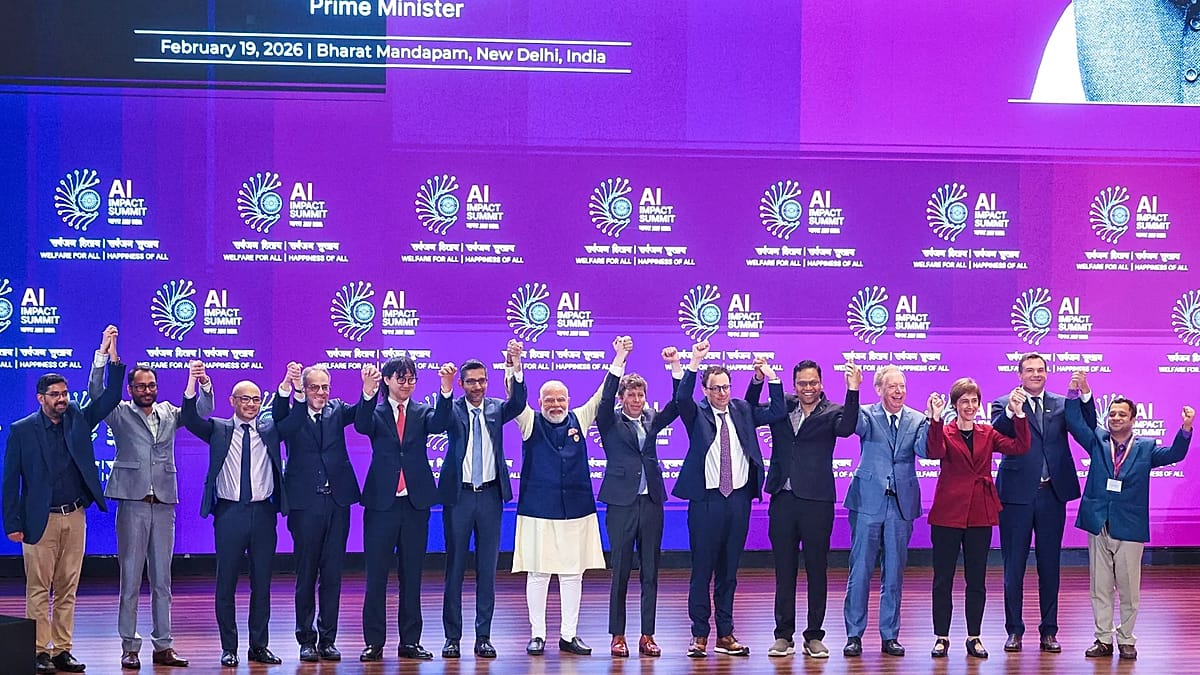
At India’s AI Impact Summit in New Delhi, the world’s most powerful AI executives and a handful of heads of government converged on a familiar consensus: AI is transformative, dangerous, and in urgent need of “guardrails.” Those guardrails often take a specific shape once they are translated into policy: procurement pipelines, compliance moats, and surveillance-friendly defaults.
Business Insider reports that Google CEO Sundar Pichai warned against an “AI divide,” calling for investment in compute infrastructure, connectivity, and training. DeepMind CEO Demis Hassabis compared AI’s impact to fire and electricity, arguing for a “scientific approach” to understanding capabilities and building safeguards. OpenAI CEO Sam Altman floated the idea of an AI regulator akin to the International Atomic Energy Agency, with authority to “rapidly respond” to changing risks.
Euronews adds the political varnish. French President Emmanuel Macron framed AI governance around protecting children from “digital abuse,” citing the use of Elon Musk’s Grok to generate sexualised deepfakes. He also insisted AI should not be controlled by “a few powerful AI companies,” while simultaneously defending Europe’s regulatory posture as a long-run advantage: “safe spaces win.” Indian Prime Minister Narendra Modi called AI a “shared resource” and urged a roadmap grounded in “human values.”
None of this is wrong. It is also incomplete. “Global coordination” can mean: licensing, mandatory reporting, model audits, and compliance regimes that only a few firms can afford — the neat trick by which safety becomes cartelization. When Altman proposes an IAEA-like body, he is implicitly asking for something that can inspect, certify, and constrain. That is a regulator’s job description; it is also an incumbent’s dream.
The summit’s most concrete development is not a treaty, but a distribution deal. TechCrunch reports OpenAI is pushing into Indian higher education via partnerships with six institutions — including IIT Delhi, IIM Ahmedabad, and AIIMS New Delhi — aiming to reach 100,000 students and staff in a year. The focus is campus-wide deployment of ChatGPT Edu, faculty training, and “responsible-use frameworks,” plus OpenAI-backed certifications at select schools. OpenAI is also working with Indian ed-tech platforms such as Physics Wallah, upGrad, and HCL GUVI to expand structured courses.
Governance becomes industrial policy. Whoever supplies the tools and the certifications shapes the norms: what counts as “responsible,” what gets logged, what must be reported, and which workflows become standard. Education is not just skills; it is market capture with a moral halo.
India, for its part, gets what it wants: a fast path to scale human capital and embed AI into core academic workflows. The risk is that the state’s inevitable next step — standards, audits, and approved-model lists — will harden today’s partnerships into tomorrow’s licensing bottlenecks.
The summit’s public message is democratization. The likely outcome is a world where access to frontier models is mediated by compliance, and compliance is mediated by the same institutions that claim to fear concentration.