
US data-center boom builds shadow power grid
Private interconnects microgrids and on-site generation bypass utility queues, Electricity becomes moat for AI incumbents
Images
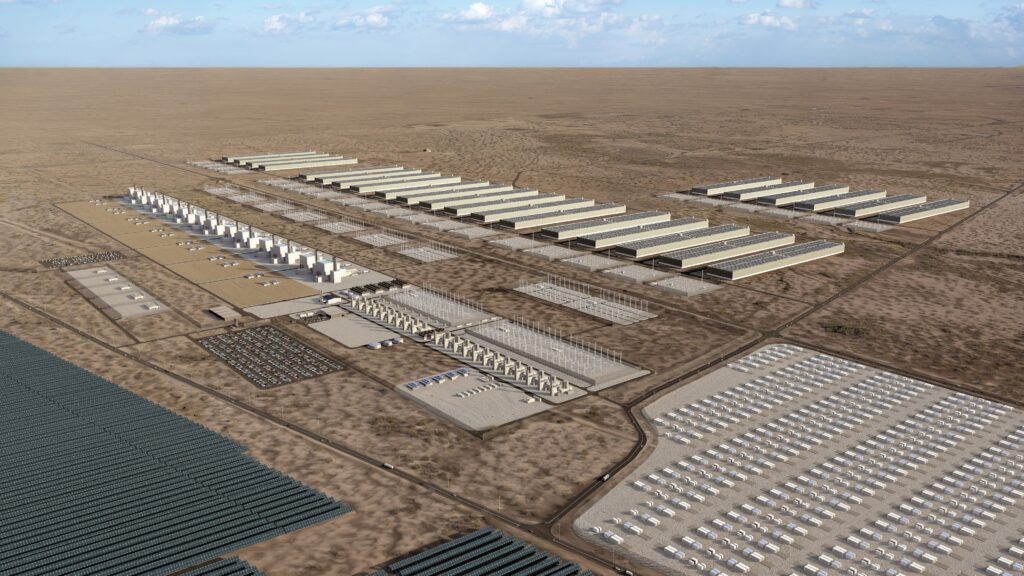 Silicon Valley is building a shadow power grid for data centers across the U.S.
dnyuz.com
Silicon Valley is building a shadow power grid for data centers across the U.S.
dnyuz.com
Silicon Valley’s latest infrastructure innovation is to rebuild the electric grid—privately.
According to the New York Times (via dnyuz), large tech companies and data-center developers across the US are increasingly assembling what amounts to a “shadow power grid”: bespoke transmission hookups, private substations, on-site generation, and microgrids designed to keep new AI-era data centers energized when the public system cannot. The driver is not ideology but queueing theory: interconnection backlogs, local opposition, and slow-moving utility buildouts have turned grid access into the binding constraint for compute.
The playbook is familiar from cloud computing. When a shared resource becomes scarce, hyperscalers stop treating it as a commodity and start treating it as an internal dependency. Electricity becomes the new API: you don’t merely buy it, you integrate it.
The Times describes developers pursuing dedicated high-voltage connections and financing grid upgrades that utilities would otherwise schedule years out. Others lean on behind-the-meter solutions—gas turbines, fuel cells, large-scale batteries, and microgrids that can island from the broader network. Long-term power purchase agreements (PPAs) with wind, solar, and nuclear suppliers—often paired with storage or firming contracts—are used to claim “clean” power while still meeting 24/7 load obligations.
This is frequently presented as a win-win: private capital accelerates infrastructure, and the wider grid benefits from upgrades. It can look more like priority boarding for the largest customers. The same interconnection studies, siting disputes, and permitting hurdles that stall ordinary industrial projects do not disappear; they are simply navigated by actors who can hire the best consultants, prepay the upgrades, and litigate when necessary.
The competitive implications are clear. If megawatts and interconnects become the scarce input, then the incumbents with balance sheets, land banks, and political relationships get to scale AI—and everyone else gets to wait. The “market” for compute starts to resemble the market for airport slots or spectrum licenses: formally open, functionally rationed.
The resilience story is also double-edged. Microgrids and on-site generation can reduce stress on transmission during peak events, and islanding can keep critical services running. But a proliferation of private power islands can undermine the economics of the shared grid, shifting fixed costs onto smaller customers who cannot self-supply. The public system becomes, by default, the provider of last resort—while the best-served loads quietly exit into custom-built supply chains.
The political economy is the punchline. After decades of rhetoric about deregulation and competition, the fastest-growing sector in the economy is solving its bottlenecks by becoming its own utility—while still depending on public rights-of-way, public permitting, and, often, public subsidies. The state is not shrinking; it is being re-tasked as a gatekeeper for whichever private grid can file the best paperwork first.