
DHS seeks $70 million luxury Boeing 737 Max 8 for deportations
ICE tells OMB jet will serve removals and cabinet travel despite 18-seat layout, Mass deportation bureaucracy discovers first-class mission requirements
Images
 nbcnews.com
 Obtained by NBC News
nbcnews.com
Obtained by NBC News
nbcnews.com
 Obtained by NBC News
nbcnews.com
Obtained by NBC News
nbcnews.com
 Obtained by NBC News
nbcnews.com
Obtained by NBC News
nbcnews.com
 Obtained by NBC News
nbcnews.com
Obtained by NBC News
nbcnews.com
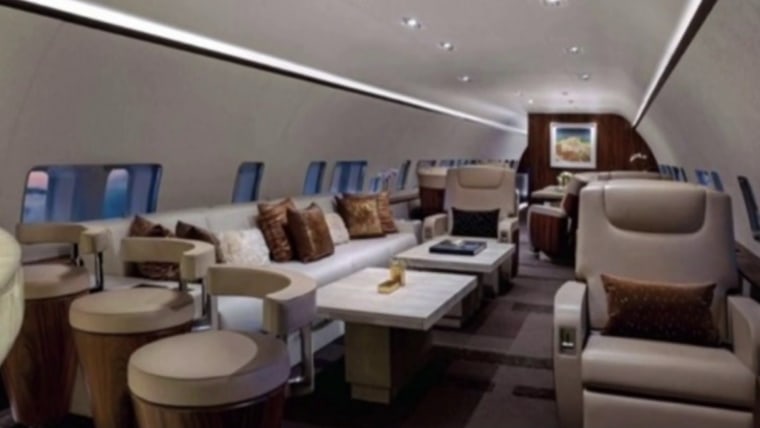
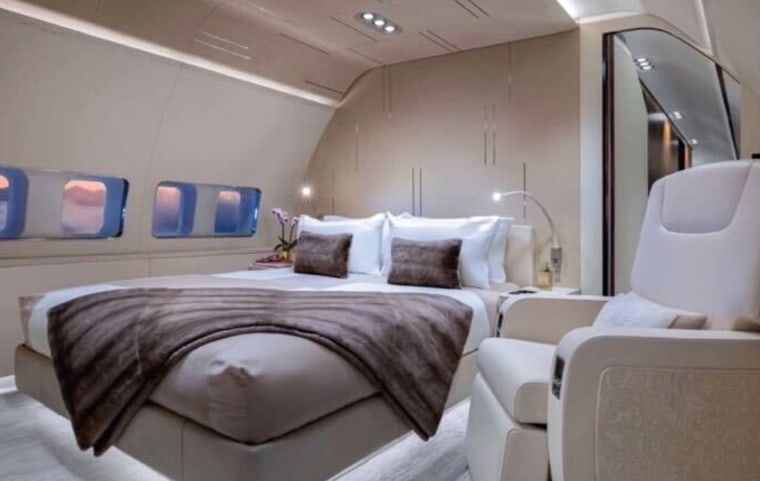
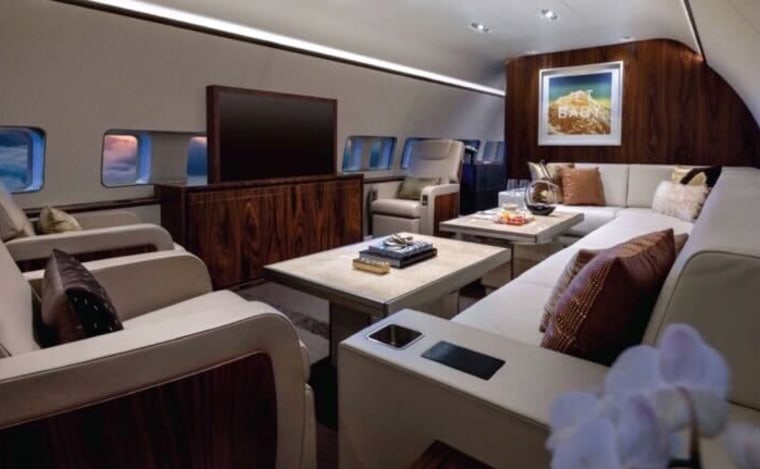
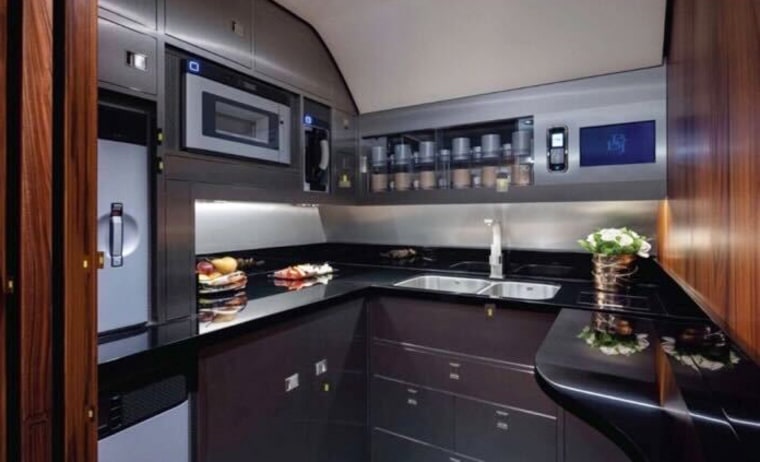
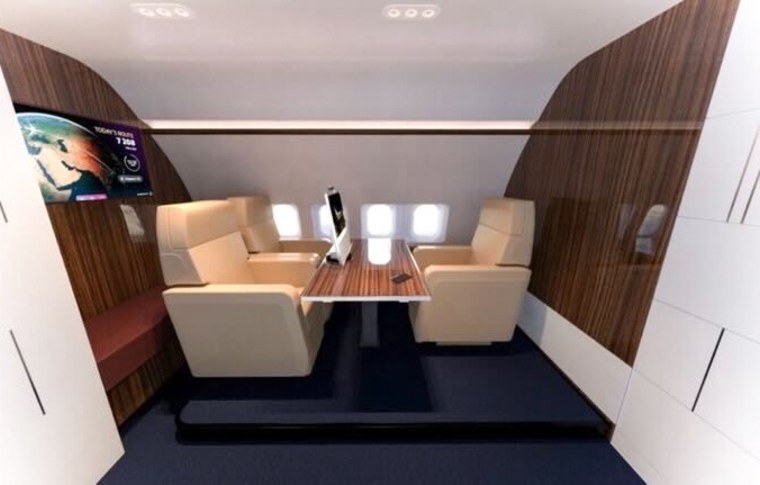
The Department of Homeland Security is seeking White House budget approval to buy a Boeing 737 Max 8 outfitted like an executive jet—bedrooms, showers, kitchen, bar, and large TVs—while claiming it is needed for immigrant deportation flights, according to NBC News.
NBC reports that Immigration and Customs Enforcement has asked the Office of Management and Budget to approve a roughly $70 million purchase of a 737 Max 8 that DHS has recently been leasing. Two DHS officials involved in the request told NBC that ICE told OMB the aircraft would be used both for deportations and for Cabinet-level travel. A DHS spokesperson confirmed the “dual missions” framing and said at least one bedroom is being converted into seating to meet deportation needs.
The procurement logic is awkward on its face. Marketing materials obtained by NBC describe a configuration with space for a maximum of 18 passengers and sleeping capacity for 14. Deportation flights, by contrast, typically carry 50 to 100 detainees plus medical and security staff, and some aircraft are equipped with floor-mounted restraint points for shackling. One DHS official told NBC that using this jet for deportations is “far-fetched,” adding: “But that’s what they’re claiming.”
DHS argues the purchase would save money by replacing more expensive military aircraft used for removals. The spokesperson told NBC the jet flies “at 40% cheaper” than military aircraft used for ICE deportation flights and would save “hundreds of millions of dollars,” though NBC notes DHS did not provide per-person deportation costs for the luxury configuration.
The deeper story is not the interior design; it is how enforcement missions metastasize into permanent procurement ecosystems. ICE historically relied on charter flights rather than owning aircraft. Now, NBC reports, ICE has purchased five non-luxury 737s as part of Homeland Security Secretary Kristi Noem’s plan to own deportation planes, with a goal of eight total. Once an agency shifts from buying seats to buying fleets, the incentives flip: capital assets need utilization, utilization needs throughput, and throughput needs policy that continuously produces bodies and budgets.
In parallel, NBC’s separate reporting on “Operation Metro Surge” in Minnesota shows the political externalities of the same enforcement machine. After deployments of thousands of federal immigration officers to Minneapolis and two fatal shootings of U.S. citizens during confrontations, Minnesota polling became more polarized than national sentiment, with stronger pro-ICE intensity among Republicans and stronger anti-ICE intensity among Democrats and independents.
Public-facing claims of efficiency and necessity, internal bureaucratic rewards for scale, and a contractor-friendly logistics layer that outlives the political slogans that launched it. The state may call it “mission requirements.” The market calls it a captive customer with a credit card and no competitors.