
Trump Board of Peace plans 5
000-person fortified base in Gaza, Guardian cites contracting files, Reconstruction governance arrives as barbed wire and watchtowers
Images
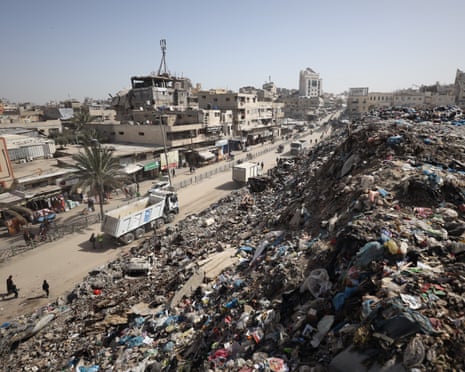 The United Nations Development Programme (UNDP) delegation on a field visit in Gaza City, on 16 February. Photograph: Anadolu/Getty Images
theguardian.com
The United Nations Development Programme (UNDP) delegation on a field visit in Gaza City, on 16 February. Photograph: Anadolu/Getty Images
theguardian.com
 Middle Eastern funds are ready to invest tens of billions of dollars in Trump’s Board of Peace — with one catch: sources
nypost.com
Middle Eastern funds are ready to invest tens of billions of dollars in Trump’s Board of Peace — with one catch: sources
nypost.com
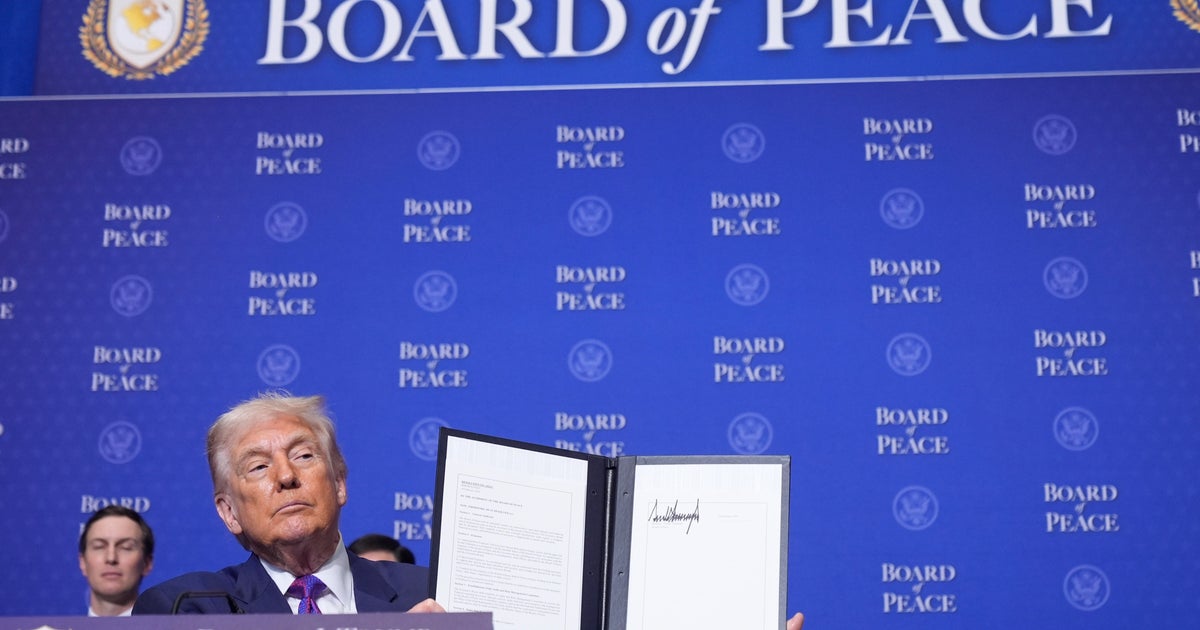 Trump says U.S. will contribute $10 billion to Board of Peace
cbsnews.com
Trump says U.S. will contribute $10 billion to Board of Peace
cbsnews.com
 DC road closures for first-ever meeting of Board of Peace
wtop.com
DC road closures for first-ever meeting of Board of Peace
wtop.com
Donald Trump’s newly created “Board of Peace” for Gaza is already acquiring the one thing every humanitarian project eventually needs: a fortified base.
According to the Guardian, contracting records tied to the Board of Peace describe a plan for a roughly 350‑acre compound in southern Gaza designed to house about 5,000 personnel. The documents envision a phased buildout to an operating base roughly 1,400 meters by 1,100 meters, ringed by 26 trailer‑mounted armored watchtowers, barbed wire, bunkers, a small‑arms range, and warehouses for equipment. Contractors are instructed to conduct geophysical surveys to identify voids and tunnels—an unusually candid acknowledgment that “reconstruction governance” in Gaza begins with counter‑tunnel engineering.
The base is framed as the hub for a future International Stabilization Force (ISF), a multinational force meant to secure Gaza’s border, protect civilians, and train “vetted Palestinian police forces,” the Guardian reports, citing UN descriptions. The documents raise questions modern international law rarely answers in public: rules of engagement, what happens if Israel resumes large‑scale strikes, whether the ISF is expected to disarm Hamas (an Israeli condition for reconstruction), and who actually commands the chain of force when “multinational” troops operate from a base contracted through a Trump‑chaired entity.
The Board of Peace’s legal architecture is central. The Guardian quotes Rutgers law professor Adil Haque calling it “a kind of legal fiction,” nominally separate from both the UN and the US while functioning as an “empty shell” for Washington. The UN Security Council has reportedly authorized the Board to establish the ISF—an odd sentence in itself, since the body is simultaneously sold as a workaround for the UN’s slower, more pluralistic machinery.
The membership roster underlines the concept: a fee‑paying club heavy on regimes that don’t lose sleep over governance optics. In a separate Guardian piece, the inaugural Washington meeting is described as attracting representatives from states ranked “Not Free” by Freedom House, including Egypt and Turkey, while several European democracies reportedly avoid full participation or send “observers.” Israel is represented by foreign minister Gideon Sa’ar.
Funding and procurement look equally bespoke. Contractors told the Guardian that discussions with US officials often happen on Signal rather than official email—convenient for speed, less so for oversight. Meanwhile, Indonesia has reportedly offered up to 8,000 troops: rich states design the governance vehicle; other states supply manpower; and Gaza supplies the terrain.
If the Board of Peace is meant to be “the most consequential international body in history,” as Trump has claimed, it is at least honest about one thing. Consequence, in geopolitics, is measured in perimeter fencing, not press releases.