
Peru Congress appoints José María Balcázar as interim president
Eighth head of state in a decade amid Jerí censure over alleged China-linked meetings, temporary stability delivered by permanent crisis machine
Images
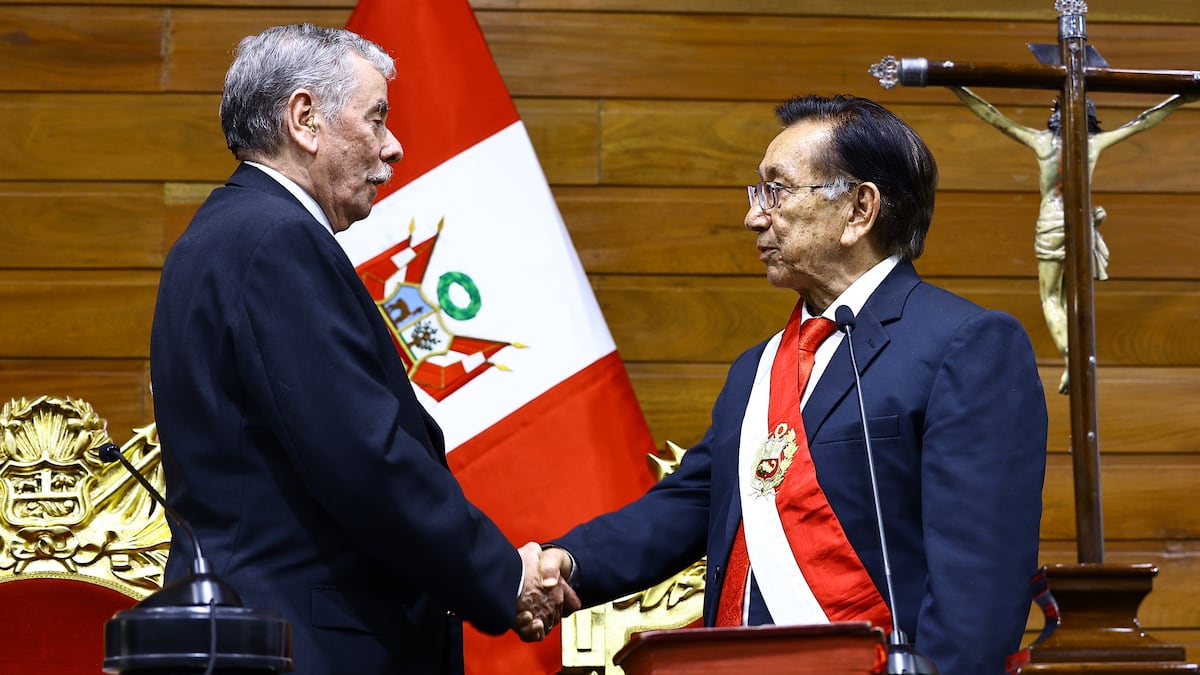 Peru’s Congress appoints José María Balcázar as president, the eighth in a decade
english.elpais.com
Peru’s Congress appoints José María Balcázar as president, the eighth in a decade
english.elpais.com
Peru’s Congress has appointed José María Balcázar, an 83-year-old lawmaker from the Perú Libre party, as the country’s president—its eighth head of state in roughly a decade, depending on how one counts the wreckage.
According to El País, the appointment followed the censure and removal of President José Jerí, whose downfall was tied to “clandestine meetings” and alleged links to Chinese businessmen, plus accusations involving women allegedly favored with government contracts. Balcázar will serve for five months, handing power over on July 28 to the winner of Peru’s April 12 election.
The method is quintessential Peru 2020s: a president not chosen by popular vote, installed by parliamentary arithmetic after the previous one is ejected, with the country briefly drifting in a legal vacuum. El País reports that Peru was effectively without a president for 24 hours—ministers remained in place, but only for administrative tasks—an interval that would be comic if state continuity were not a real public good.
Balcázar is no technocratic “stabilizer.” He is a lawyer and former judge from Cajamarca whose public record includes defending child marriage. El País notes he has claimed that “early sexual relations help a woman’s future psychological development,” remarks that drew condemnation from Peru’s Ministry of Women and broader public backlash.
That a legislature can rotate presidents like a committee chair is often sold as constitutional resilience. In practice it is institutionalized crisis: a system where the executive is permanently contingent on congressional intrigue, and “stability” becomes a euphemism for whatever coalition can survive the week.
Peru’s revolving-door presidency has produced absurdities before—Manuel Merino lasted five days in 2020—and now produces new ones: an interim president whose legitimacy is entirely procedural, whose mandate is explicitly temporary, and whose political incentives are to avoid being the next disposable officeholder.
Weak constraints on political actors do not yield “responsive democracy”; they yield a market for power where offices are traded through backroom deals, censure motions, and opportunistic scandals. When the state is this unstable, citizens do not get less government—they get government by emergency, decree, and patronage, because normal politics is too fragile to carry the load.
Peru will hold elections in April. Until then, it will run—again—on the promise that the next transition will finally be the last one.