
Karachi apartment blast kills at least 13
Pakistan gas networks mix low-pressure mains with LPG cylinders and predictable failure modes
Images
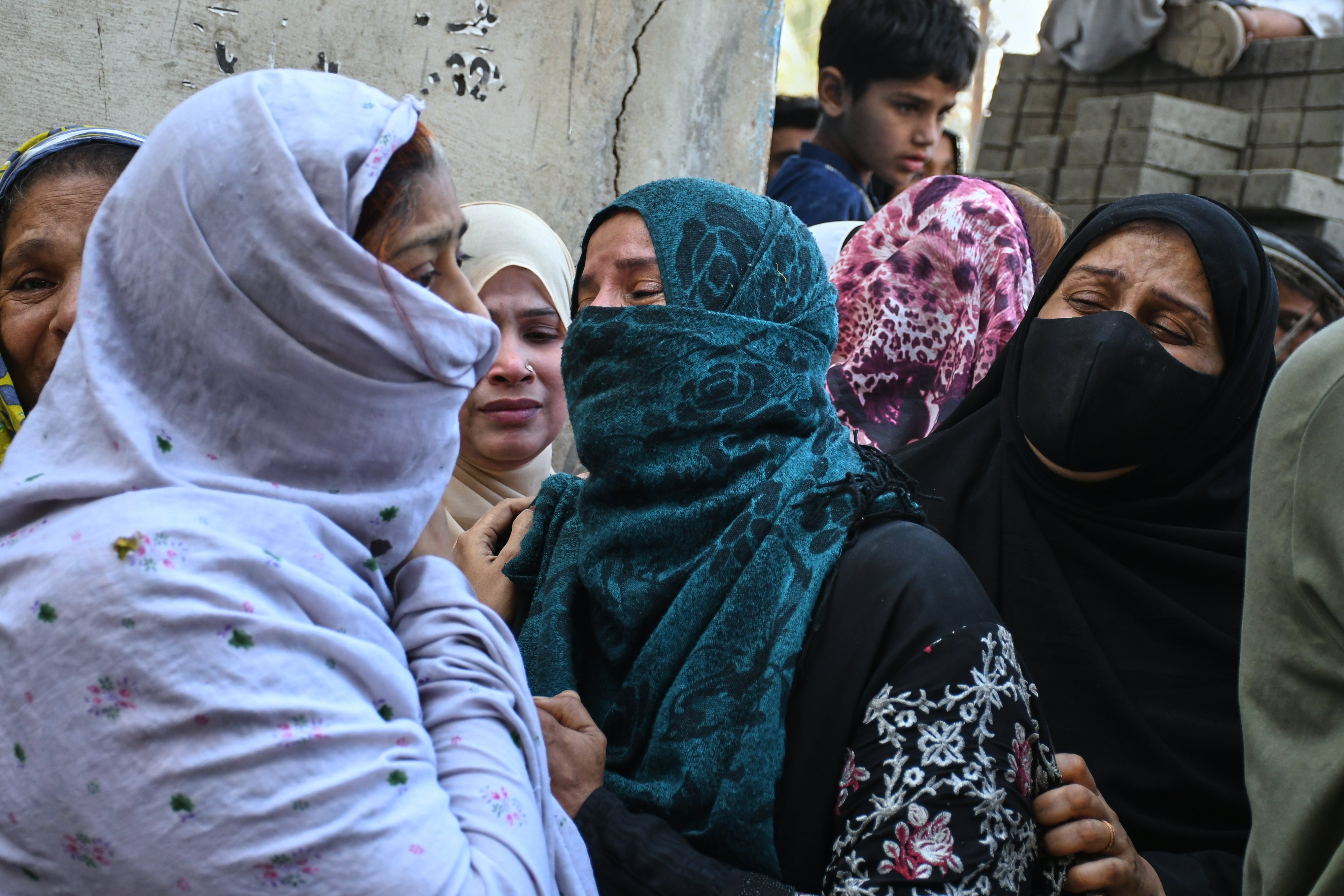 Women mourn over the death of their relatives near the site of a gas explosion in an apartment building, in Karachi, Pakistan, Thursday, 19 February 2026 (Associated Press)
Associated Press
Women mourn over the death of their relatives near the site of a gas explosion in an apartment building, in Karachi, Pakistan, Thursday, 19 February 2026 (Associated Press)
Associated Press
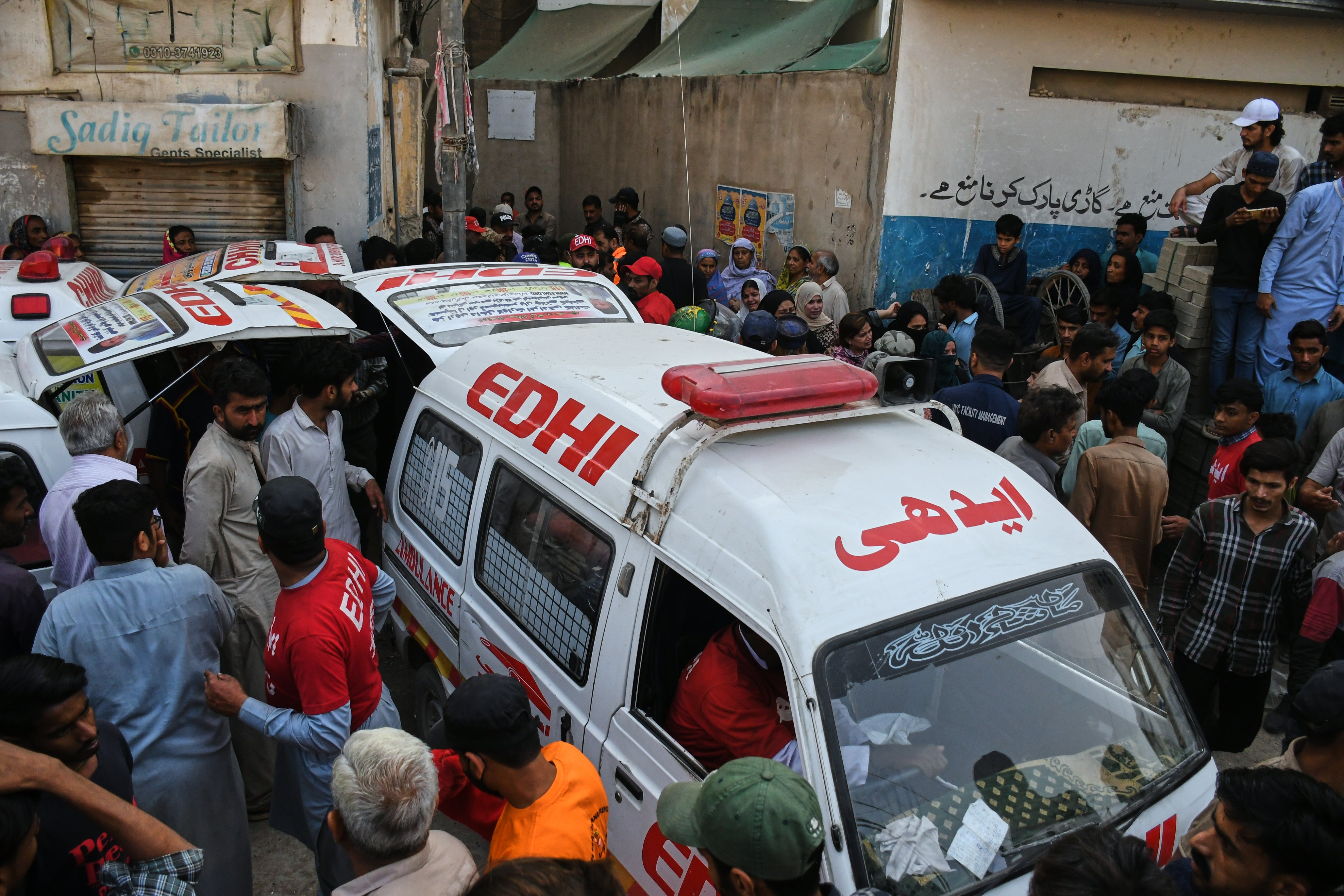 Rescue workers load a body into an ambulance after recovering it from the rubble following a gas explosion at an apartment building, in Karachi, Pakistan, Thursday, Feb. 19, 2026. (AP Photo/Ali Raza) (Copyright 2026 The Associated Press. All rights reserved.)
Ali Raza) (Copyright 2026 The Associated Press. All rights reserved.)
Rescue workers load a body into an ambulance after recovering it from the rubble following a gas explosion at an apartment building, in Karachi, Pakistan, Thursday, Feb. 19, 2026. (AP Photo/Ali Raza) (Copyright 2026 The Associated Press. All rights reserved.)
Ali Raza) (Copyright 2026 The Associated Press. All rights reserved.)
A gas explosion in Karachi has killed at least 13 people after an apartment building partially collapsed, underscoring how “regulated” infrastructure can still behave like an improvised experiment.
The Independent reports that the blast struck a residential area of Karachi, the capital of Pakistan’s Sindh province. Police chief Rizwan Patel said rescuers were still pulling rubble in an ongoing search-and-rescue operation, suggesting the casualty count could change.
Pakistan’s urban gas system rests on mismatched assumptions. Most homes are connected to natural gas for cooking, but low pressure in the distribution network means many households also rely on liquefied petroleum gas (LPG) cylinders as a workaround. That hybrid setup—piped methane plus portable pressurized cylinders—creates multiple failure modes: leaks in aging mains, faulty indoor connections, illegal hookups, poor ventilation, cylinder handling errors, and the ever-present temptation to “fix” pressure problems with unlicensed modifications.
The Independent notes that authorities provided few technical details so far, which is typical in the immediate aftermath: officials secure the site, rescue teams dig, and the public is told to wait for an investigation that may or may not produce a falsifiable cause.
In cities like Karachi, building codes and gas safety rules often exist in thick binders, while the actual built environment is shaped by informal construction, weak inspection capacity, and corruption incentives that reward paperwork compliance over physical integrity. Regulators can mandate standards for odorization, pressure control, and appliance connections; they cannot repeal physics, nor can they supervise every junction in a sprawling network where “unauthorized” is frequently synonymous with “normal.”
The blast also highlights the political economy of monopoly utilities. When a centralized provider under-delivers—low pressure, unreliable supply—users rationally create parallel systems (cylinders, aftermarket regulators, informal contractors). The state then treats the resulting risk as a reason for more rules, more inspections, and more discretionary enforcement—often applied selectively.
Pakistan has seen similar incidents before. The Independent points to a July explosion in Islamabad that killed eight people, including a newlywed couple, after a wedding reception.
Karachi’s tragedy is not primarily a story about a missing regulation. It is about the gap between regulation theatre and enforcement reality, and about how households adapt to failing infrastructure in ways that keep daily life running—until one day the accumulated improvisations detonate.
If investigators want more than a press conference, they will have to publish specifics: gas concentration evidence, leak origin (distribution main vs internal piping vs cylinder), building structural assessment, and maintenance/inspection records. Otherwise, the “cause” will be negligence, broadly defined, and therefore not clearly assigned to anyone in particular.